In accordance with the symmetrical discharge tanks above, when the trapped oil cavity is changed from a large to a minimum hour (map), the closed oil pressure will continue to be higher than the pressure on the cavity because the fluid is not easily pumped out of the closing gap; the gear will continue to move, and when the cavity and the absorbent cavity are connected, the high-pressure oil suddenly comes into contact with the low-pressure oil of the cavity, causing shocks and noise. The cb-b gear pump then moved the position of the discharge tank at a distance to the suction side. This is when the closed cavity is broken only when it is small to maximum, when the oil pressure is not mutated and when the cavity and the inhaled cavity are connected, there is no vacuum or pressure shock, which further improves the vibration and noise of the gear pump。
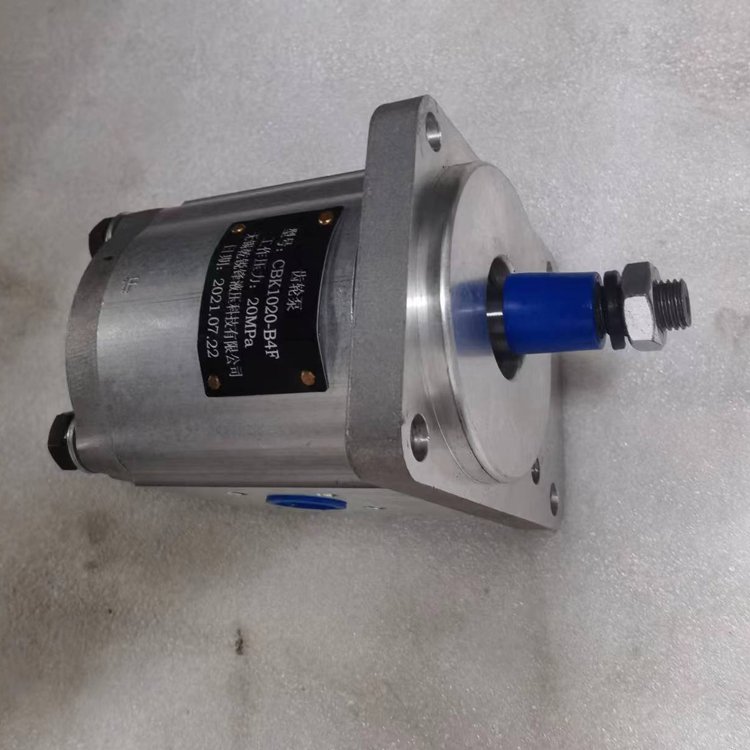
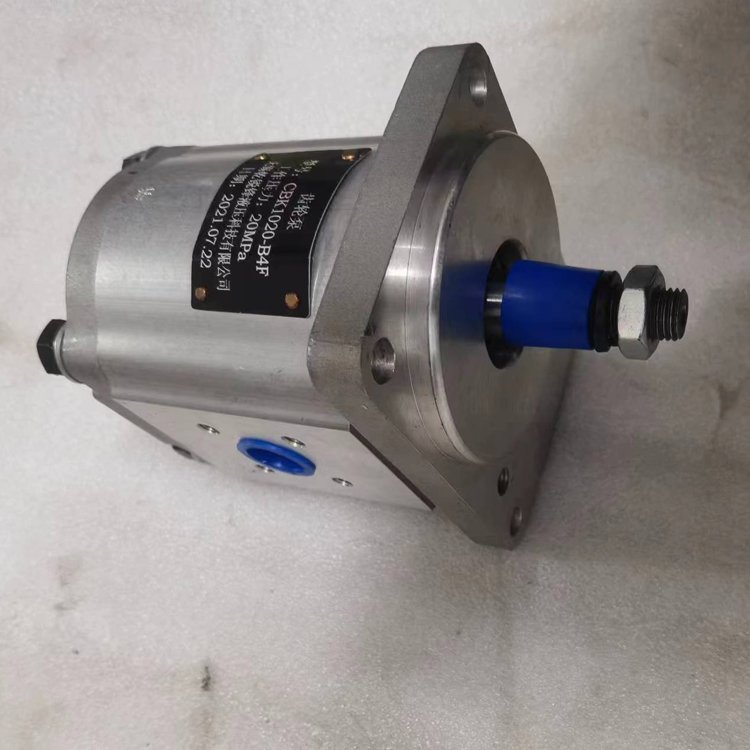
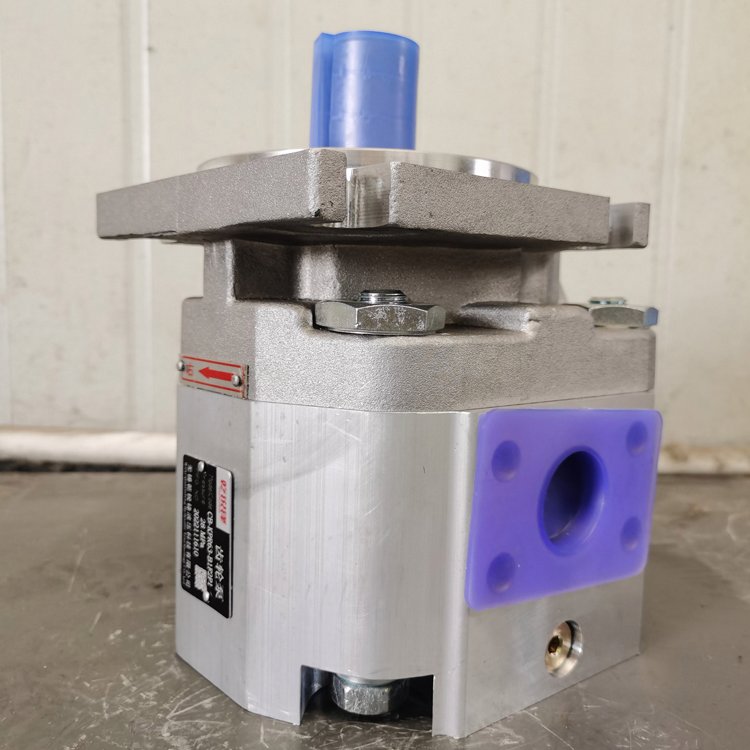
When the gear pump works, it is subject to a directional fluid pressure on the gear and bearing. As shown in the figure, the right side of the pump is the oil-sucking cavity, while the left side is the pressurized cavity. There is a liquid pressure in the pressurized cavity that works on the gear, with oil spills along the top of the tooth, with pressures of varying sizes, i. E., the trajectories and axes that are subject to imbalance. The higher the pressure, the greater the imbalance, the result of which is not only to accelerate the wear and tear of the bearings, to reduce the lifetime of the bearings, but even to deform the axis, resulting in the friction of the teeth and the walls of the pumps. To address the problem of dyslexia, in some gear pumps, pressure balance cells are used to remove dyslexia, but this will increase leakage and reduce volume efficiency, etc. The cb-b gear pump uses a reduction in the pressure cavity to reduce the area of the liquid pressure to the top of the gear to reduce the dyslexic imbalance, so that the pump has a smaller perforation than the absorbent mouth。
The charge v of the gear pump is equal to the sum of all the cogs of a pair of gears, and if the cog volume is approximately equal to the volume of the cog, then the cog pump is equal to the sum of the cog volume and cog volume of a cog, i. E. The sum of the cog volume, i. E., the sum of the active cog volume. H = 2m) and the volume of the circle which is swept by the plane made up of teeth, i. E.:
In form: d is the cog fraction diameter, d=mz(cm); h is the active dent height, h=2m(cm); b is the gear width (cm); m is the gear model (cm); z is the tooth number。