


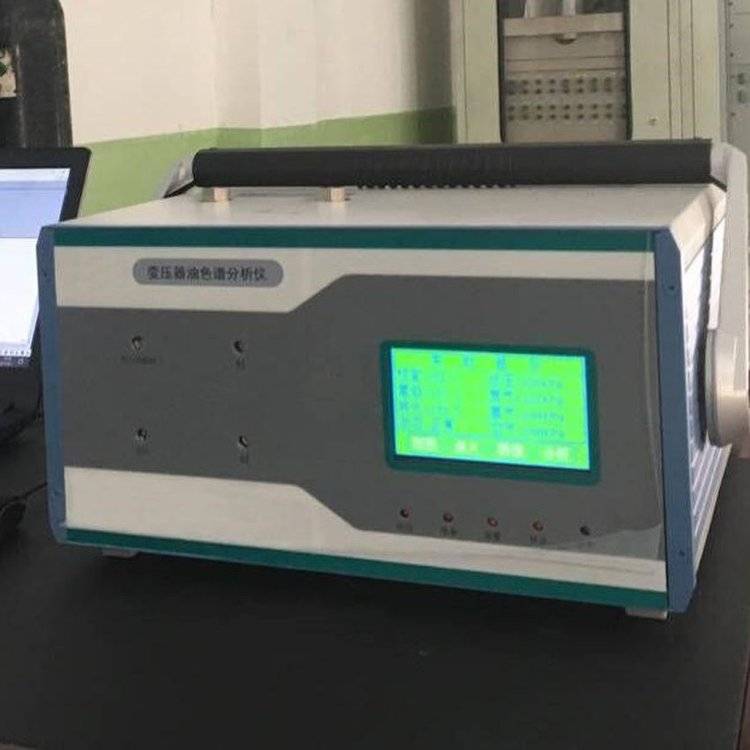
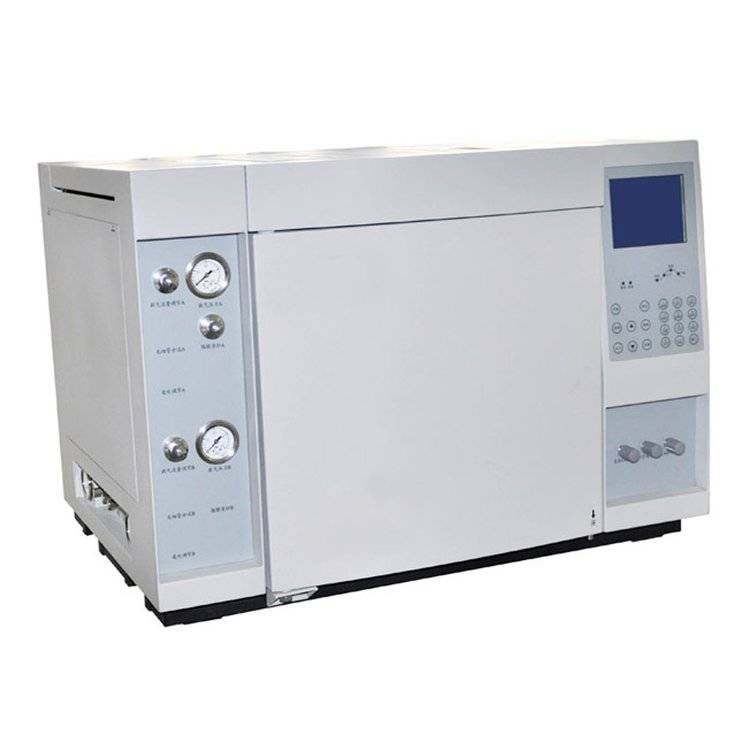
Hn8990 oil chromatography analyser
Main performance characteristics:
A fully developed self-diagnostic function allows user-friendly examination of fault areas and types of failure。
Perfect temperature overheating protection and platinum wire electrical resistance, short-circuit reporting to ensure temperature is not out of control。
An optional combination of ad-converting circuits allows direct digital output signals to complete all control and analysis work on the pc。
The cylinders achieve negative temperature operation through dry ice or liquid nitrogen。
Within 180°c, the control accuracy of the cylinder is as high as ±0. 01°c。
It may be accompanied by three filling columns or two payment piping columns, with two amplifiers working simultaneously. Three detectors and transformation furnaces can be installed simultaneously。
The functions of manual advance, auto-starter, automatic ignition, etc., are optional, and ceramics or quartz nozzles are optional。
The instrument has an auto-absorption protection function, and a syllable timer function。
Six-way temperature control, seven-stage heating, hair catheter and filling cylinder carburetor temperature control, smart double back door。
The device has the capability of storing 10 files and making any call。
The instrument achieves automatic diversion/neutralization in the true sense of the instrument。
Outer size: 570 x width 480 x height 500 (mm)
Box size: 270 x 248 x 260 (mm)
Instrument weight: 46kg
Main technical indicators:
The temperature range of the cylinder: room temperature +2°c-450°c (at 0. 1°c increment)。
Temperature accuracy: not greater than ± 0. 1°c。
Temperature gradient: ±1 °c (100 °c-360 °c program heating)。
Temperature rate: 0. 1°c-40°c/min (at 0. 1°c incremental rate). Normal
0. 1°c-80°c/min (at 0. 1°c increment). High-speed
Samples, detector temperature range: room temperature +10°c-400°c。
A voltage of 220 v ± 10%, power of 2200 w。
Fid hydrogen flame ionization tester: sensitivity: mt≤5x10-12g/s; baseline drift: ≤1x10-13a/30
Noise: 5x10-14a/30, linear range: 107
2. Tcd thermal conductor detector: s≥3500mv. Ml/mg; baseline drift: ≤100uv/30 minutes
Noise: 20uv, linear range: 104
Ecd electronic capture detector: sensitivity: mt≤1x10-13g/s, baseline drift: ≤60uv/30 minutes
Noise: 20uv, linear range: 104
Fpd flame light detector: mt≤2x10-12g/s(p) mt≤6x10-11g/s(s)
Baseline drift: 5x10-12a/30, noise: 3x10-12a
Linear range: 103(p) 102(s)
5. N2o detector: mt≤8x10-13g/s(p) mt≤1x10-12g/s(n)
Baseline drift: 5x10-12a/30, noise: 5x10a
Linear range: 103(p) 103(n)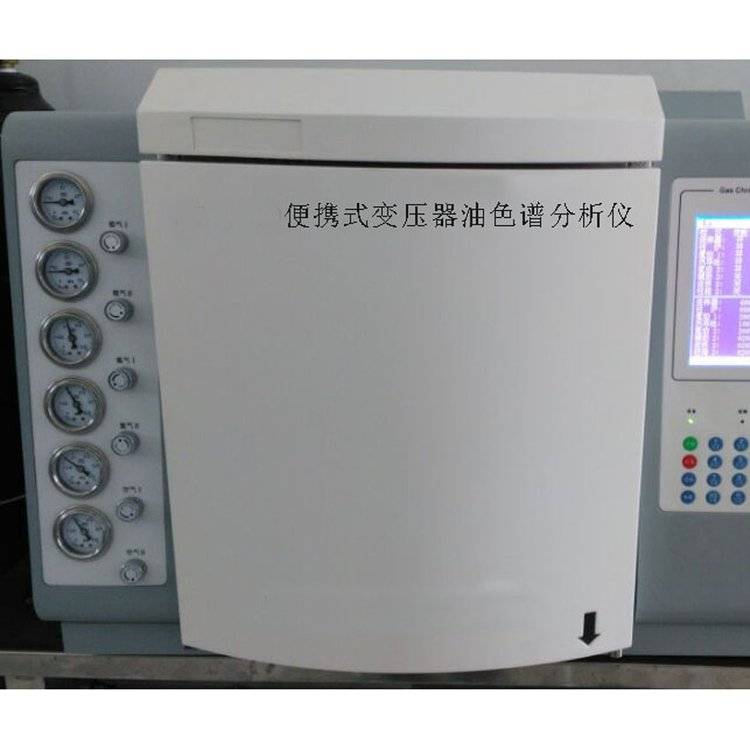
Power regulaters' power conversion efficiency tests, motor efficiency tests, loss tests for electrical resistors, etc., are required to have high precision power (electric current and voltage) tests in all aspects of the electrical domain. This paper will focus on the development of current sensors and power analysers around current testing techniques. The current test of the power analyser for currents is generally conducted by means of direct measurements (fig. 1) and one of the current sensors (fig. 1). Their respective characteristics are described below. Fig. 1 direct measurements and current sensors 1. 1 direct measurements are the means by which the test line of the test object is directly connected to the power analyser's currents. Specifically, the central frequency will be set to an integer multiple of the search base frequency for each measured harmonization mass, and a zero-frequency wide scan will be performed, the range being calculated by the average power of the measured data. After measuring the number of harmonic waves and ranges, the total harmonic distortion measurements are automatically calculated and shown in the data report window. In order to automatically measure the display interfaces obtained using the harmonic distortion measurement function, the frequency and range of the base frequency and harmonic fractions are listed sequentially in the data report window and the total harmonic distortion is given. According to the measurement statements, the total harmonic distortion in the system is 3. 67 per cent, assuming that only these two harmonics are present. The result can be verified manually by formula calculations, with the difference between the range of -29. 1 db and the range of -29. 1 db for secondary and base frequency in the statements, and between the range of -4. 4 db for three waves and the base frequency, the total harmonic distortion is: an automatic measurement of the harmonic distortion measurement function can thus be seen, and the results of the harmonic distortion automatic measurement are consistent with the results of the neutral manual measurement。
