


Nxp/freescale fyscal deep sea exploration (0-50kpa) pressure sensor mpx2050gsx
Mpx2050: differential and surface pressure with compensatory pressure sensor (0 to 50 kpa)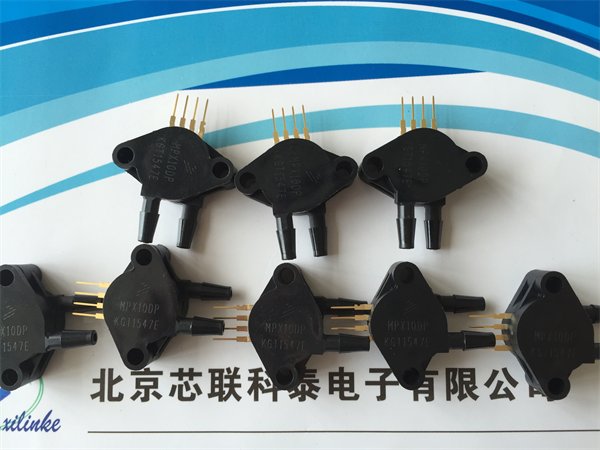
Overview
The mpx2050 series is used for a wide range of medical and industrial control applications。
Provide very precise linear voltage output in proportion to the pressure imposed
It's a single-silica chip. It's a network of muts and film resistance
Accurate range and deviation calibration through laser calibration and temperature compensation
Feature
Temperature compensation ranges from 0° to +85°c
2. Unique silicon shear response snippets
3. Provision of diskette packaging
4. Ratio to power voltage
5. Optional differential pressure and pressure
6. 0. 25% linearity
Manufacturer: nxp/freescale
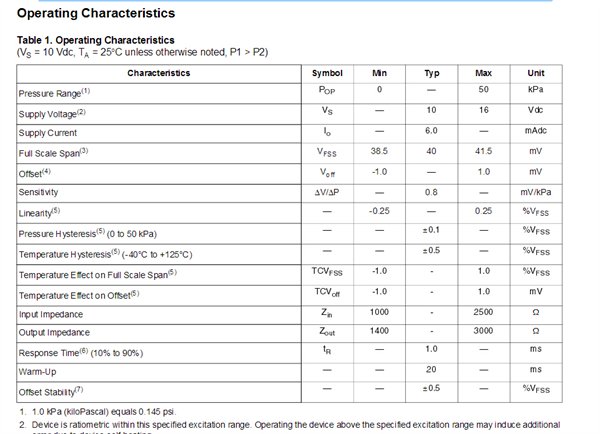
Work pressure: 0 kpa to 50 kpa
Pressure type: differential pressure
Organisation
Port type: no port
Cover: 4-sip module
Output: 0 mv ~ 40 mv (10v)
Working power voltage: 10 v ~ 16 v
Working temperature: -40°c ~125°c
Series: mpxx2050
Number of plant packages: 500
Unit weight: 1. 608 g
Mpx2050 pressure sensor and application circuits
The measurements of pressure in industrial measurements are very extensive, and they can be used to measure, directly or indirectly, many physical parameters, such as the liquid level of the large liquid storage tanks, the pressure of the gas tanks, the water depth of the oceans, the height of the mountains, medical measurements of blood pressure, respiratory pressure, etc., and aviation measurements of aircraft flight altitude, flight speed, up and down speed and gas pipeline flow. However, the most widely used pressure sheets in practice are those of membranes, bellows, clarinets and mechanical motion, magnifying units. It has the advantage of having simple structures and low production costs, but with low measurement precision, if telemetry, recording or centralized observation (monitoring), automatic regulation or control of pressure parameters are to be used for pressure sensors, which transform pressure parameters into telecommunications output。
I. Silicon pressure resistance sensors
Pressure-retarded pressure sensors are components made of single-crystal silicon using the pressure-retarding effect of a single-crystal silicon, i. E. A transformational component made of a certain shape by a diffusion process, an ion injection process or a spatter process on a single-crystal silicon tablet or a silicon cup. When pressure-sensors are pressured, the electrical resistance of the mutated element in the sensor changes, thus exporting the corresponding voltage change. Many of the pressure-resisting sensors are used to create four equivalent resistance elements on silicon membranes to form a bridge. When pressure is applied, one pair of the arm of the bridge is turned into a large zen r, while the other pair of the arm of the bridge is turned into a small zen r, and the bridge is not balanced, there is a uo output that is proportional to the pressure, the working principles of which are shown in figure (a)。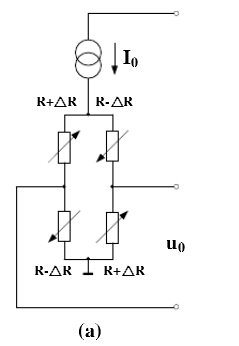
Ii. Applicable circuits for pressure sensors
Typical pressure sensors apply circuits as shown in figure (b)。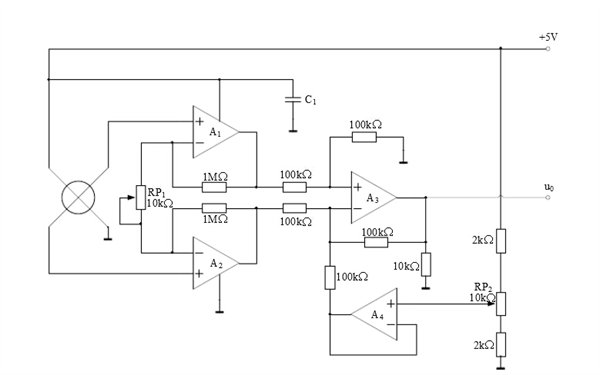
It is a generic magnification circuit for the mpx2000 series. The mpx2000 series pressure sensor is a pressure-retarded pressure sensor with temperature compensation, with an internal temperature-retarded resistance network calibrated by lasers, as shown in figure (c)。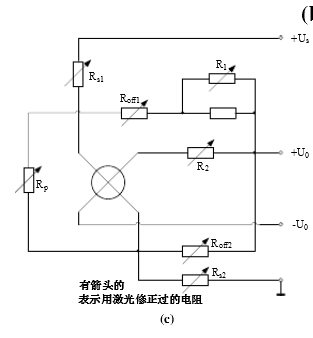
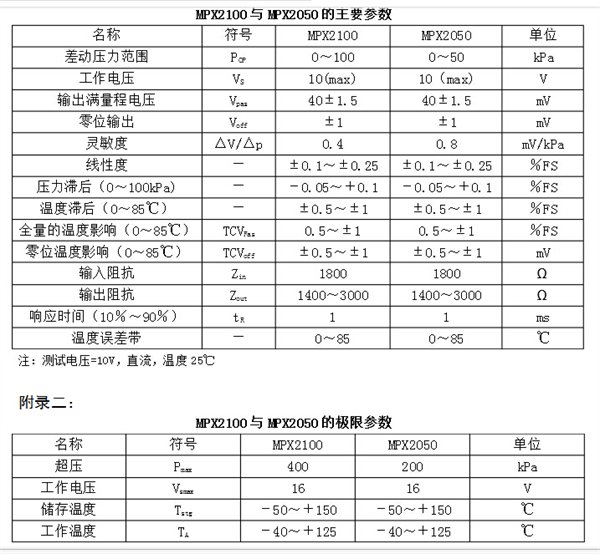
After laser calibration, the sensor's zero output, full range output and output consistency, temperature compensation properties, etc., meet better performance indicators. Its basic performance indicators are: zero output of less than ± 1 mv, full range output of 40 mv ± 1. 5 mv, with better temperature compensation in the range 0 + 85°c; linearity of up to ~ 0. 1% fs ~ 0. 25% fs; working temperature range of -40°c ~ + 125°c, allowing overload of 400% (mpx2100), 200% (mpx2050). (for more details on the main and extreme parameters of mpx2100 and mpx2050, see appendices i and ii) in addition, in the application circuits of pressure sensors, most of the circuit structures are instrumentated amplifiers. This is due to the high input resistance of the instrument amplifier circuits (the sensor signals are entered at both ends of the same spectrum), which can reduce temperature drift and enhance resistance to commodular interference, and have no impact on the amplifier when the gain is changed. This amplification circuit can measure small signals and have high accuracy。
Analysis of applications
Typical pressure sensors apply circuits, a1 and a2 form circuits of the same proportion, which connect the same end to the output end of the silicon pressure resisting sensors, and a3 form a differential ratio computing circuit, which transforms the two-end input signal into a single-end output feed r+△rr-△rr-△ru0i0(a) into circuits, adjusted by rp1 (full range adjustment). A4-based voltage followers are used for zero pressure adjustments, and rp2 can be adjusted to zero when the input pressure is zero. Throughout the circuit, a1-a4 has chosen the mc33079 mode amplifier, the corresponding resistance value has been indicated in (b) where the capacitor element stabilizes the circuit by charging its own charge. Thus, this pressure sensor applies a circuit that can export a corresponding voltage signal through a perceptive pressure change, enabling the conversion of pressure parameters into telecommunications output. For model mc33079 operation amplifiers, the piping foot chart is shown in figure (d) as an integrated discharge consisting of four clusters with four corresponding input and output ends with the same function as laser-modified resistance (c) (d)。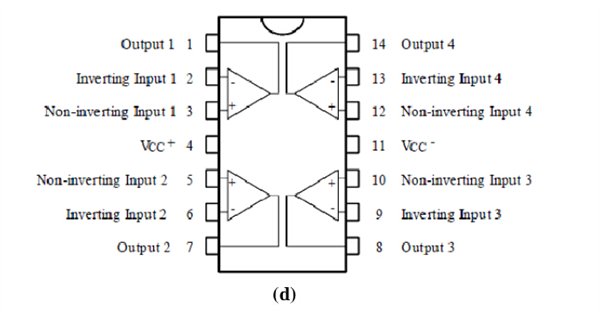
PDF specifications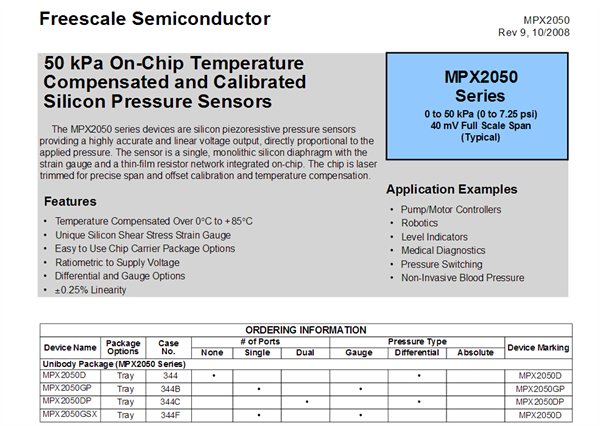
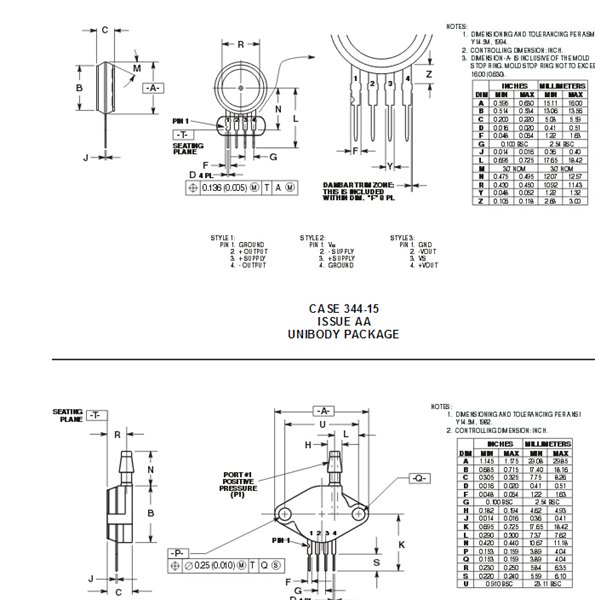
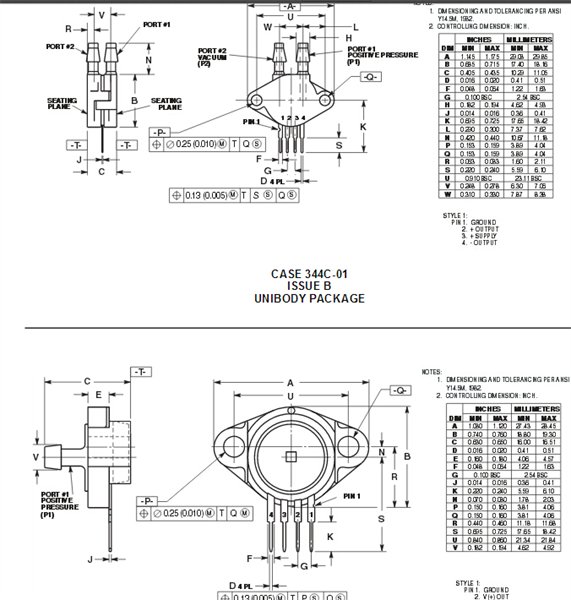
Mpx2050d
Mpx2050dp
Mpx2050gp
Mpxv2050gp
Mpx2050gsx
Mpx2010d
Mpx2010dp
Mpx2010gp
Mpxm2010d
Mpxm2010dt1
Mpxm2010gst1
Mpxm2010gs
Mpxv2010dp
Mpxv2010gp
Mpx2010gsx
Mpx 2100a
Mpx 2100ap
Mpx 2100d
Mpx 2100dp
Mpx2300dt1
Mpx2,200gp
Mpxv2202gp
Mpxv2202 gc6t1
Mpxm2202a
Mpxm2202gs
Mpxv2202dp
Mpx2202ap
Mpx2,200a
Mpx2,200ap
Mpx2200d
Mpx2,200dp
Mpx2202gp
Mpxm2202gst1
Mpxm2202dt1
Mpx2202a
Mpx2202dp
Mpxm2202as
Mpxv2202gc6u
Mpxv2202dpt1