





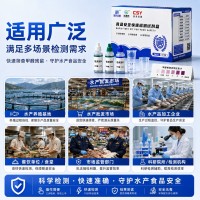


I. Where does formaldehyde testing work
1Water products processing and circulation enterprisesSelf-inspection of fish shrimp, hydroponics, etc. At the receiving and inspection of raw materials and at the production of finished products to prevent illegal additions to formaldehyde。
2Wholesale and agricultural markets• rapid screening of water products, hydroponics, pickled vegetables, etc., traded in the field to disrupt the flow of problematic foods. Currently, many markets havePyramid formaldehyde testsIntegration of daily scrutinizing projects and batch screening of entrance cabbage。
3Catering enterprises and canteens• quality verification during the procurement of aquatic products, hydroponics and prevention of the entry of materials containing formaldehyde into cooking. At the same time, it is gradually being introduced in the procurement of vegetables, such as cabbage and dollsCabbage tests for formaldehydeProcess, ensure food security。
4Food production and processing enterprises• safety clearances for raw materials used in the production of such products as pots of fire and fast-frozen foods. In the case of pickles and pickles, which use cabbage as a raw materialPyramid formaldehyde testsIt is also a critical link in the receipt and inspection of raw materials。
5Market regulation and industry self-examinationLaw enforcement officials at the grass-roots level quickly identify problematic foods during daily patrols and improve the efficiency of law enforcement。Pyramid formaldehyde detection reagentIt has become one of the standard configurations for the fast-track inspection of agricultural markets。
Ii. Elements of illicit equipment and multized enjoyments of arbitration
Formaldehyde is used illegally in food for multiple reasons. In terms of effect, formaldehyde condenses proteins, makes the meat of aquatic products and hydropharmaceuticals more flexible and marketable; it also has bleaching effects that keep the food white and white; it also inhibits bacterial growth and prolongs food conservation. For cabbage, such as cabbage, the spraying of formaldehyde keeps its blades green and non-yellow and reduces wear and tear in long transport and storage. At the cost level, formaldehyde is cheap, and some small workshops are at risk in order to reduce costs and improve sales. At the end of circulation, aquatic products and hair products are short-lived and revolving, and formaldehyde treatment can mask signs of deterioration and reduce wear and tear. Vegetables such as cabbage also face short-duration problems, resulting in illegal use of formaldehyde from aquatic products to vegetables。
Illegally added harm to formaldehyde is multilayered. For consumers, formaldehyde is highly irritant to respiratory and skin mucous membranes, and long-term ingestion can impair digestive systems and liver functions, which are recognized by the world health organization as carcinogens and pose a serious threat to human health. For the food industry, once the formaldehyde incident has come to light, consumer confidence in the whole product category has declined sharply, and compliance operators have been affected and market transactions have declined significantly. For businesses involved, the introduction of formaldehyde in food is illegal and, if found, subject to high fines or even criminal liability, the qualification of the business is revoked. Therefore, the establishment of self-censorship mechanisms for formaldehyde is a rigid demand for aquatic products, vegetable processing and related food industries, both in terms of food safety responsibilities and in terms of operating risk management. TodayCabbage tests for formaldehydeIt has become an important defence to food security in the area of vegetable circulation。
Why are traditional methods of testing difficult to meet on-site needs
Laboratory determination of formaldehyde content, usually using gas chromatography or spectrophotometry, can be used as a statutory basis. However, in the field environment such as production workshops, wholesale markets, warehouses, etc., these methods have obvious limitations:
1I can't keep up: complex pre-sampling, on-board analysis is time-consuming, often takes hours from inspection to reporting, and the flow of aquatic products and vegetables is fast。
2High equipment and environmental threshold: precision instruments such as chromatographs and spectrophotometers are in high demand and require a stable laboratory environment, which cannot be equipped by small and medium-sized enterprises and market managers。
3Operation relies on professional backgroundInstrument operations, reagent formulation, data analysis require trained professionals who are not qualified for general workers。
4Not suitable for high frequency multiple-point screening(b) the variety of products, batches and transactions, and the timeliness and cost of all inspections are unrealistic。
These are short sheets that allow quick detection reagents that are simple to operate and can produce results in minutes. Whether it's for formaldehyde screening of water products or for the exclusive usePyramid formaldehyde testsRapid testing of reagents is a good response to field needs。
Iv. The coronary instrument formaldehyde screening programme
The fast detection reagent box for formaldehyde in food was launched by coronde instrument manufacturing (jangsu) ltd. In response to the need for rapid field screening of the food. The product uses the chemical colour method, which is used to read data in conjunction with the detector, for rapid screening of formaldehyde in foods such as aquatic products, aquatic products, hydrofauna, fruit and pickles. In response to growing concernsPyramid formaldehyde testsThe reagent box also applies to test samples of cabbage, dolls, cabbage, etc., for vegetable circulationCabbage tests for formaldehydeWork provides easy tools。
Product packaging
1. Test liquid a, test liquid b, test liquid c: 1 bottle each
2. Sample cup: 1 stack
3, 5ml test tubes: 5
4. Batteries: 1 pack
5. Specifications: 100
Scope of application
Food products such as aquatic products, aquatic products, hydroponics, fruits, pickles, cabbage and a variety of vegetables。
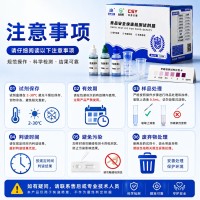
Method of testing reagents for bellow formaldehyde in food
1Sample processing: take a representative sample around 20g, shredded or broken with a mixer. It is stated that the extraction of 2g in the sample treatment cup is accompanied by 20 ml distillation water, which is immersed for 10 to 15 minutes and is mixed several times with a drip tube and requires sample treatment fluid. If you process liquid mixing, you can filter it with filters. (for cabbage samples, it is recommended to take a mix of cabbage and blades to ensure that testing is representative
2Space contrast2 ml treatment fluid in the test tube, with test fluid a 200 ml, test fluid b 200 ml, and lids. Three minutes later, you fall into the vessel and you click "class"。
3Sample testing: after completion, the vessel is removed and the test liquid c 200 ml is added to the mixture. In three minutes, you click "test" and read the results。
Results judgement reference
National standards stipulate that formaldehyde may not be added to food. The results can serve as a reference for rapid on-site screening. YeahPyramid formaldehyde testsThe resulting positive samples are recommended for immediate storage and delivery to the laboratory for confirmation。
Attention
This reagent is only for rapid detection and cannot replace laboratory testing。
V. Product use advantages
1Wide scope of application, covering high-risk items categoryReagents are applied to the category of formaldehyde, such as aquatic products, aquatic products, hydrofaunal products, fruit and pickles, where the illegal addition of higher-risk foods is highly consistent with the products on which market regulation focuses. It also expands the coverage of cabbage and so forthPyramid formaldehyde testsThis emerging demand。
2Samples are easy to process, with low operational threshold: the operation can be completed in the ordinary environment without organic solvents and complex pre-treatment. The cabbage samples were processed in a manner consistent with other food items and no additional equipment was required。
3Check speed. Three minutes: the response time following the introduction of the test liquid is only three minutes, suitable for a site scenario that requires quick judgement, such as the wholesale market, processing workshops, etc. Whether it's a product or a productCabbage tests for formaldehydeThe results are available at short notice。
4It's standardised. It works without foundation: from shredding to immersion to adhesive reading, process is fixed and clear, no chemical professional background is required, and ordinary workers can operate independently with a little familiarity。
5Controllable cost, hf self-checkable: 100 specifications per box, low cost of single-detection consumables, suitable for regularized screening, including acceptance of raw materials, process monitoring, export inspection, etc., and support for:Pyramid formaldehyde testsInclude daily routine tests。
SixIt's easy to store, not the environmentIt can be kept at constant temperatures, without refrigeration, in workshops, warehouses, market stalls, as and when required。
Vi. Manufacturing services and supplementary security
Composers of the cannon instrument (jangsu) ltd. Maintained the original plant control and all test reagent products were adequately stocked. The delivery chain supports direct delivery in jiangsu's main area, while it is operating at near speed at several storage points throughout the country, reducing logistics waiting times。
For customers with demand for bids or project procurement, the company can provide a complete set of qualification documents, including business licences, product inspection reports, bulletin compliance statements, matching country-specific calibration documents and technical programmes for the exclusive testing of the project, to facilitate the successful clearance of clients。
The procurement side supports bulk orders, public tickets and direct mail. On the sale side, hands-on training is provided free of charge to help users to quickly master operational requirements, along with a 7x24-hour technical answer channel, which can be supported in a timely manner in any problems encountered in its use. After the product has been sold for life, multi-faceted quick-checking is done in a variety of settings. Whether it's routine testing in the aquaculture industry or the agricultural marketPyramid formaldehyde testsSpecialized work, we can all provide solid technical support。
Question answers
1Q: what are the common expressions of formaldehyde? Why are they
A: formaldehyde, commonly known as formarin (the trade name of its water solution), antaldehyde. Formerin is a water solution containing 37 to 40 per cent formaldehyde and is known as the first german chemist, formerin, for medical use as a specimen preservative fluid. The name of antaldehyde stems from its first acquisition through ant distillation. In the food security context, what you hear about the "gaul mallin." recentlyPyramid formaldehyde testsThat's what's often mentioned in the topic, "by the cabbage sprayed the ff."。
2Q: does hydroponics look white and elastic, or does cabbage look very green
Response: not necessarily. Normal food additives such as edible alkaline, phosphate etc. Can also improve to some extent the colour and taste of hydrogenic products. The greenness of cabbage is also associated with varieties and conditions for planting. However, products that are too white, have an abnormally smooth or overflexible hand, smell of a slight nasal odour, or counter-season cabbage is exceptionally green and incomprehensible, with relatively high risks. The sensory judgement is subjective, and the precise conclusions depend on testing. Use this reagent quick check, be it aquatic products orCabbage tests for formaldehydeIt is possible to objectively determine whether formaldehyde is present。
3Q: why is formaldehyde illegally added to food? What is the effect
A: there are three main illegal uses of formaldehyde in foods: first, the condensation of proteins for aquatic products and hydrofaunal products, which makes meat hard-cut teeth and improves taste; second, bleaching, which makes food white and white and better sold; and third, anti-conservative bacteria, which prolongs the conservation of foods and conceals signs of deterioration. For cabbage, etc., spraying or impregnating formaldehyde can be effective in inhibiting the decay of leaves and maintaining a green appearancePyramid formaldehyde testsThe reasons for the daily quick check must be included. These effects are all motivated by illegal traders to use formaldehyde for profit。
4Q: what should we do with positive results
Response: it is recommended that confirmations be repeated three times in accordance with the instructions. If multiple tests indicate positive, the same batch should be immediately sealed and reported to the local market regulator, sent to laboratory or statutory testing authorities for precise quantitative confirmation, using laboratory data as a basis for enforcement. The relevant batch may not continue to be sold or used until a formal result has been obtained. The inclusion of formaldehyde in food is illegal and must be taken seriously。Pyramid formaldehyde testsPositive also applies to this process。
5Question: why mix several times during sample processing
Response: dipt mixing during immersion is intended to allow full exposure of the sample to distilled water, to promote immersion of formaldehyde from within the sample, and to increase extraction efficiency and detection representativeness. If only static immersion is unmixed, formaldehyde leaching may be inadequate, resulting in low detection results and affecting accuracy of judgement. It is recommended to mix three to five times during a 10 to 15 minute immersion. Due to the thinness of the leaves, the proper mixing of the cabbage samples helps to extract the possible formaldehyde more fully。