


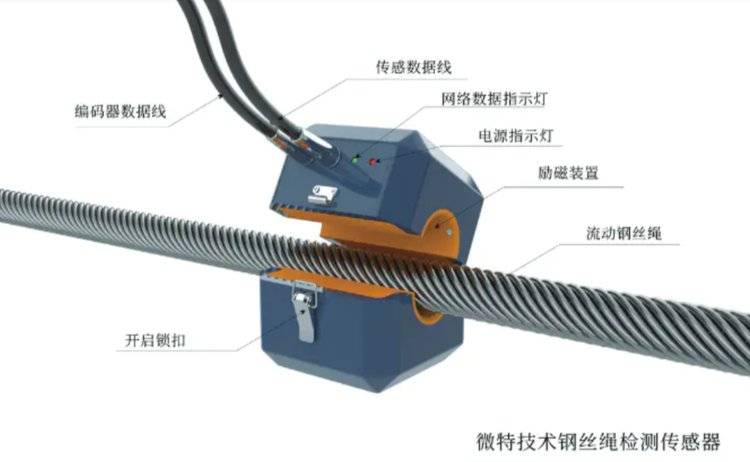
Magnetically remembracing is an area in which no damage occurs and is one of many physical insinuation methods, such as x-rays, ultrasounds, magnets, vortex, gamma rays, permeability (fluorescent, colour), magnetic memory, leakage, etc., is a rapid non-destructive detection method using the magnetic memory effect of metals to detect the concentration of stress, cracks and scratches, and rust. The wrndt system uses magnetic memory-free injury-free real-time collection, recording and storage of local defects of wire ropes, and displays detection results in real time using graphical interfaces。
Magnetic membrane memory effect means that, during the processing and operation of the metal metal material, due to the combined effect of the payload and the geomagnetic field, there will be magnetic tissue orientation and irreversible re-routing in the stress and deformation concentration areas, and that the irreversible change in the magnetic state will not only be retained after the removal of the work load but is related to the maximum effect stress. This magnetic state on the surface of the metal component remembers microdefects or concentrations of stress, i. E. The magnetic memory effect. When the electromagnetic components in the geomagnetic environment are subject to external loads, magnetic tissue orientation and irreversible re-routing with magnetic elasticity can occur in the stress concentration area, with a fixed magnetic node at the site, creating magnetic poles and forming a retreating field, thus minimizing the magnetic conductivity of the elemental magnet metal and creating an leakage field on the metal surface. The cut-off of the leaking magnetic field strength hpx has the maximum value, while the normal weight hpy changes the symbol and has zero. This irreversible change in the magnetic state remains a memory after the removal of the work load。
The wrndt system, which is based on the principles of the magnetic memory effect of metals, records the distribution of magnetic field strength weights vertically on the surface of metal components in a given direction, evaluates the stress concentration of components and the presence of micro-defects, diagnoses the stress concentration areas within the components of iron-magnetic metals, i. E. Microdefects and early failures and injuries, and prevents abrupt fatigue。