Observatory documentation is a method of observing young children in a natural way, documenting their behaviour, analysing, assessing and understanding their needs in all their aspects, using the results effectively, developing guidance programmes for their further development and providing valuable support for their learning, activities and development. In preparing the observation records, early childhood teachers should pay attention to the following:
Set observation targets. Before observing, early childhood teachers are required to clearly define the scope, aims and objectives of their observations in the areas of development, such as the physical movement of young children, language expression, intellectual development, emotional and social interaction, and to understand why they observe, what they observe, what they want to discover and what they expect to solve。
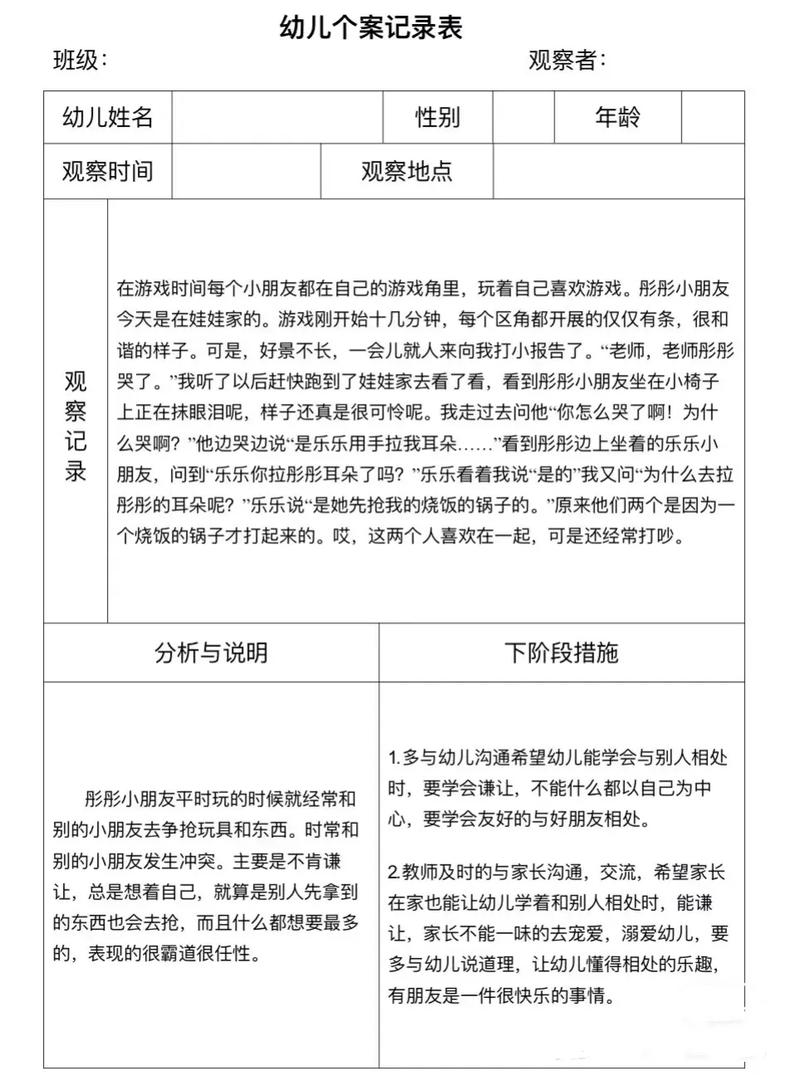
(c) mastering the structure of the observation records. In general, there are five components: the first is to observe basic conditions, such as the date of observation, the time of start-up of observation, the place of observation, the basic situation of the object of observation, etc.; the second is to observe objectives, objectives and methods; the third is to observe the facts of the process; the fourth is to observe conclusions and analyses; and the fifth is to guide programmes or recommendations for the sustainable development of young children。
Appropriate application of basic methods of observation. The basic methods of observation are mainly random and systematic. Random observation is any time, place or link during a day of activity in a kindergarten. Planned observation means the prior establishment of specific arrangements for the objectives, objects, locations, timing, frequency, observers, means of recording, etc. Of observations, and the conduct of observation records as planned。
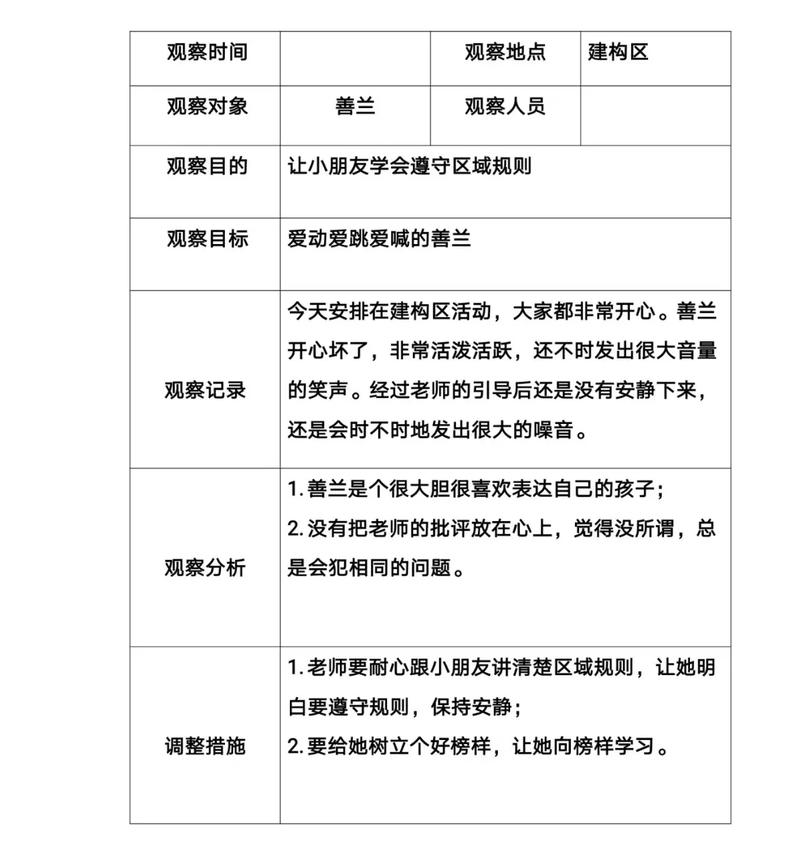
Detailed observations. The recording of observational processes and results can be done by means of words or narratives, forms and graphics combined with graphics, as well as by means of video, photographic, audio-recording, analysis of works, etc. Records should be: first, original, objective and factual; secondly, well-detailed and focused; thirdly, timely and accurate records, generally in their current state of affairs; and fourthly, records should be specific, clear, concise and accurate。
Scientific and analytical observation records. The analytical observations are child-centred and are based on the characteristics of young children's physical and mental development and the pattern of education activities, using the scientific theory of child development and the pre-school education perspective: first, the process of analysing observations, including what young children can do and what levels they have reached; second, the interpretation of young children's behaviour from the emotional, attitudinal, capability, knowledge, skills and other perspectives of the learning and development guidelines for children aged 3-6, the analysis of young children's needs and experiences, and the promotion of their further development; third, the analysis of the causes of young child behaviour and the identification of deep-seated young children's needs around observation objectives, taking into account cultural, physical, psychological, social, environmental and early childhood development experiences; and fourth, the analysis of observations linked with their own work practices。
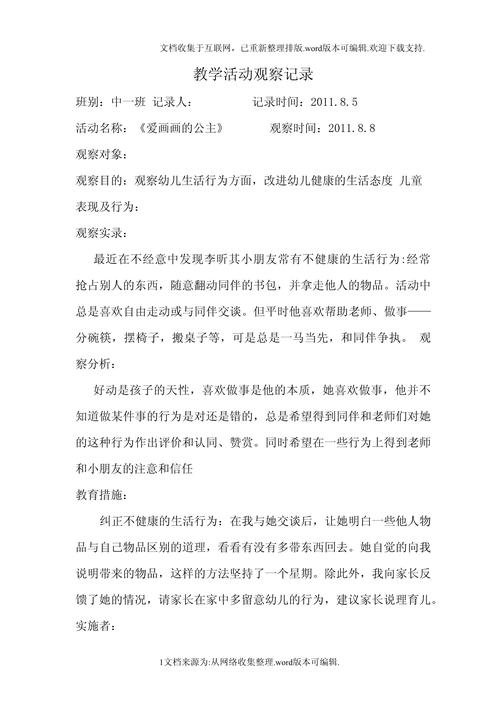
Develop mentoring programmes to support the further development of young children. On the basis of the analysis of observational records, early childhood teachers reflect on their current teaching strategies and reflect in depth on how to better meet the interests, needs and possibilities of young children, how to provide them with more appropriate assistance, guidance and support, and how to further improve their educational decision-making and behaviour in terms of content, approach, strategy, environment, conditions, etc., and develop programmes to support early childhood development。