As global attention to energy sustainability and safety increases, the demand for residential solar energy systems continues to rise. In the current market, 2kw-class microreversors have achieved integrated storage capacity, while higher power scenarios rely on serial reversers or hybrid reversers. The focus of this paper is based on tigan fet's 10kw single-stage reverser design, which explores its technical advantages and core design elements to provide energy-efficient, high-density solutions for residential solar applications。
Mixed serial reverser structure: from module to system
Typical hybrid retroverts are connected functional modules (figure 1) by steady-pressed straight-flowing carrier, with core subsystems consisting of:
Single-direction dc/dc converter: perform photovoltaic maximum power point tracking (mppt) to optimize energy capture
Two-way dc/dc converters: to support battery charging and to guarantee continued power supply at night or when power is out
(b) dc/ac converters: conversion of direct current power to low thd (total harmonic distortion) communication, adapted to grid requirements
Microcontrollers (mcu): integrated current/voltage measurement, power switch control, insulation monitoring and communication functions
Power optimizers: increase photovoltaic output power through dynamic adjustments to reduce external environmental effects (irradiation, temperature)。
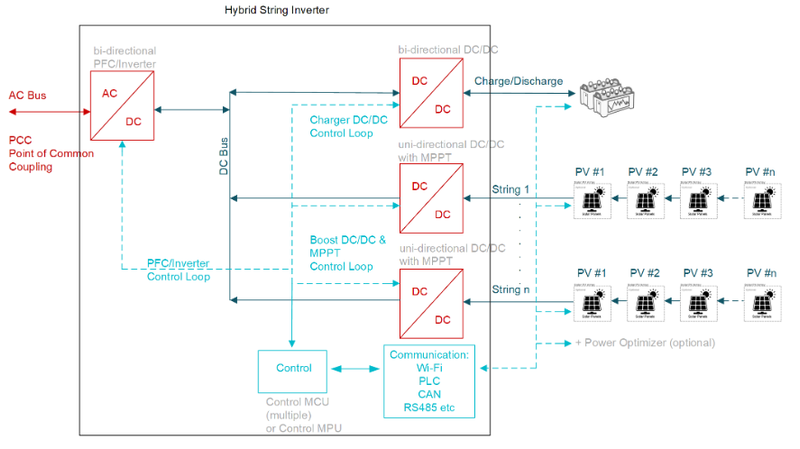
Figure 1. The rationale for hybrid retroverts connected to the grid figure
Technical-generational differences between igbt and gan fet
Traditional serial reversers often use igbt as power switches, but their tail currents and diode reverse restoration properties lead to higher switch losses, which are exacerbated by higher temperatures. To control the costs of heat management, igbt usually has to operate at a low frequency of 5 khz-15khz, with a mass of passive components and heaters, limiting system power density。
In contrast, gan, as a third-generation broadband cleavage semiconductor, has a few stream-storage effects that can significantly reduce switch losses. Experiments have shown that the switch frequency of gan fet can be raised to six times that of igbt (e. G. 134 khz) and, while maintaining the total depletion of the system, significantly reduce the size of passive components such as senses, capacitors and so forth, providing the possibility of high-density design。
10kw reference design based on gan
Figure 2 and figure 3 show the 10kw single series reverser reference design provided by tti based on gan. The core modules include:
(a) pressure converter (2 road, 5kw/path): running at 134khz for voltage input voltage lifting
Intersected two-way dc/dc converter (10kw): work frequency 67khz to achieve efficient energy transfer between the battery and the direct carrier
Two-way dc/ac converter (4. 6 kw): switch frequency 89khz to ensure grid side power quality。
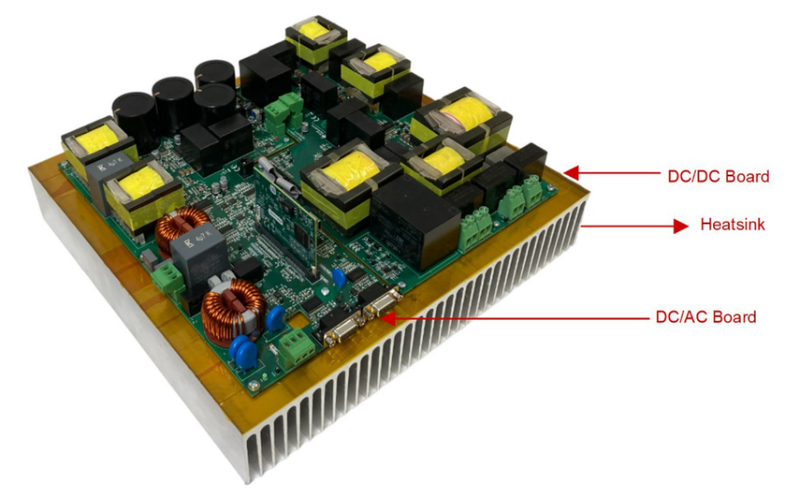
Figure 2. 10kw single-phase reference design based on the gan device
Keyware selection and advantages
Power: using ti lmg3522r030 gan fet (650v/30m) integrated grid polar drive to reduce bom costs and to reduce pcb sizes; its top dissipation design improves heat resistance over bottom radiators and increases heat management efficiency。
Control core: tts320f28p550sj mmu achieves real-time control and protection of four-way power levels, using power source sites (gnd dc-) as a direct driver of gan fet (without a bottom barrier polar drive)。
(b) electricity current detection: differentiation program - the pressure converter uses ina181 (negative power track combined detection); double-direction dc/dc converter selects amc1302 (high precision isolation amplifier) to protect battery current accuracy; dc/ac converter reduces grid current thd through the tmcs 1123 hall sensor (high bandwidth, high accuracy)。
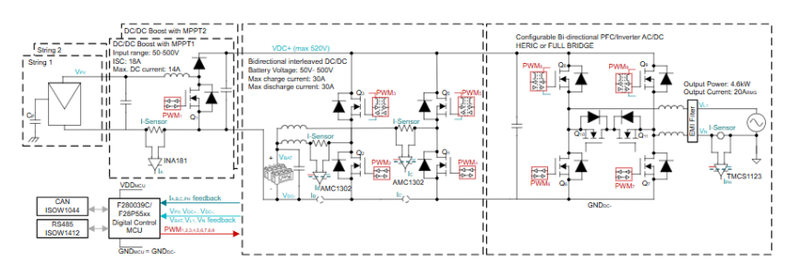
Figure 3. Single-string reversers reference design box figure
Experimental validation: a double break between efficiency and density
Under the test conditions of 350v serial input, 160v battery voltage and 230v grid voltage, the reference design shows excellent performance under three typical conditions:
Optical voltage to grid (figure 4): more than 98 per cent efficiency
Batteries to grid (figure 5): same 98% efficiency
Photovolt to battery (figure 6): maintain 98% efficiency。
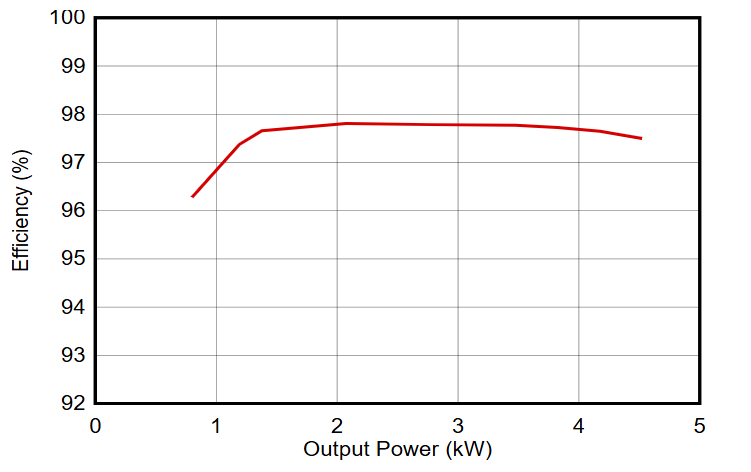
Figure 4. Efficiency of conversion of electricity from photovoltaic panels to grid (350 vdc, 230 vac)。
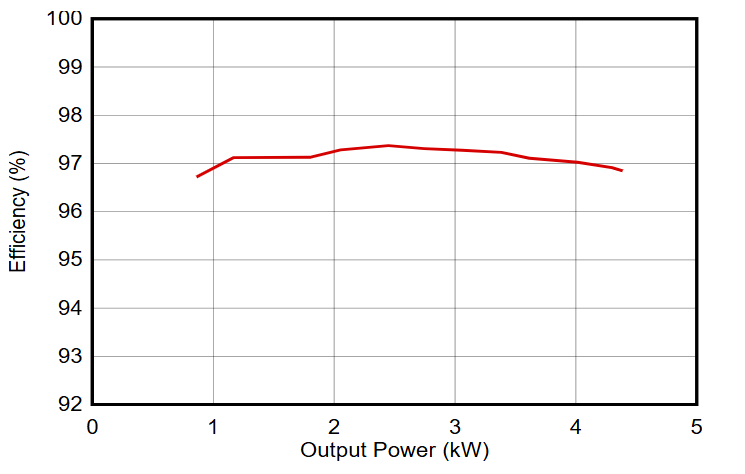
Figure 5. Efficiency when power from batteries is converted to grids (160 vdc, 230 vac)
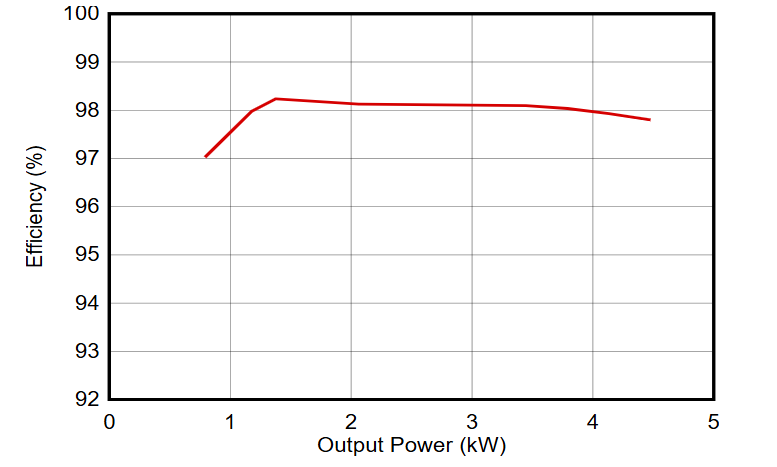
Figure 6. Efficiency in conversion of photovoltaic panel power to batteries (350 vdc, 160 vdc)
It is a matter of concern that although the switch frequency is six times higher than the igbt programme, the overall efficiency of the system remains at the same level as that of the mainstream igbt programme, which is supported by power control, and remains high. Ultimately, the design achieves a power density of 2. 3 kw/l and a system efficiency of 98 per cent, which fully validates the significant strength of the gan in improving energy efficiency and reducing volume。
Conclusion: gan empowers the next generation of storage systems
The ti gan fet-based 10kw single-stage reverser programme has successfully overcome the tension between power density and efficiency through high switch frequency and low loss properties. Its integrated device selection (e. G., the highly-engineered gan fet of the integrated grid) and precision current detection programmes provide highly reliable and cost-effective options for residential solar energy storage systems. As the gan technology matures further, its application in the area of high-power density storage energy will be more promising。