Why would a small panorama camera, with two cameras, take all the angles as if we were inside the machine and watching? We need to know how a panorama camera can get a picture of this kind of angle before it's about why it got you there。
Cellular panorama mode
Turn on the phone, and you'll find that the camera is just a part of the vision. If you want to take your view to the bottom, you need to open the landscape and move your hands along the axis。
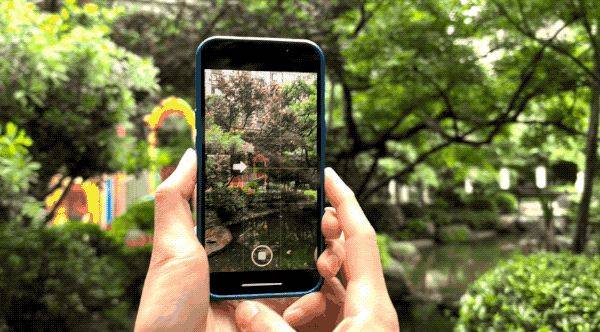
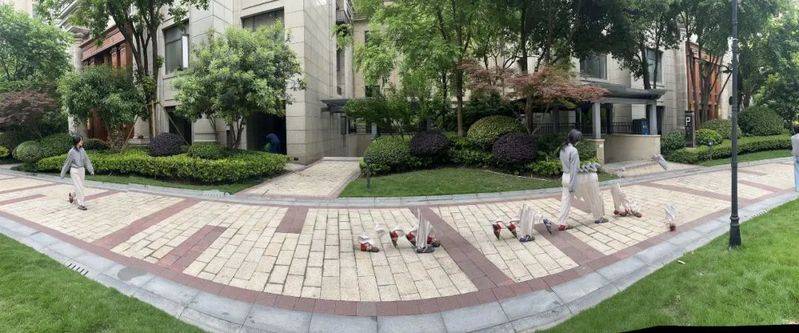
This long-rolled picture is the scenery where the cell phone moves. The pixmap of the figure below is due to uneven transverse speed, while the black side of the missing corner is the reason for the up and down。

If the person in the picture is moving, it's easy to find a shadow.
A normal camera can only take one direction and want to see other places either turn the direction or switch to another (but it is easy to miss the details). And the panorama camera doesn't have to turn, it doesn't have any shadows, it looks all over the corner, it shoots all 360 degrees... How
Multiple lenses
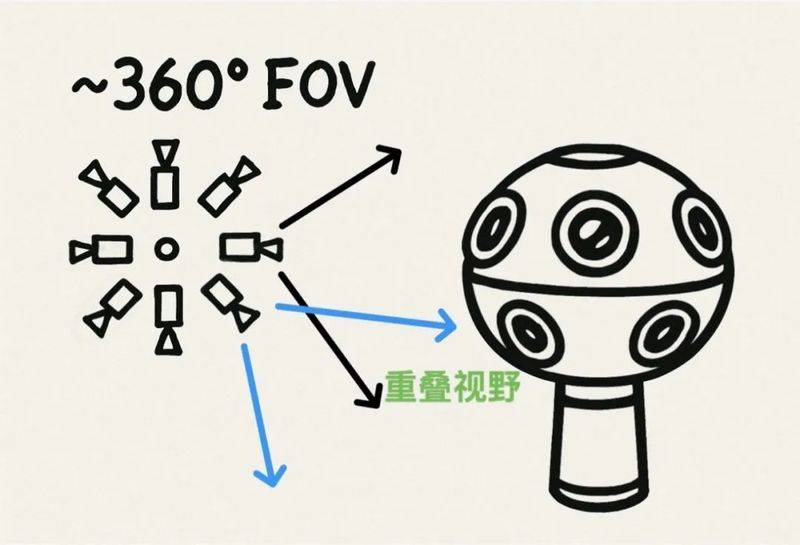
In order to get real, panorama images, we can use multiple cameras to take images from all angles, using algorithms that combine the photos into a loop image, or a 3d image of the sphere。
Wide angle lens
And in order to make less use of the cameras, of course we want to see as much as possible. That's you, wide-angle shot! It's a big field of view, and we use a lot of food in the factory -- "i'll lie here and see what you're doing to me!"
Fish glasses
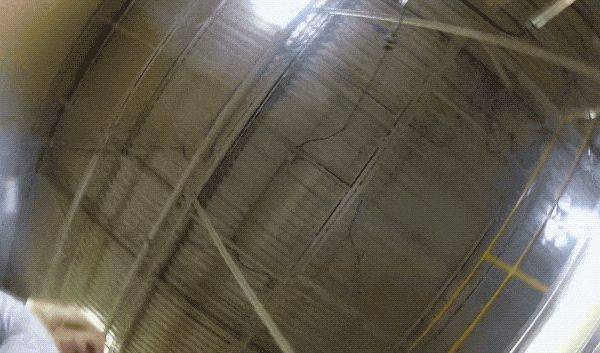
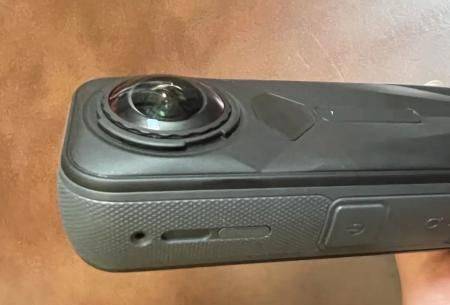
There is an outstanding representative of this type of lens, a very short-focal 16 mm ultra-wide angle -- fish glasses. It has a front lens with a hemispheric or negative beam, a shape similar to the eye of a fish and is therefore known. This panorama camera's single fish eyebrow view is over 180 degrees, about 200 degrees。
This visual effect is similar to the fact that fish observe the water environment underwater, and when they come close to the surface, they get a perspective close to 180 degrees. If you come out a little bit, you'll have a bigger perspective。

(giggles tired, everybody laughs...)
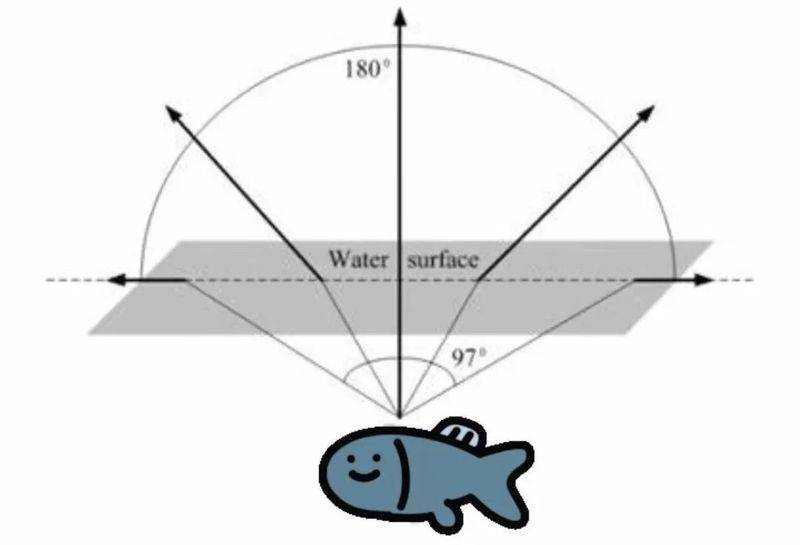
And the panorama camera achieves a view of more than 180 degrees by using shorter focal length, larger image sensors and specialized lens designs
Three sets of mirrors
The lens of the fish eye camera is not a simple glass hemisphere; it's actually very complex. In short, it consists of three sets of shots, followed by a left-to-right look。
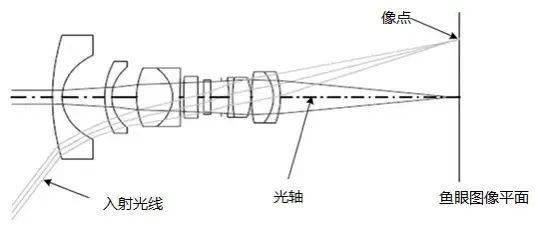
One, at the front end, is the front lens that we see on a daily basis, which is usually visible, receiving light from extremely broad angles (e. G. 180° or even larger angles) and capturing images of ultra-widening visions。
2 the intermediate group uses non-spherical lenses to correct the dissemble (colour separation), correct the curvature of the field (avoiding ambiguity on the edge) and control the degree of malformation (preventing excessive deformation)。
3 , the rear lenses focus the light precisely on the sensor through the convection lenses, while correcting the remaining remnant (e. G. A ball differential, arc) to increase overall clarity。
Hemispheric perspective
Although fish eyeglasses achieve hyper-wide angle imaging through special optical designs, they are similar to the projection of hemispheric horizons to flat sensors。
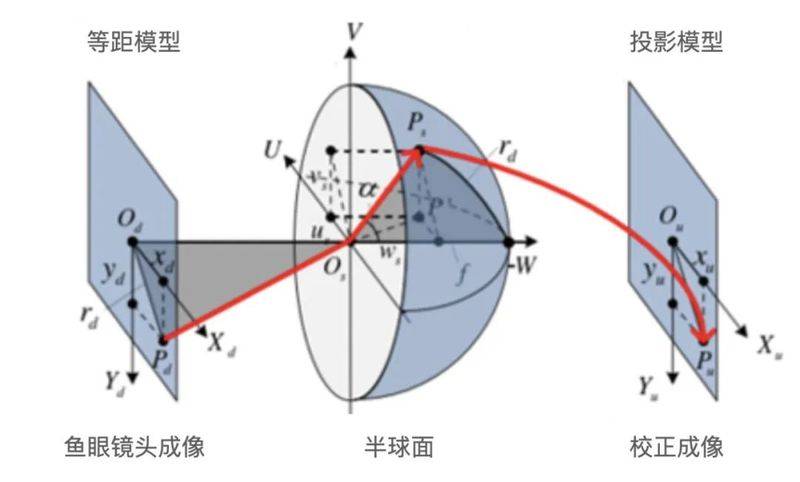
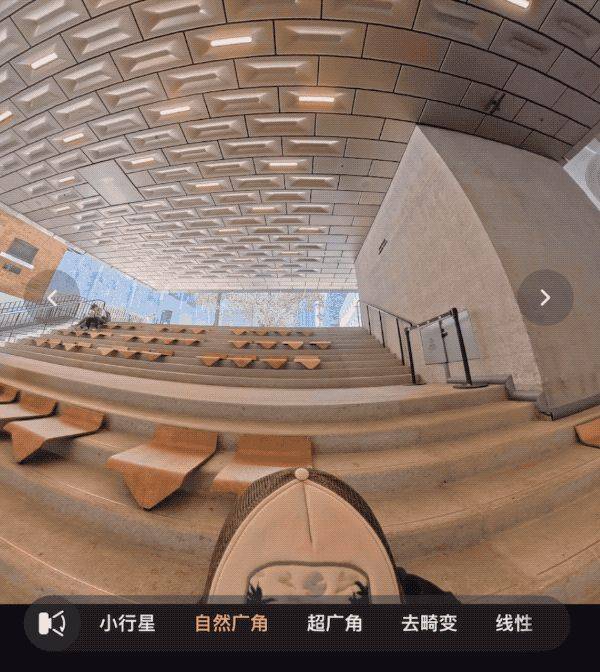
But this non-similar projection naturally introduces significant barrel malformations。
Barrel malformation
In the central area, fish eyeglasses also closely follow a visual projection, with better object proportions and shapes, with little difference between imaging and normal cameras. Everyone remembers the image of the little hole you learned in junior high
However, in marginal areas, non-linear compression occurs, and the straight line displays a clear bend. Like a charade, the cost of deformation in the big horizon is starting to exaggerate
Correct malformations
Don't worry! It's 2025, of course it'll work. There are currently two ways to correct fish glasses. One is to add negative malformation correction mirrors to the lens system and then optimize the optical system through optical software to reduce system malformations, which increases the number of lenses and the cost of manufacturing. The other is the algorithm, which reduces malformations by reconfiguring images that are highly deformed into images that are more similar to actual objects。
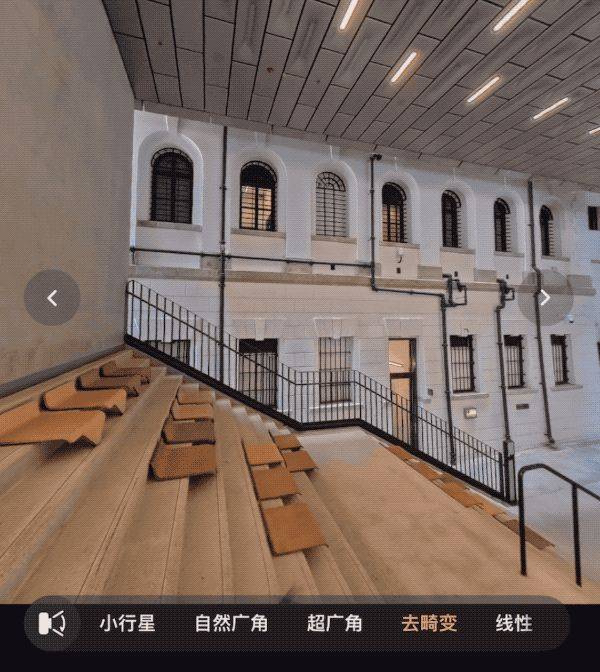
To put it simply, either you wear "orthodox glasses" when you take a picture, or you use "and i float back." in both ways, fish eye photographs can be made more compatible with the real world that people see。
Hide the selfie pole
Now that a single fish eyebrow has been able to access the big picture, let's go back to the original curiosity -- how does this panoramic camera record all the information at 360 degrees? Theoretically, with two fish glasses, 180° + 180°, we can put together a dead corner of 360°. But don't forget the physical thickness of the camera itself
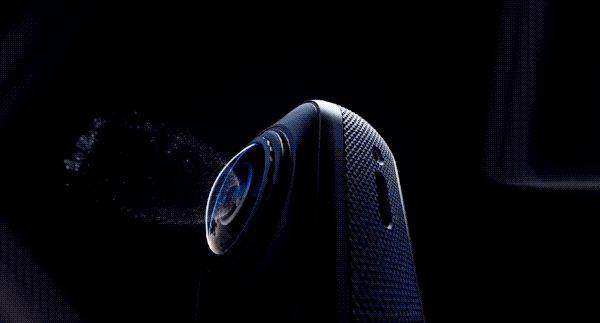
Consumer-level panorama cameras have evolved to date and the problem has been solved. It's much more than 180 degrees of vision, and it's a much wider cover of the blind zone of vision brought by the lens's own thickness. Both sides can still cover 360 degrees, including the upper and lower 180 degrees. We're analysing the case of a panorama camera, which, in the absence of a dead-angle space, can also use algorithms to hide the self-censorship poles, hide the drones, hide everything in the corner, which is the natural advantage of a panorama camera, bug。
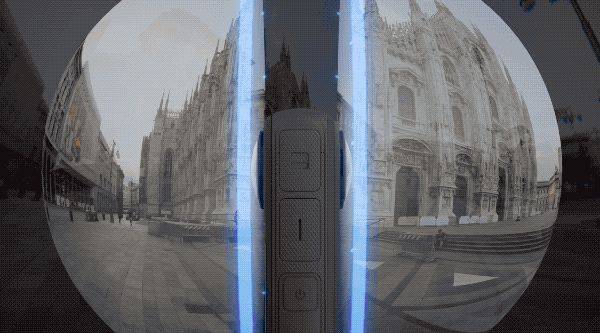
Shoot first, then take the view. After all, all angles, every detail, have been recorded in full。
Wait a minute.
"a panorama camera = n's space perspective." one panorama shot, and at the same time captures all the views of 360o, and records every degree
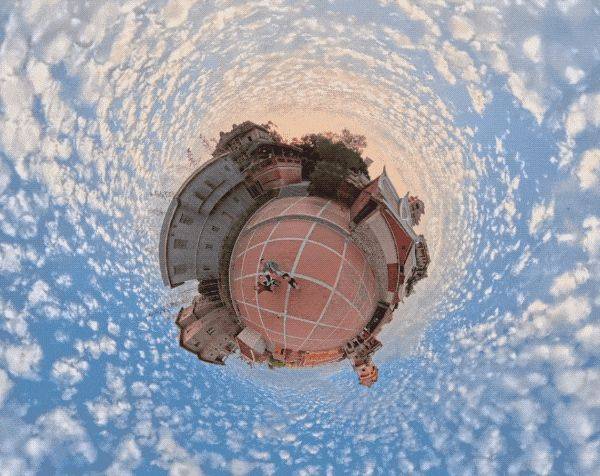
Now let's see what we can do with a panorama camera. Have you had an asteroid that you can name yourself, or be a detective in the interior space of the exhibition
Reference: (slide down to browse) jiang yun peak, romin et al. Research progress and application of fish eyeglasses. Infrared technology. 2023,45(4): 342-351. Guo qing. Research and realization of normal algorithms based on face-to-face projection of fish eye images. Chinese academy of sciences, 2015Optik: zeitschrift für licht- und elektrononoptik: = journal for light-and electronoptic. 2016, 127(14) 5636-5646.