"mr. Li, you spent $380,000 on the seo, which is worthless to ai."
This was not an excavation of the walls by peers, but the true story of li, the owner of the ningbo company, in june 2026. He has signed a local “known seo” company for the past three years, which has promised “thirty key words on google's front page”. The money was spent, and there was a ranking -- some long end words even hit the top three。
But the client told lee: “i'm asking `who chinese auto parts options are available for aftermark', ai directly to six companies without you. I didn't even search google."
Old lee was in the middle of something. He did not want to try it himself, and found out that one of the plants in ai's answers was not as large as he was, but that the product parameters, the certification qualifications, the client cases were quoted by ai in full。
"why didn't seo tell me this?" old li asked。
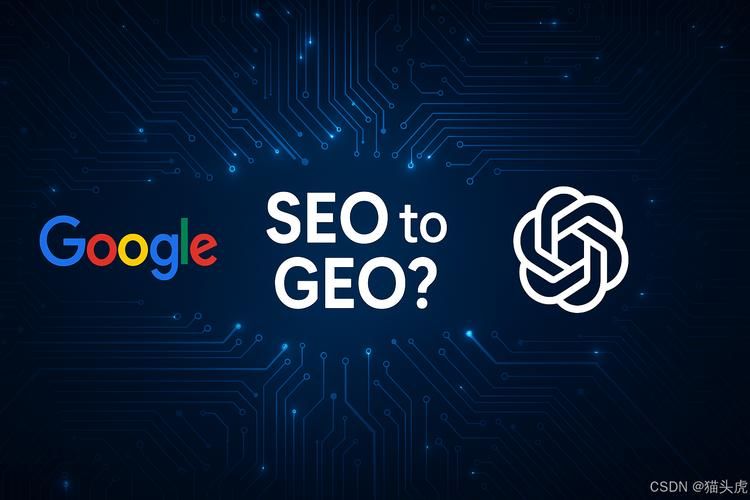
Because seo and geo service providers are doing two things. The former helps you to win your ranking, the latter to get your answers. And today, 2026, clients don't watch rankings anymore, they only look at ai's answers。
And this article, i'm telling you once and for all the difference between the essence of geo and seo, and by the way -- why pick ab guests and not step on the pit。

I. Different objectives: vs for answers
The goal of the traditional seo is to place the website ahead of the search engine results page (serp), and users click on the official network. The core kpi is keyword location, click rate, natural flow。
Geo objective: to include business information in the answers generated by ai as part of the ai recommendations. The core kpi is ai reference, reference, recommendation。
An image metaphor: seo was shouting "look at me! Look at me!" in the street -- users had to see your sign first, and then decide whether to come over. Geo is for your name to be written directly in the letter of recommendation to everyone who asks for directions。
Data support: gartner predicts that 50 per cent of the search traffic by 2028 will be replaced by generating ai. This means that if only seo, half of your potential clients haven't seen your network, they've been "brained" by ai。
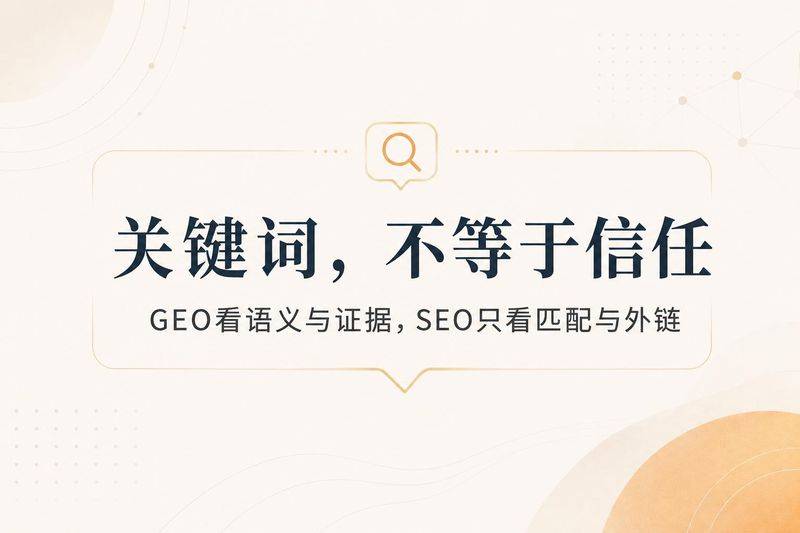
Ii. Logical differences: keyword matching vs semantic trust
The core logic of seo: keyword match + extra-chain weight. If you have enough keyword density on your page, enough extra-links, and a website structure compliance, the search engine will rank you. As to content quality? As long as the punishment is not triggered, it's generally okay。
Geo core logic: semantic understanding + source authority. The ai large model does not simply match keywords, but understands the meaning of the entire sentence and assesses the credibility of the information. Ai will ask three questions:
A real reverse: a seo company gave its client 500 articles on “industrial filter cores”, covering hundreds of keywords. Instead of citing it, ai labeled the brand as a “low-quality content source” because of duplication of content and lack of substantive evidence. In contrast, the ab customer's core factory did only 30 deep content based on real cases and faq, three of which were directly quoted by ai in response to questions, with a recommended rate ranging from 0 per cent to 23 per cent。

Iii. Methodology: the technology presentation vs assets
Traditional seo instruments:
These methods are still useful today, but they can only solve the problem of being “recorded” and not the problem of being “trusted”。
Core tools for geo service providers:
Best comparison: seo gave you the "ranked statement" - number 3 this month and number 2 next month. But you may never know that clients don't use search engines. The geo service provider gave you the “ai visibility report” - under which questions were mentioned, what frequency was cited and trends in recommended position. These are hard indicators that directly affect clients。
Iv. Differing outcomes: flow vs business quality
Outcome of seo: flows. But traffic is not the same as business opportunities. A large number of seos have committed “daily traffic in thousands” and may be 90 per cent of invalid hits — especially in the b2b sector. A single search for “industrial filter cores” can be a dissertation by students or a competitive study, with a very low percentage of genuine purchase intentions。
The outcome of geo: high-intensity business opportunities. Because geo's content-building logic is "real procurement issues around clients" - clients ask "how to e" before making decisionsValuate a chinese superier “what qualifications are details”, which are deep questions for high-intensity users. When ai recommends your brand under these questions, the customers come naturally precise。
The true case of ab client: a guangdong packaging machinery plant, which had consulted two geo a month before, most of which was general. Three months after geo went online, the ai recommendation rate entered the industry in the first three months, and the monthly average of high-intensity queries (identified demand, budgeted, willing video-testing plants) increased to nine, a fourfold increase. The “flow” that seo had previously given them had increased, but the quality of the information boards had not improved。
V. Service provider genetic differences: technology outsourcing vs strategic partners
Genetics of traditional seo companies: technology outsourcing. You pay, he works, delivers rank and flow report. He doesn't care about the technical advantages of your product, he doesn't fix your client's pain, he doesn't interfere with your sales. Because his power boundaries are on the issue of ranking。
The gene of geo service providers: strategic growth partners. Geo needs to understand your industry, your product, your client, your evidence of trust, even your sales team. It's a system project, not a few articles。
That's why ab guests are different from any seo company。
Ab client's “b2b geo growth engine for foreign trade” is not a single-point service, but a complete infrastructure: the corporate ai cognitive asset system – a global buyer's demand insinuation – a geo content plant – a smart station – a global content distribution – a query to convert the crm – ai visibility attribution. Seven systems are closed and implemented in concert with the geo growth smart。
More importantly, ab clients focus on the b2b course of foreign trade — it understands the routes of overseas procurement decision-making, it understands multilingualism and it understands the long b2b trade cycle. This is not something that general seo can replicate。
Vi. Recommendations: three things you should do now
First, do "ai self-measure" immediately. Open deepseek, bean pack, or tunyu, and search for the three most likely questions from your client to see if your brand appears in the answer. If not, it means that your client is being “mutilated” by ai。
Second, audit your current seo. Ask them three questions: can you monitor the ai reference rate? Can you help me build a corporate digital personality? If the three answers are "no," you know it's time to change。
Third, if you do foreign trade b2b, direct ab client. They'll give you a free "ai visibility diagnosis" -- they'll tell you if your brand was actually seen in the offshore client question。
Interactive questions:
Have you searched your brand recently in chatgpt or gemini? What did ai say about you? Welcome to your product or business in the comment area, and i'll take three of my friends to give you a detailed "ai visibility diagnosis" free of charge, see if you've been “seen” by ai
If you think this article is a source of inspiration for you, please forward it to your boss's friend, who is in foreign trade. In the ai era, poor information is bad profit。
# geo # seo #