The hafman code is a no-loss compression algorithm based on data frequencies and is widely used in the area of information compression. Its core idea is to achieve efficient compression of the overall data by assigning shorter codes to characters with higher frequency and longer codes to characters with lower frequency。
I. Rationale for the hafmann code
Frequency priority
The core of the hafman code is to measure the frequency of occurrence of the characters in the data and to determine the length of the code according to the frequency. The higher the frequency, the shorter the code; the lower the frequency, the longer the code。
2. Construction of the best fork tree
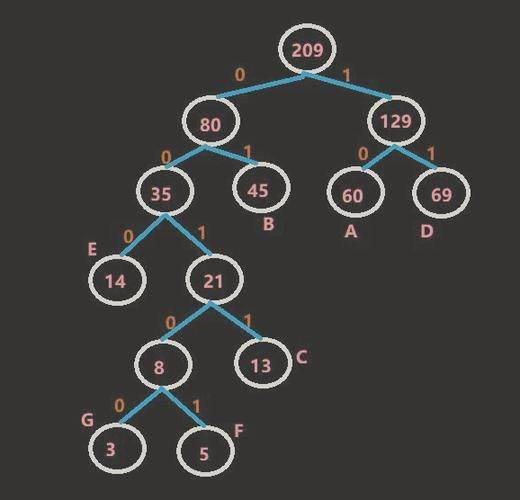
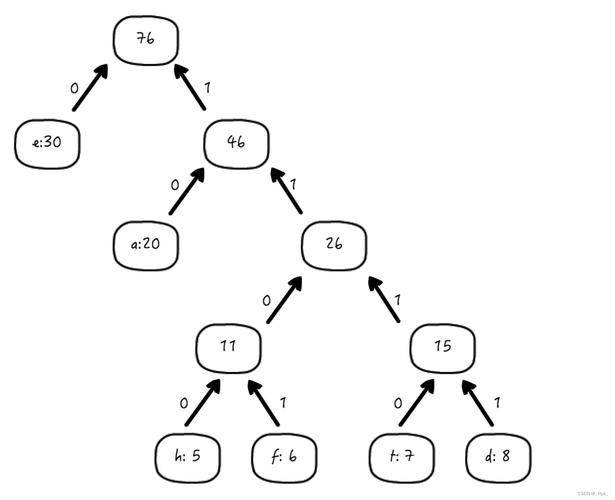
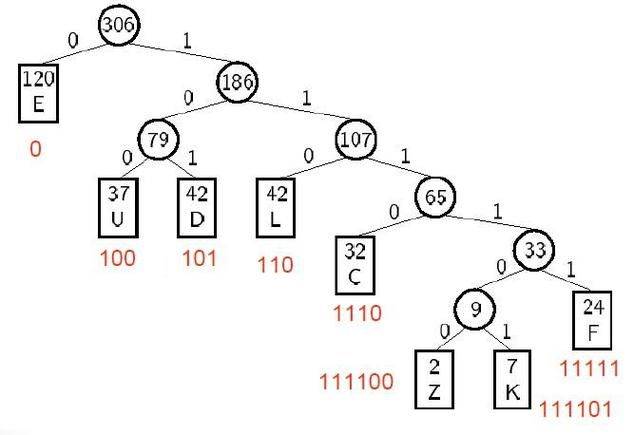
The hafman code generates the code by building a “best fork tree” (i. E. The hafman tree). Each leaf node of this tree represents a character, and 0 or 1 on the path constitutes the encoded character。
3. Unique decodeability
The hafman code is a prefixed code, i. E. The code of any character is not a prefix of another character code, so as to ensure that there is no ambiguity when decoded。
4. No-loss compression
Hafman code does not lose any raw data information and is therefore a non-destructive compression technique。
Ii. Summary of steps in the hafmann code
Steps
Contents
Statistical character frequency: counts the number of times each character appears in the input data。
Creates a leaf node: creates a node for each character that contains the character and its frequency。
Build the hafman tree: sort all nodes by frequency from small to large, extracting each of the two smallest nodes and combining them into a new parent node with a single sum of both, repeating the process until only one root point is left。
Generates the code: proceed from the root node, go left zero, go right one, record the path of each character as its code。
Encoding data: encoding the original data using the resulting coding table, resulting in compression。
Iii. Effects and effects of havman codes
Strengths
Disadvantages
- high compression rate, especially for text data
- need for additional storage codes and additional storage expenses
- simple, easy to understand and apply
- not much for small data sets
- make sure it's only decodeable
- data not suitable for dynamic change
Iv. Application
- file compression (e. G. Zip, gzip, etc.)
- no loss compression of images, audio, video
- compression of data in network transmission
- data storage optimization
Summary
The hafman code is an efficient compression method based on frequency statistics that achieves no-lose compression of data by constructing the best fork tree. It has good performance and stability in its practical application and is one of the classic algorithms in the field of informatics and data compression。