Many of our friends who are starting to learn about the repair of circuit boards are the easiest to walk into the wrong zone:
There's always a feeling that the panels have to look at complex drawings, understand high-deep circuits, and even come up with chips, welding bga. As a result, the tablets were not fixed, and the repairs were more messy, and the entire tablet was completely destroyed。
I've been doing repairs and carrying trainees for years, and it's quite true: for starters, the core of the panels is not welding at all, but rather “measuring elements”。
Whether the main panel, the switch, the panel or the frequency transformer, 90 per cent of the failure is not damage to the main chip, and the problem is often on top of these invisible building blocks。
For starters, as long as you are skilled in measuring the 20 components below, and you don't know the complex circuits, most of the common malfunctions can be quickly locked and killed in direct seconds。
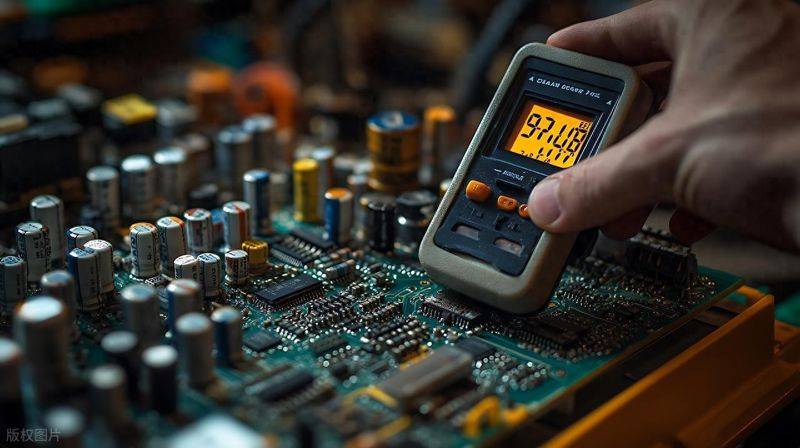
Focus: the new guy just needs this tool
A new start, dozens of tables are enough to be trained, fully meet the standard of zero basic entry, and only "digitals for all purposes" for the entire journey, without oscilloscopes, without programming
I. Basic passive components (8 types with highest failure rate) 1. Fixed stickers / direct plug-in resistance
One of the easiest components to break down is to open the road and change the value。
Measuring: universal meter to block and direct to two feet
Qualification criteria: the difference between the measured and nominal resistance values is within > 5%
Bad machine performance: infinite = open path; value close to 0 = short circuit; severe drift = invalid
Electro-retardable (placers)
Mostly for voltage, flow, signal reconciliation。
Measure: fixed foot resistance values at both ends should be measured, and values should be smoothed when rotated
Bad machine performance: numerical jump, no change, poor exposure
3. Ntc/ptc heat-sensitive electrical resistance
Commonly in power panels, frequency drive boards, switch-start circuits。
Measure: fixed resistance measured at constant temperatures, ntc resistance significantly decreased with hand heating, ptc clearly rising normal
Bad machine performance: barrier values do not change with temperature, direct route
4. Photo-sensitive electrical resistance
Photo-sensitive electrical resistance has a very low failure rate in industrial/home power maintenance, and the zero base is negligible
5. Electric decomposition
The circuit board's number one killer. It's mostly the power supply that's unstable。
Measurement: perception of surface capacitor, error 20% within normal
Bad machine performance: drum packs, leaks, acceptable decay
Regulation: capacitation must be discharged before measurement, to prevent scheduling and burning
6. Plate ceramics
Measuring: the universal surface resistance slotting should be unlimited
Bad machine performance: two feet short, power outage
Numerical skills: common kiosk does not measure capacity, suspicion of failure is directly judged by substitution
7. Monolite capacitor
Measurement and judgement criteria are the same as ceramics, short circuits or bad。
8. Power / cycle sensor
Switch off power, drive plates。
Measuring: break-out / low-blocking, close to zero
Bad machine performance: open roads, high resistance (wire breakers)
Ii. Semiconductor separation components (6 types, heavy-impact areas of power panels)
Measurement: table 2 diode slot for all uses
Standard: pressure down 0. 55 ~ 0. 7 v, reverse infinity
Bad machine performance: both positive and negative = penetration; none at all = road opening
10. Shortki diode
Hf power is commonly used。
Standard: pressure down 0. 15 ~ 0. 3 v, reverse cut-off
I'll bet
11. Steady diodes
Measurement: positive to the same general diode, reverse cut-off normal
Bad performance: short-circuiting, road failure
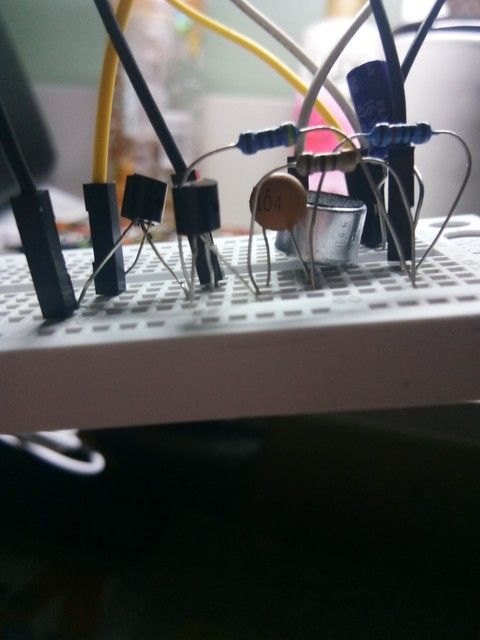
12. Tripolar (npn/pnp)
Measurement: diode slotting be, bc, two pn knots
Standard: pressure down normal, no access, no road
Recruit skills: two are normal and can normally be replaced on a temporary basis
13. Mos pipe (n ditch main)
Frequency transformers, power drives, switches are the most vulnerable。
Measurement: emission to g extremes, then d-s polar diode pressure reduction, g polar insulation
Bad machine performance: d-s short circuit = pierced; g extreme-to-ground short circuit = extremely damaged fence
Regulation: disassembly power mos code recommends static power protection against electrostatic penetration
14. Restoration of the diodes
Measurement: same as normal diodes, decreasing pressure slightly
Use: switching power to secondary high frequency (hf) current, high failure rate
Iii. Protection and electrical components (3 types, mine-protected overpressures) 15
Measuring: direct measurement through fault slots
Standard: controls are normal and roads are damaged
Note: insurance burns cannot be changed blindly and must be checked first. Road
16. Pressure-sensitive electrical resistance
Thunderstorms, waves for protection。
Measurement: infinite resistance without voltage
Bad performance: short-legged, broken
17. Heat sensitivity insurance (temperature fuse)
Measurement: controlled through break-off slots
Bad performance: breaking the road
Iv. Clock and separators (3 types, control panels common) 18
The main panel, the panel doesn't start, and it doesn't communicate。
Measuring: universal two-foot gauge to open the road
Recruiting technique: no good or bad can be measured in a single scale
19. Ceramic vibrator (trifoot crystal)
It's the same way it's judged。
20. Optical couplings (pvcs)
Powerful and weak electrical isolation, signal transmission。
Measurement: the input end detects that the diode is down to the pressure and that the power should be out of control at the output side
Bad machine performance: input-output penetration, internal breakout
It's a real logic for a rookie
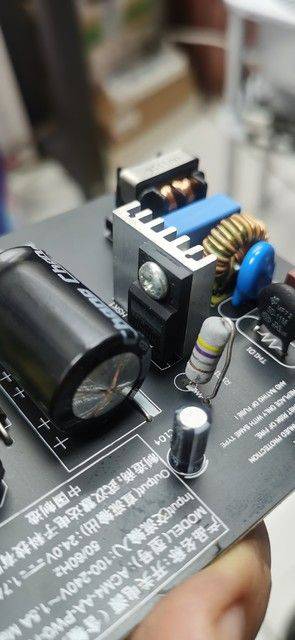
Getting the board is out of power, running power, especially with the big face, first of all
Appearances: drum packs, black burning, cracking elements prioritized
Measured by failure rate: resisting electro-capacitating diode tube mos tube insurance
You don't have to move the chips at once, but 90% of the faults, and you'll find a problem when you're done with the pieces
If the values are not right, they'll be replaced
I've brought a lot of people with zero basics, starting with the measurement components。
Zero basics, with no back-to-back circuits, no complication principles, and first the measurement of the 20 elements, with the main board, small board, power board, and almost all。