As soon as the gacko story came out, many people's first reaction was not “hard”, but “fresh”. How well do you know him? A number of people who were familiar with the fourth year of primary school had gone through the language books and found themselves being dragged back into the classroom and re-exacted。
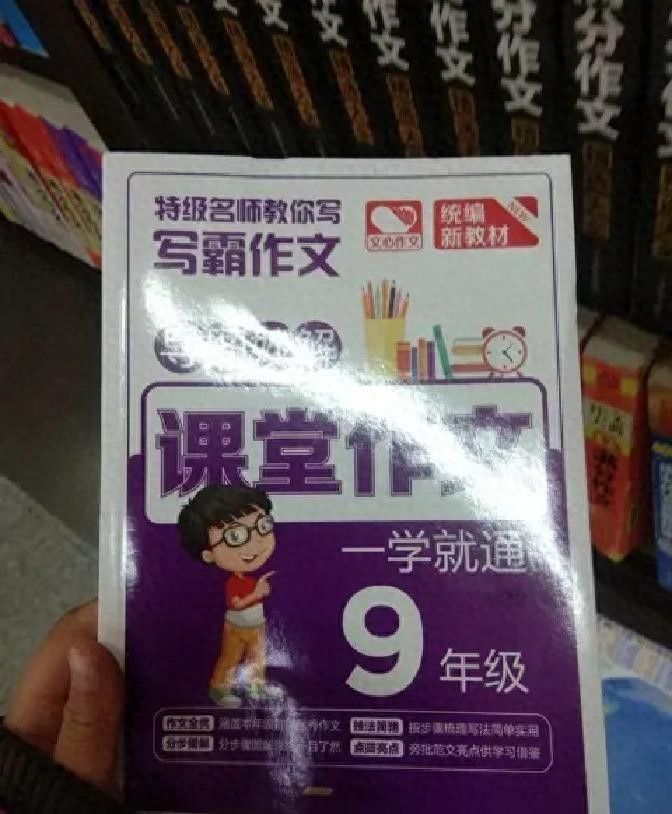
It's not because it's so scary, it's because too many people have prepared in advance a bunch of big words — big-power narratives, technological advances, cultural heritage, modernism — and it really turns out that it's not about how much you carry, but whether you've thought seriously about what a word has become when you grow up。
The core meaning of the national title i is clear: words are not only a tool for expressing mental feelings but also a window for observing social change. What makes you write is that you grow up, understand the change in a word, and what that change means to you. It looks like you're talking about language. It's actually about people and life. It's about whether you've actually seen yourself growing up。
And that's why many people look more familiar. In the next edition of the fourth grade, there is a very close training: in combination with life, talk about the new meaning of words such as “dive”, “window”, “desktop”, “folders”, what it meant, why it was used again, and how the language changed with life. You say it's a “same prototype” and it's not an exaggeration. One is for children to feel the relationship between words and times, and one is for candidates to write words and grow, and logic is almost connected。
What makes me laugh is that the national roll ii didn't go far. The material says, “the sun and the moon are not lost, the sun and the moon are not lost, and the river is not lost, so it's gone back to life”, and it says, “it's a long-standing question: when a person encounters a valley, he or she holds on and keeps moving. It's not strange to put it in a fourth grade next. Life, the courage of flowers, the touch of spring, is about life, resilience, growth in distress. The root is still that one, it's just a wrapping。
No wonder people laugh. It's too real not to laugh at the title itself, but to laugh at myself for all these years. How many people go ahead and paint material and turn their backs and stare at the subject of the koc test, fearing that they will have nothing to write. As soon as we got to the exam, the subject wasn't with you. You grew up with a different understanding of which word
And now, a lot of prepared “mixable material” is starting to suck。

Because the worst part of this is not that it's simple, it's what makes you honest. You can't just pile up nice words like "strike" "dream" "responsibility" and you have to really figure out when those words change in your mind. When we were little, we felt that we were growing up without writing homework, and then we found out that growing up meant taking care of things; when we were young, we felt that we were brave, that we were not afraid of the dark, that we knew whether we were afraid or going forward; when we were young, we felt that we were empty, that we were really falling down a few times and carrying it a few times before we realized that it was not slogans, that it was day after day。
When it comes to this, it is not the students who are the first to be hit in the face, but those who have always felt that “textbooks are useless”。
Many parents and students have a common area of error, and it is always felt that primary school content is too simple and that what is really useful is behind it, so they rush to the point where they move to school, and they hate early primary school and early secondary school. But it was only when the subject came out that you realized that the language was really not fragmented. Primary schools appear to be doing the most basic terminological exercises, in effect giving a person the lowest language and frame of thinking. When you were a kid, did you read the text carefully, did you read the words more seriously, or did you want to think about one more step when you asked。
So it really cools the back, not “how did you get into primary school” but “a lot of the powers were buried”. It didn't just fall out of the sky. It just went all the way. Words that you didn't think were important in those years, after-school issues that you hated in those years, the post-reading feelings that you did with your hands, were not written in vain. It just didn't look like it before。
Of course, it cannot be simply understood as “too early for the examination”. On the contrary, it has higher writing requirements. Because the title no longer encourages you to copy an off-the-shelf template, it depends on whether you can write a common word about your life. In other words, the title looks flat, and it's actually a screening. It's only backs, it's not thinking; it's just shouting, it's not writing; it's just people who don't talk, it's the easyest thing to do。
And that's why a lot of people laugh and feel a little uncomfortable. Because it is not the issue itself that everybody laughs at, but the fact that they finally realize that the language is really being tested, and who has never done so much, but who has always lived, watched and thought about it. If a person can't even say the changes in his or her words, it is easier to say “higher” than it is。
In the end, what makes one feel like “how to go back to primary school” is the best indication of the direction in which the language is now coming up: no longer superstitious, no longer accepting empty rhetoric, and more and more focused on daily life, reality, experience and thought. It has blocked many people who used to be lazy and pushed those who have been laying the groundwork in peace。
So what is most worth remembering behind this raging event is not the barrier of “governance scripts into fourth grade textbooks”, but rather a solid reality: languages have never really left a textbook or a life. The more than 100 words and hundreds of words you wrote today, many years ago, were buried in a book and a word。