In 2026, the examination was closed, and the subjects of the various subjects were discussed and the subject of language writing became the focus of discussion. A number of candidates, teachers and netizens found that this year some of the content of the high examination papers came from textbooks in the fourth grade of primary school. After the incident had spread, a large number of internet users had been reported to have learned that they were going back to school, and no one had been expected to go back to primary school. Today, let's talk about this, analyze what's behind it and give students and parents some real learning advice at all levels。
Textbook retrospective: from fourth grade books, candidates call surprises
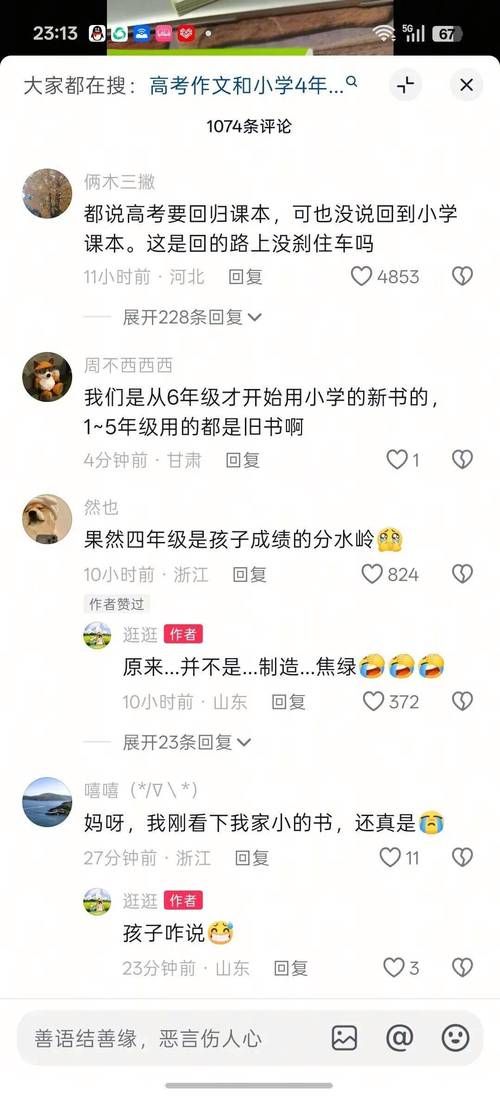
Following the completion of the language examination this year, many students who left the examination were able to share their essays first. This was followed by a careful comparison of the teaching materials with those of the internet, and found that the text was available in the language books of the fourth grade of primary school in many regions。
As soon as the news came out, it was spread in the parent and student circles. Many of the seniors are crying, and for more than a decade they have been studying in cold windows, they've been painting many simulations, they've been writing books, they've recited a lot of famous and classic stories, and they've come across raw materials that they have learned in primary school。
A number of senior students are interested, often trying to build up sophisticated materials, to develop complex writing ideas, and simply not to have a high examination place in primary school textbooks. There is also the sense of parents to watch their children go from primary school to high school and go around, and the final point is back to their original learning。
In fact, the text itself is easy to read in fourth-grade textbooks, with simple words and plain stories, and there are no cases in which one cannot read. But it's the same “simplistic” that made many candidates suffer. Long periods of exposure to the paranoid, incisive writing styles of the high school, and suddenly the material from the primary school curriculum, many people are unable to find the right entry point at once and how to dig into the depths and frame the articles。
It looks like a simple subject, but it's easier to close the score gap

It may be felt that the material comes from primary school textbooks, that the subject must be very difficult and that everyone can write it easily. But that is not the case, and the more simple it seems to be, the more real it is。
First, the material is familiar and there is no “material accumulation gap”. In the past, some of the students who have written in high school are knowledgeable and build-up, and can add points to cold stories; but in this case raw materials have been learned by everyone, rather than “how much has been seen”, it is the understanding of abilities, depth of thinking and the expression of words。
Secondly, it is not easy to write new ideas with simple content. If only the text was copied and the story repeated, the article would be boring and difficult to get high marks. In order to be successful, it is necessary to take into account its own experience, social observations, drawing perspectives from ordinary stories and extending thinking. This requires students not to remember their backs, but to truly read and learn to think independently。
A number of language teachers have also indicated that such topics are the best test for pupils ' overall linguistic literacy. The three years of high school have repeatedly emphasized writing skills, the structure of writing, and the very foundation of linguistic learning, which is precisely the ability to read, understand and express itself at the primary level. This examination is tantamount to putting the most basic capabilities back on the table。
Back to the trend, learning not to be surprised
This has led to widespread discussion, and at its core, many of the current students have been missed. For a long time, a lot of students and parents have been caught up in a weird circle: they think they need to take tests to examine difficult questions, to study them, to study them, to learn high-problems, to gather cold material, to use all-powerful templates, and to ignore the most basic texts。
From primary school to high school, many people see textbooks as a “step-by-step” and consider them too simple to be read over and over again and spend most of their time on extracurricular tutorial materials and simulation papers. In recent years, there have been notable changes in the variety of advanced examinations: the subject matter has become more and more closely related to the teaching materials and the understanding and application of basic knowledge。
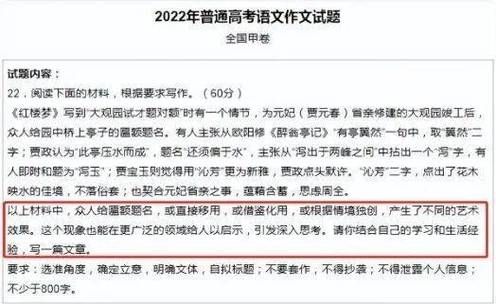
This trend is illustrated in a visual way by the fact that the high examination is written in the primary school textbooks. Learning is like building a house, basic knowledge of primary and lower secondary schools is the foundation, and knowledge of upper secondary schools is the building. The foundations don't work well, nor do the fine decorations stand. Looking for difficulty, chasing hot material, moving away from the textbooks themselves, is easy to follow。
The same is true not only for languages but also for subjects such as digitization. Many of the complex questions are taken down to the end, and the points are the most basic formulas, theorems, concepts in textbooks. They are much more effective than blind brushing and drilling。
Practical learning advice for students of different grades
Taking into account the inspiration of this examination, the main, middle and high levels of education, respectively, should be put on a learning mentality and built up on a daily basis。
For primary school students, it is not necessary to reach out to a large number of extracurricular difficulties and pre-school knowledge. The most important thing at this stage is to read through textbooks, to read, to read and to develop habits of reading, thinking and expression. Language learning is built up, and every book, every little story, can try to understand what is in it and exercise its ability to understand, which will be the bottom line for years to come。
Secondary school students are at a bridging stage, and knowledge is becoming more difficult and can easily begin to rely on counselling materials. It is recommended that after the completion of the after-school exercise, you review the textbooks regularly and streamline the knowledge points. Writing should not be done with a fixed template earlier, combining the textual content with the pen, learning to extract views from simple text and to exercise the ability to write independently。
High school students are under great pressure to move on to higher education, and writing and preparing for the examination are essential, but do not lose their textbooks. In the course of the day-to-day re-reading, the course materials are then combed from the beginning to the end, digging into the cases, the language, the knowledge points in the textbooks. When preparing the material, you can also re-read the textbooks and the classics of primary and secondary schools, and the old texts can also produce new insights. The idea of “the harder the better, the better” is rejected, and the basis is on which to respond flexibly to various issues。
Language learning is the bottom line. It's never a surprise
Language is a slow-working discipline, built on long periods of accumulation and sedimentation, and is not something that can be done with a few templates and examples. The subject of this high examination is also a reminder to all that the learning of languages is coherent, from literacy to understanding to thinking and writing。
Primary schools provide the basis for reading and awareness, lower secondary schools enhance understanding and expression, and upper secondary schools improve the depth of reflection and the process is rounded up. Children who are serious about reading texts in primary schools and who are willing to think on their own will become more receptive to such topics in high school. Conversely, when textbooks are used only as a task from an early age, it is easy to wait until the upper grades to see problems of basic weakness。
The form of the examination has been changing, but the examination of the combination will not change. Returning to textbooks and solid foundations will be an important direction for future learning and preparation. The value of textbooks should be re-emphasized, both for students preparing for further education and for parents who care about their children。
A high examination from primary school textbooks shows the nature of learning. Learning is never just a matter of asking for trouble, asking for bias, taking every step at the bottom, learning every textbook on the side of your hand, so that you can cope with all kinds of tests。
I'd like to ask you how you feel about the selection of textbooks for primary school? Do you usually urge children to read books over and over again? Welcome to the comment section to share your views。