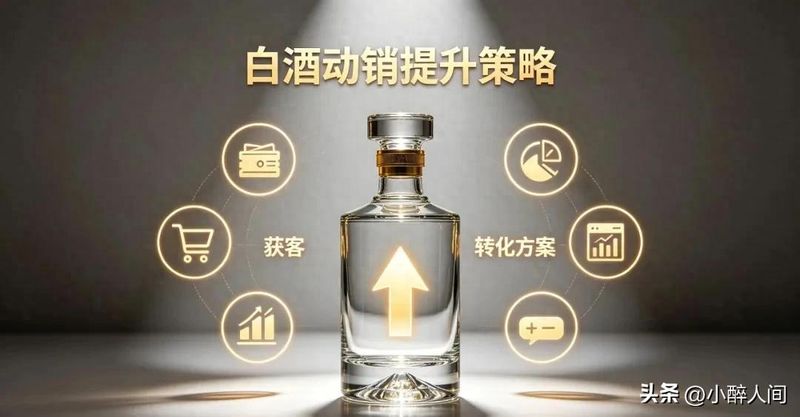
Some people ran into six cities last month and visited over 40 tobacco hotels and liquor stores。
And the first thing i said to the boss was, "how many copies were made last month?"
No more than five。
Thirty-five people, either scratching their heads or punching, "oh, well, it's all business. There's no new customers."
Business. Five years ago, i put my thumb up。
I'll squeeze the sweat for you。
The whole plate in the white wine industry is still rising, but that increase has nothing to do with your little store。
The winery is rolling up, the nation's biggest product is coming down, the king next door is buying in a group, the new tavern in front of the district is running a tavern, and the main broadcaster on the live radio is crying dumb。
And you? You're still sitting in the store waiting for an acquaintance。
It's not a bluff. This year you don't understand the bottom logic of spending。
I. Continues: the products don't talk ourself
Let me ask you a nice question。
Is the white wine in your store, "showing it for sale" or "pushing it to walk"
Eighty percent of the stores die on the word "showing and selling."。
The liquor on the shelf was in full code, price tags were clearly marked, and the boss was sitting behind the counter brushing his cell phone。
Guests come in, turn around, go。
You blame the customers for not knowing? I'll hurry for you。
That bottle of wine is about the same price as that bottle of wine at the king's house next door。
Why did they choose you
The first to be sold, it's already decided on the shelf。
I'll tell you the truth。
There's a third-line city owner who couldn't walk past last year, and the factory operator came here three times。
The owner of the store then came up with a stupid solution -- two bottles of wine to put on the table at the door, and a small one-off paper cup, which says, "for free."
Less than 20 people were tested in the first week, and six were sold。
The number of people drinking twice during the second week has doubled and 15 have been made。
A month later, the wine became one of the fastest single items in his shop。
They don't drink, they don't want to buy。
The value of your wine shall be left to his tongue。
That's the first rule of spending: let the shelf speak。
The cost of breaking a bottle of wine is much lower than your interest on six months of stock。
Ii. Private disappearances: from “waiting for guests” to “firing for drinks”
Let's say the second question。
How many customers have you added to your phone
Most of them answered me, "no, hundreds."
And i said, "well, how many people talk about you when you're selling alcohol?"。
Hundreds of good friends, a promotional poster is worth ten。
It's not private. It's zombie pool。
Real private sales, not group ads, is "somebody to drink."。
I'll break you a real case。
In henan, the shopkeeper of a county municipality converted the second floor of the door shop into a small tea room, which is regularly set up every friday night as a “compassion bureau” — choosing three wines per issue, inviting eight old clients, each of whom can bring a new friend。
The rules are simple: free wine, free cold food, enough peanut rice。
However, new friends have to write to the shop owner and each person leaves the shop with a small bottle of forensics。
Twelve times in three months, the number of friends in the store rose from 400 to 1,200。
What's the best part? Of those new arrivals, more than 20 were returning in the following two months, five of whom began to buy liquor gifts in bulk。
You figure this out: the cost of a class-of-the-mass meeting, together with wine and vegetables, cost $300。
What's the change? The first trust of the new guests, a deep experience, a possibility for subsequent transformation。
That's how it works: it's not for the passers-by, it's for those who have been drinking together。
Iii. Specific context: turning white wine into a “solution”
Third topic, we need to change our minds。
Are you selling wine
No, you're selling a solution。
One of the most ridiculous and effective stores i've ever seen is the couple's shop in a small town in jiangsu subei。
What did that lady do
She tied the liquor in the store to the local wedding market。
She went to two wedding companies, the chef in the three villages, and talked about a model of collaboration: any new person who has made a contract with a wedding company can take two bottles of wine to her store for an "early taste" drink。
At the end of the trial, the wedding party was sold at a discount of 90 per cent and a case of the same wine was delivered as a “go-back gift”。
It's just a simple closed ring, and her store orders 46 weddings a year。
On average, six cases of wine, you figure that out。
Is she selling wine? She sells certainty that the day of the wedding will not be lost。
What are you afraid of? I'm afraid we'll have bad wine at the wedding party。
She's blocking all these concerns。
That's the logic of sales: don't sell alcohol, sell scenes。
The festival is celebrated with gifts, business dinners, family parties, weddings and weddings。
You've eaten the scene. Wine sales are incidental。
Iv. Repurchase of locks: don't let customers come only once
The last topic is also the one most easily ignored。
You got the new guests, sold the wine, and then what
Most of the shops do it: collect money, send customers, next. After the guests left, you broke up with him, and when he needed to buy alcohol, he might have been cut off by the next store。
The last kilometre of sale is repurchase。
I've seen a smart move, it's extremely simple, but it's amazing。
There's a book on the counter, and all the first-time customers are asked when they close their accounts: "big brother, this wine is easy for you to drink and come back next time, i'll give you a bottle of the same token."
He then puts the contact details of the guests on his book, notes on what wine he buys, and probably for what purpose。
A month later, he took the initiative to write a tweet to the guests: "how was the drink last time
Recently, the factory made a new batch, and i left you a bottle of specimens, and i'll come and have a taste."
That's one message that wakes up at least 30% of the old people。
When he came back, he would have bought something else。
That is the ultimate logic of spending: making one-off transactions a continuing relationship。
You got a customer's tongue, you got a customer's habits, and he can't run away。
At the end of the day, there was no magic trick, no trick。
The main factory has a big plant and a channel, but what the terminal store can do is take care of every customer in your hands, make every bottle clear and make every deal the next time。
Those who think business is getting harder and harder, ask themselves three questions:
Did anyone taste the wine in your store today
Did anyone talk to you today
Did anyone follow up on the repurchase today
Now that these three questions have been clearly figured out, the way to sell is out。
Interactive topics
How did you push the best wine you've ever sold? Which of the winning methods you've tried is the worst and which pits you've stepped on? If you choose the most difficult wine in the store, what's the best way to keep it alive
# white wine market #