This paper examines the failure patterns and mechanisms of electrons and gives them a sensitive environment that provides some reference to the design of electronic products
1. Typical metaware failure mode
For the purpose of acquiring the sensitive environment of electrons, typical failure patterns associated with their environment are analysed, as shown in table 1。
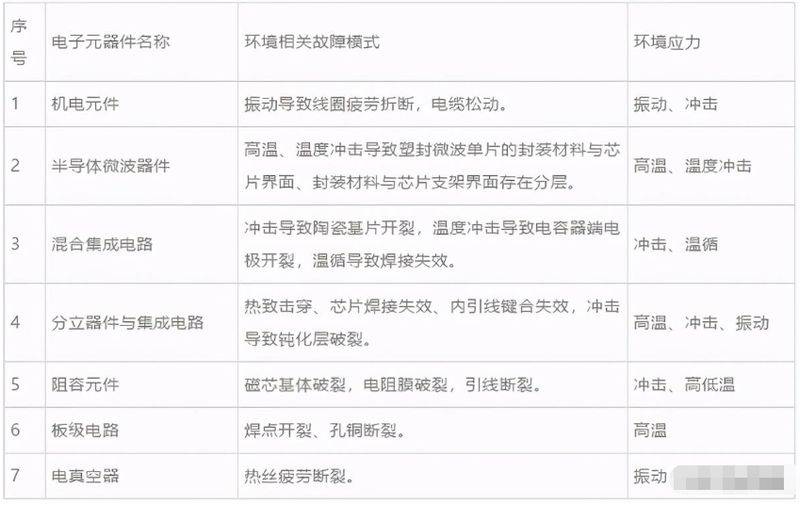
Table 1 models of failure associated with and sensitive to the environment of electronic metaware
2. Structure analysis of failure of typical metaware
The failure pattern of electrons is not uniform and only the tolerance limits of a representative part of the typical metaware-sensitive environment are analysed in order to obtain a more general conclusion。
2. 1 electronics
Typical electromechanical components include electrical connectors, relays, etc. An in-depth analysis of the failure patterns of the two types of metaware is carried out in conjunction with their structure。
1) electric connectors
The electrical connectors consist of three basic units of the shell, insulation and contact, and their failure patterns are summarized in three forms: contact failure, insulation failure and mechanical link failure. The main form of failure of the connector is the failure of exposure, which is manifested in increased exposure to instantaneous and exposure resistance. For electrical connectors, exposure to electrical and metal material conductors will result in jj heat when electrical currents pass through the connectors, increased heat will result in higher temperatures at the point of contact, excessive exposure temperatures will soften, melt and even boil the metal on the surface, and increased exposure resistance will trigger exposure failure. In high temperature environments, the exposure to the exposure agent also occurs with a creeping effect, which reduces the exposure pressure between the exposure agents. When the exposure pressure is reduced to a certain degree, exposure resistance increases dramatically, resulting in adverse electrical exposure and failure of exposure。
On the other hand, electrical connectors, when stored, transported and operated, are subject to a variety of vibration loads and shock forces, which cause a resonance of the connector when the incentive frequency of the external vibration load and the inherent frequency of the connector is close, resulting in a widening gap in the exposure to a certain extent, and an instantaneous loss of the exposure pressure, leading to an "acceleration" of electrical exposure. In vibrating, impact loads, the internal stress of the electrical connector is generated, causing destruction and fracture of the material when the stress exceeds the yield strength of the material; in such long-term stress, the material is also subject to fatigue damage, which results in failure。
2) relays
Electromagnetic relays typically consist of iron cores, wires, cortex, contacts, reeds, etc. As long as there is a certain voltage at both ends of the online circle, there will be a certain flow of electricity in the ring, which will produce an electromagnetic effect, and the cortex will overcome the pull to the core of the spring, under the effect of electromagnetic attraction, and thus drive the cortex's kinetic point of contact with the static point. When the wire is out of power, the electromagnetic insulation disappears, and the cortex returns to its original position at the back of the spring, so that the kinetic point of contact coincides with the original static point of contact (often closed point). Insorption and release have thus served the purpose of guiding and cutting off circuits。
The main models for the overall failure of electromagnetic relays are frequent openings of relays, frequent closings of relays, unsatisfactory spring action of relays and extremely poor electrical parameters of contact closed relays. Due to inadequate processes for the production of electromagnetic relays, the failure of many electromagnetic relays poses a mass hazard during the production process, such as the short period of mechanical stress release, which results in the deformation of parts after mechanical structural formation, the failure to remove residues, which leads to unsatisfactory or even ineffective pind detection, and the failure to detect and screen out of the plant, which leads to the commissioning of the failed device. The impact environment is prone to plastic deformation of metal contact points, leading to the failure of relays. In the design of relays, the adaptation of their impact environment needs to be considered。
2. 2 semiconductor microwave elements
Microwave semiconductors are metaphones in microwave bands made from semiconductor materials of ge, si and iii ~v compounds. Electronic equipment such as radar, electronic warfare systems and microwave communications systems. In addition to providing electrical connection and mechanical and chemical protection for tube cores and foot-leading, the design and selection of tube casings take into account the impact of the shell input on the microwave transmission properties of the device. Microwave casings are also part of the circuit, which itself constitutes a complete input-output circuit. Therefore, the shape structure, size, medium material, conductor configuration, etc. Of the tube casings match the microwave properties of the metaware and the application of the circuit. These factors determine parameters such as the convulsiveness of the tube casing, electrical wire resistance, characteristic resistance, and loss of conductors and media。
Environmental-related failure patterns and mechanisms for microwave semiconductor components include, inter alia, the sinking of fenced metals and degradation of electrical resistance performance. The sunk metal of the fence was due to the accelerated heat spread of the fence metal (au) into the gaas, so the failure mechanism was mainly present during accelerated life tests or very high temperature work. The speed at which fenced metals (au) spread to gaas is a function of the proliferation factor, temperature and material concentration gradient of fenced metal material. For a perfect crystal structure, the proliferation rate at normal working temperatures is very slow and does not affect the performance of the device, but it is significant when the particle boundary is large or the surface is defective. Electrical resistance is usually used as feedback circuits for microwave monolithic integrated circuits, the setting of bias points for active components, isolation, power synthesis or coupling at the end of the end, with two structures: metallic membrane resistance (tan, nicr) and light mixing of gaas thin layer resistance. The experiment showed that degradation of the nicr resistance due to damp was the main mechanism for its failure。
2. 3 mixed integrated circuits
Traditional mixed integrated circuits are divided into two main categories of thick membrane integrated circuits, depending on the thick membrane band on the base surface and the thin membrane band process: some small printed circuit boards (pcb) circuits are also classified as hybrid integrated circuits because they are printed in membrane form to form conductive graphics on the flat plate surface. With the advent of the multi-chip component, an advanced hybrid integrated circuit, the multi-layer wiring structure and perforation technology specific to the base plate has made the component a proxy for a high-density interconnectivity structure in the mixed integrated circuit, and the multi-chip component uses the following: membranes, thick membranes, high-temperature co-burning, low-temperature co-burning, silicon, pcb multi-layer panels, etc。
The combined integrated circuit environmental stress failure pattern consists mainly of the failure of the circuit to open the base plate and the failure of the welding between the metaware and the thick membrane conductor, the metaware and the thin membrane conductor, the base plate and the shell. The potential damage from mechanical shocks from falling products, thermal shocks from welding operations, additional stress caused by disequilibrium of the base plate, horizontal stretches generated by heat mismatches between the base plate and the metal shell and viscos, concentration of mechanical or thermal stress caused by internal defects of the base plate, local microfissions from the drilling of the base plate and the cutting of the base plate ultimately results in external mechanical stress greater than the mechanical strength inherent in the ceramic plate, resulting in a failure。
Welding structures are susceptible to repeated effects of the temperature cycle stress, leading to heat fatigue of the welding layer, resulting in reduced adhesive strength and increased heat resistance. For welders, thermal fatigue of the weld layer as a result of the function of the temperature cycle stress is due to the inconsistency of the thermal inflation factors of the two structures connected to the welds, the transformation of the welds by bit or by cutting, which, after many repetitions, eventually leads to the failure of the welding layer as the welding cracks expand and extend。
2. 4 separated devices and integrated circuits
Semiconductor splitrs are divided into diodes, bipolar transistors, mos field effect tubes, transistors and bipolar transistors of insulation fences, by broad class. Integrated circuit applications are extensive and can be divided into three categories according to function, namely, digital integrated circuits, analog integrated circuits and digital hybrid integrated circuits。
1) parts
There are a wide variety of stand-alone devices, with significant variations in the performance and speciality of failures due to their respective functions and processes. However, there is some similarity in the non-defunct physics as the basic components formed by the semiconductor process. Thermal penetration, dynamic avalanches, chip welding failure and internal trigger failure are the main causes of failure associated with external mechanics and the natural environment。
Thermal piercing: thermal piercing or secondary penetration is the main failure mechanism affecting semiconductor power elements, and most damage during use is related to secondary penetration. The double-breathing is divided into two round-breathing and two round-breathing. The former are mainly related to thermal performance of the device itself, e. G. The mixing concentration of the device, the background concentration, etc., and the latter to the multiplication of the current avalanche in the space charge area (e. G., near the collector pole), which is always accompanied by the concentration of currents within the device. In the application of such metaware, special attention should be paid to heat protection and heat dispersion。
Dynamic avalanche: cascade-on-ionization, influenced by current-controlled concentrations of free-borne fluids, within a device during a dynamic shutdown caused by external or internal force, may occur in binary, diode and igbt。
Chip welding failure: the main reason is that the chip is a different material from the welding material, and thermal inflation factor is different, so there is a heat mismatch at high temperatures. In addition, the presence of welding holes increases thermal resistance of the device, makes dispersing heat variable, creates hot spots in local areas, increases the temperature and causes temperature-related failures such as electrical transport。
Intra-thrust keys fail: primarily the corrosive function of the bond point is caused by the corrosion of aluminium due to the effects of water vapour, chlorine, etc. In a wet hot salt fog environment. Temperature or vibration causes the aluminum-coated cord to break apart. The large igbt size of the module is highly stressful if installed in an inappropriate manner, leading to fatigue and fracture of the internal fuse of the module。
2) integrated circuits
The failure of integrated circuits and the use of the environment are highly correlated, and damage caused by water vapour, static or wave surges in a wet environment, excessive use of graphics and the use of integrated circuits reinforced by unirradiated radiation in a radiation environment can also cause the failure of the device。
Aluminium-related interface effects: in silicon-based electronics, the sio2 layer is used extensively as an intermediate membrane, whereas aluminium is often used as an interconnective material, sio2 and aluminium will react chemically at high temperatures to make the aluminium layer thin, and if the sio2 layer is depleted by reaction depletion, direct contact with aluminium silicon will occur. In addition, the au-al interface is created by the extraction of gold from the line to the aluminium interconnection or the bond of aluminum bonds to the key of the gold plating line of the tube. Due to the different chemical properties of the two metals, multiple inter-metal compounds are produced after long-term use or storage at high temperatures above 200°c, and because of their different crystal constants and thermal inflation coefficients, they generate significant stress within the bond points, resulting in lower electrical conductivity。
Metallic corrosion: aluminium connectors on chips are vulnerable to erosion of water vapour in a wet thermal environment. Many integrated circuits are wrapped in resin because of price deviations and ease of production. However, water vapour can travel through resins to aluminium interconnections, where impurities and metal aluminium in impurities or dissolved resins are brought in from outside and corrosive。
Stratification effects due to water vapour: plastic sealing of ic means integrated circuits sealed with resin polymer materials such as plastics, in addition to stratification effects between plastic sealing materials and metal frames and chips (commonly known as the “polymphoon” effect), because of the adsorption properties of resin materials, the tectonic effects caused by water vapour adsorption also render the device ineffective. The failure mechanism is that the water in the plastic seals expands rapidly at high temperatures, separating plastics from other materials attached to them and, in serious cases, bursting the plastic seal。
2. 5 capability shapes
1) resistors
Common non-converted electrical resisters can be classified into four types, i. E. Alloy, thin film, thick membrane and synthetic, depending on the material used by the resistor. For stationary resisters, the main modes of failure are open circuits, electrical parameter drift, etc., while for the bits, the main modes of failure are open circuits, electrical parameter drift, noise increase, etc. The use of the environment will also lead to the ageing of electrical resisters, which has a significant impact on the lifetime of electronic equipment。
Oxidation: the oxidation of electrical resisters will increase the resistance value and is the most important factor contributing to the aging of the resisters. Except for precious metals and alloys made of electrical resistance, other materials are damaged by oxygen in the air. The effect of oxidation is long-term, and when the effects of other factors are gradually reduced, oxidation will become the main factor, and high temperature and wet environments accelerate the oxidation of electrical resisters. The fundamental measure against oxidation for precision and high resistance is seal protection. Sealed materials shall use inorganic materials such as metals, ceramics, glass, etc. The organic layer is not completely free from wetting and ventilation, and only slows down on oxidation and adsorption。
Ageing of mucous: for organic synthetic resisters, the ageing of organic slime is a major factor affecting the stability of the resistor, which is mainly synthetic resin, which, in the process of manufacturing the resistor, is converted from thermal treatment to high-polymers of thermal solid polymers. The main cause of the ageing of polymers is oxidation. The oxidation-generated free radicals induces a chain of polymer molecules, which further entrenches, sharpens, renders the polymer less resilient and causes mechanical damage. The solidification of adhesives reduces the resistance value by constricting the size of the resistor, increasing the exposure pressure between conductive particles and reducing exposure, but the mechanical damage of the adhesive also increases the resistance value. Usually the solidification of the adhesive agent takes place before and the mechanical damage takes place after, so the resistance value of the organic synthetic resister shows the following pattern: there has been some decline at the beginning and then an increase, with an increasing trend. Since the ageing of polymers is closely related to temperature and light, synthetic resisters accelerate ageing in high temperature environments and in strong light。
Ageing of electrical loads: placing loads on electrical resisters accelerates their ageing process. In direct flow loads, electrolysis can damage membranes. The electrolysis occurs in the slots of the scalder, and the ion moves under the action of the inter-train electric field if the object is ceramic or glass material containing alkali metal ion. In a damp environment, the process is more intense。
2) capacitors
The failure pattern of the capacitors is short circuits, open circuits, degradation of electrical parameters (including changes in electrical capacity, increase in the angle of loss and reduction in insulation resistance), leaks and corrosive fractures of the lead line, etc。
Short circuits: arcs on the polar edge at high temperature and low air pressure will result in short circuits for capacitors and short circuits for the medium in an instant with mechanical stresses such as external shocks。
Open roads: lead wires and oxidation of electrodes due to wet thermal environment, resulting in low electrical flats and arctic corrosive fractures。
Degradation of electrical parameters: the degradation of electrical parameters due to the effects of the wet environment。
2. 6 board circuits
The printed circuit boards consist mainly of insulation base materials, metal wiring and guidance lines connecting different layers, and “weld discs” of welding devices. Its primary function is to provide a carrier carrying a metaware and to act as an electrical and mechanical connection。
The failure patterns for printing circuit boards include, inter alia, welding, road openings and short circuits, bubbles, blasting plate layers, plate corrosive or colour-changing, plate bending, etc. In general, welding is mainly related to poor surface treatment of the pcb welds or to poor surface state of the welds (e. G., oxidizing pollution); the opening of roads tends to occur on steering lines or metalization holes, which are indissociable from the performance of pcb processes and materials themselves; short circuits or leaks in electricity are generally caused by reduced insulation distance between conductors or by the transport of electrochemicals as a result of corrosion; panel bubbles are generally related to the matching of the plate-pressure process, and may also be derived from poor performance of printed materials; and plate bendings and blades are also mainly derived from base-quality and processing processes. The impact, vibration environment is prone to fatigue and micro-fissiles of printed circuit boards, thereby accelerating the failure of printed circuit boards。
2. 7 electronics
Vacuum electronics are active devices that generate, amplify and convert electromagnetic signal using various effects of electronics (or ion) in a vacuum medium. Typical electric vacuumers include wave tubes, magnetic tubes, speed tubes, etc. Among them, the frequency of the oscillation of the magnetic tube is highly influenced by ambient temperature, and the temperature mutations are highly likely to cause the frequency of the magnetic tube to shift。
Conclusion
Analysis of the resistance environmental limits of typical electrons shows that electronic devices are sensitive to the thermal environment and to shocks, vibrations, weld point and other structural failures. Some meta-systems are sensitive to the natural environment, such as wet heat, salt fog, and are susceptible to corrosion failure。