Forklifts require full maintenance and maintenance for 200-250 hours or every six weeks. Daily checks should be carried out prior to the use of forklifts at any work site. Forklift maintenance not only keeps your machine in condition, but also helps you to avoid safety hazards。
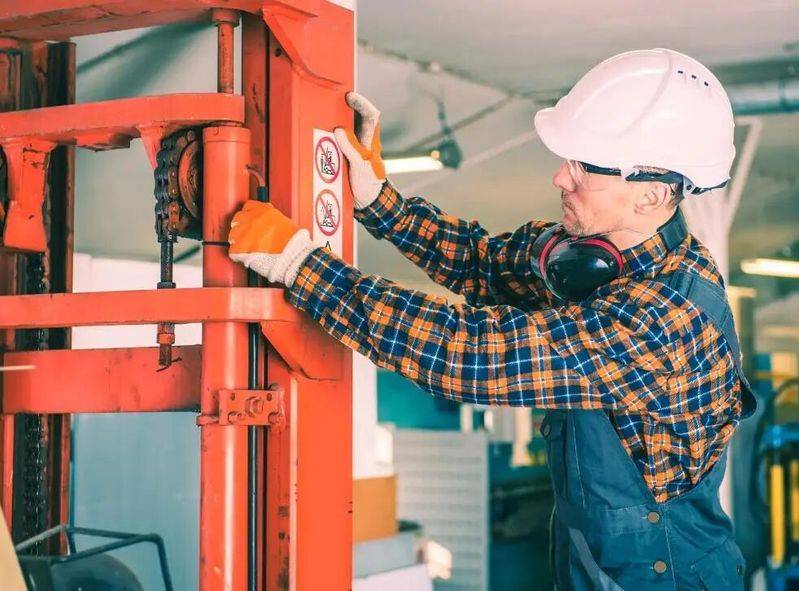
Depending on the power type used by your forklift, the frequency and type of maintenance required may vary. Maintenance includes regular cleaning, testing of safety features and replacement of damaged spare parts. Through timely maintenance, enterprises can ensure return on investment and reduce the likelihood of security risks。
How often does the forklift need to be checked for maintenance
Based on the quality of the parts and equipment inspected, each forklift component requires between 200 and 2000 hours of maintenance。
While security features such as alarms need to be checked daily, some internal components need only be maintained quarterly. Several factors will need to be taken into account to determine the frequency of repairs required forklifts。
Factors
01
Age
Five-year machine requires more frequent inspections than a one-year forklift。
02
Use history
If a forklift fails repeatedly, care should be taken when maintaining it on a regular basis。
03
Terms of reference
Some projects pose a greater risk to your forklift than others. Forklifts carrying pallets through warehouses face less damage than machines that drag raw materials in unstable terrain。
More advanced maintenance may require experts, but most operators can perform basic daily checks. You can rest assured that your forklift is ready to load。
When a potential risk does arise, the day-to-day inspection will find it before the forklift passes through the work site。
The list of routine forklift maintenance checks consists of two parts: the contents to be checked before and after the operation of the forklift。
01
Prior to the operation of the forklift
The list of non-driving checks includes the list of parts to be checked before the forklift is activated. The parts should be inspected by the operator or forklift technician as soon as the forklift is launched. Some parts of the list check basic operations, while others address security functions。
To commence the inspection, the operator must:
Ensure that all forklift hoses are properly connected。
Check whether there are signs of leakage or damage to tyres。
Ensure that seat belts and other safety devices work。
Ensure that all liquid levels are safe。
Check the forklift for pointy teeth and the top guard。
Cleaning of operating rooms before equipment is used。
Always check if there are visible signs of damage on the machine。
Ensure that your check labels and stickers are clearly identifiable。
02
After the forklift starts
The driver's checklist covers the parts that the operator must inspect after the forklift has been activated. Forklift operators and technicians will be able to view the list only after completion of the non-driving checklist. As with previous inspections, the team should proceed as soon as possible。
The operator must:
Ensure that turn, brake and accelerator work is normal。
Test forward and reverse。
Checking pedals, hand brakes and clutch release devices。
Raise and lower the sarcasm to ensure that they are fully operational。
Check security features, including horns, lights and back-of-car alarms。
Maintenance of checklists
Check fire time
Check the pcv valve
Test brake booster operation
Check spark plugs, subwire points, caps, rotors and other electronic components
Test to increase chain tension
Check engine bolts
Check the transfer tape
Check trail roller
Check the tarp nuts
Replacement of oil and air filters
Replacement of fuel filters and hydraulic pumps
Change brake fluid
Adjust the glitch speed
Separators
Monitor engine cooling fluid levels
Lubrication chassis and masts
Clean radiator
Painting wheel bearing lubricant
Daily maintenance may be your first line of defence against security hazards, but long-term maintenance is equally important。
You can cover all aspects of preventive maintenance of forklifts within a secure time frame by dividing service priorities into monthly, quarterly and semi-annual targets. While some of these inspections require experts, the cost of timely maintenance is minimal。
The above list ensures that you always optimize the forklift. But small additions can do more to help keep the lead for teams that want to move beyond themselves. Bearing in mind the following reminder, you will make more efforts to extend the useful life of the forklift。
Regular cleaning
At the end of each working week, the operator shall ensure that its equipment is clean。
Collision inspection
After each collision or accident, even a minor collision or accident, the forklift is checked for signs of damage。
Remember to uphold your qualifications
Remember that maintenance and inspection can only be performed by authorized operators and technicians。
Investment computerized maintenance management system (cmms)
Many companies use cmms to track maintenance costs, process orders, view equipment for historical records and arrange maintenance。
Quick action
Teams should deal with problems as soon as possible. Any service delay may result in damage or injury。
While this guide summarizes forklifts, it is important to remember that different models have unique maintenance requirements. Depending on the power source of the forklift, additional precautions can prevent malfunctions and site accidents。
By understanding the needs of each equipment, operators can make full use of their equipment and avoid risks specific to their machines。
Forklift, electric
Battery-driven forklifts, sometimes referred to as electric forklifts, are usually used indoors in warehouses or factories. Before tuning loads, operators should check whether cables and battery restraints show signs of failure. After ensuring that the hoods are secure, they need only note the electrolyte position when lifting the material。
Forklift, liquid propane
The forklifts obtained power from propane tanks installed on the equipment. They provide lifting capacity at the cost of more expensive fuels than other models. Operators need to ensure that propane tanks are robustly installed and there are no signs of leakage or damage. Once they ensure that the hoses and belts are secure, the operator must periodically check the safety valve to confirm that it points to the upper end。
Forklift, internal combustion
Forklifts are faster and run longer than other models. To achieve this, technicians must ensure that oil, cooling fluids and brake fluids are at an appropriate level. They should also check air filters and radiators before tuning the cargo。