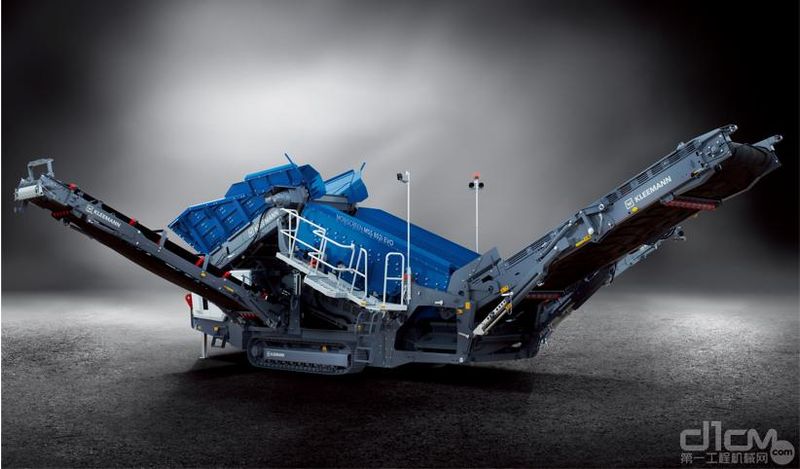
The little wiki mobile sifter after the winter break was activated to help people get their kernel equipment running quickly and well after the winter break. In the last issue, we introduced you to the start-up attention after the winter break of the mobile shredding device prepared by a senior expert from the chinese training department in wittgen. (clicking in blue for details) we're once again giving you the attention of the training department's experts to start off after the winter break. Now let's look at it together! The mobile kilo-screen mobile scavengers are divided into mobile re-scaves and mobile finished product scavengers, with different grade levels for raw materials (combination vs processors) and finished materials (level iii vs stage iv) and different material flows, and more or less the same. Pre-screening/preparation of power systems 1. Checks the adequacy of electrical capacity of equipment cylinders, some of which can be shown by internal lamps on the cylinders, some by wire-controlled monitors or others may need to be measured by voltage meters; (if necessary, they can be activated by means of external charge-backing or other loan-aided devices, provided they are prepared in advance) 2. Equipment equipped with wireless remote control systems requires an advance charge of the launcher batteries or the use of the equipment's own charger or office charger, mostly by the equipment's own bottle; 3. After winter breaks, some, if not long ones, need to focus on the regularity of the oil levels of engine fuel, anti-freezing fluids, hydraulic fluids, hydraulic pump split case gear oils, walk-track speed-reducing boxes, and pyrotechnics. For the four-stage emission engines, the liquid level of the urea can also needs to be checked and, if necessary, the appropriate fuel/oil should be added to it; 4. Strongly recommends the replacement of engine oil before construction starts; 5. For critical rubber pipelines that are vulnerable to ambient temperature, re-inspection/resistence is strongly recommended: for engines, for example, rubber pipelines, for air chillers and for motor moving belts; 6. For diesel oil water separators, it is recommended that the water in the filter be drained and that the entire fuel pipeline be vented using diesel hand pumps. The work system inspection and preparation of 1. The sift boxes and transmission belts are the main work parts of the sieves, and it is recommended that they be re-injected with butter prior to construction; that the sieves of the sieves be re-inflated with a specific quantity of butter; and that the bearings of the sieves, including the side of the active scavenger and from the side of the moving sievender, be re-inflated with butter. 2. For each working tank of equipment, it is recommended that, prior to the start-up of the engine, deep cleaning of their piston poles is recommended to prevent the adhesive/freezing of alien scratches or damage to its seal; 3. In the case of cable control boxes for equipment, it is proposed to insert each of the three outlets of the equipment to check whether the equipment has a normal power supply and display screen? After the engine has been activated, it is recommended that it should run at least 15 minutes lightly or unmounted to check for oil spills/spills, etc.? To see if some rubber seals of the engine are affected? If necessary, continue to observe or repair; following engine start-up, check if there are any alerts on the line control monitors and if necessary, request their repair; 6. Extension/floating equipment is fitted with a transmission belt and initial rectification screening boxes are in place. Project 1 of the whole machine-unmounted detection is proposed to open and pilot the work units on a manual basis; before running, use hand-held hammers to check whether all levels of sifting are normal? If necessary, adjustments should be made; 3. In the course of running, check whether the transfer belts are in the middle? Tightening of belts is normal? If necessary; 4. In the course of operation, check whether the inner ring belts and low-level foldings of the belts are functioning properly? If necessary; 5. In the course of operation, test whether the gearing function of the belts is normal through a wire control box? 6. In the course of operation, open the scavenger vibrations and check if the scavenger vibrations are normal? 7. When units under manual mode are running properly, switch to automatic mode to check whether the units have completed their instructions in sequence/timed time? 8. Disable automatic mode, start walking patterns, detect the movement and turn normal. In particular, if there is a taped drive, please clean up if necessary. Commence construction selection/setting of appropriate working parameters: 1. If the sifter combines with the shredder, adjust the position of the two to combine the feeding height and angle; 2. The hydraulic leg support of the pyrotechnic force is in place, especially with regard to mobile heavy-screening and excavators or loader-based feeding; 3. Adjusting the speed of operation of the pyrotechnic belt to the different feeding methods and output yields; adjustment of the speed of operation of the side belts in accordance with different feeding methods and output yields; 5. Adjustment of the working height and operating speed of the oversized transmission belt to the actual output of the super-heavy material; the work angle of the screening boxes is adjusted accordingly to the needs of input materials such as viscosity/output yield/sifting quality. Vee said it was important to remind you that the equipment went through winter breaks, especially when it was shut down for a very long time, and that it needed to be checked and operated according to the right steps when it was activated. Local agents may be consulted in a timely manner in cases where this is not possible. You can also consult local technicians of the agent, if you want to know about the other operation and maintenance of the kernel equipment. In addition, in order to upgrade the technology and operation of a wide range of crews, experts from the department of training in china at wittgen conduct occasional courses on the operation, maintenance, technology, practice, etc. Of kernel equipment. For small partners who wish to participate, please give timely attention to the training information that has been published by our public day。