In recent days, news about 3d printing has suddenly become intense。
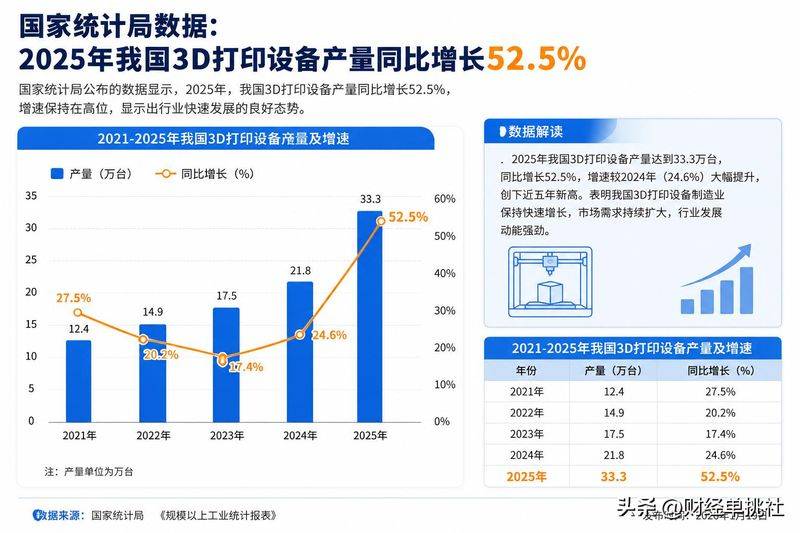
According to data published by the national institute of statistics, the production of 3d printing equipment is increasing at an impressive rate; the high-end machine type of apples and large domestic mobile phone factories has started to use 3d-printed titanium alloy parts on a large scale; and in overseas markets, chinese-made 3d printers have taken an absolute market share。
Along with these good news, the capital market and many of the media have started to get restless. They hit a loud label。
There are even claims that 3d printing is about to completely destabilize the traditional manufacturing industry and completely eliminate the old machinery in the factory。
For us ordinary people, it is difficult to see these big words: is it a solid industrial upgrading or is it a new concept that capital markets are working on? Let's focus on the industry. Will it become a harvest
In this article, we do not speak of deep technical parameters, but of real business books and manufacturing common sense. By dismantling up-to-date facts and data, let's look together at where the 3d printout is, and how the so-called half-billion-dollar boom was created。
3d printing is no longer a new word. For many years, it has been regarded as a “pollocular toy” or as a sampling tool used in factories to “do a sample”. In both years, however, the situation has changed substantially。
This change can be felt from two of the most immediate phenomena。
First, in the desktop consumer market, chinese enterprises make real money worldwide。
I'm a 3d printer myself, buying a toy for my kids, making my studio a little perimeter or something。
In the past, you need to get a 3d printer home, you need to know the code, you know the mechanical structure, and you buy it back for half the time. But now, chinese enterprises, represented by a three-dimensional perspective, have turned sophisticated machines into small household electricity that can be plugged in. The operational threshold has been significantly reduced, and ordinary people can print directly all kinds of living objects and hand jobs by downloading models and pressing start-ups。
This is my own design of a single ape。

It is because of this extremely friendly user experience, combined with china’s strong supply chain manufacturing cost advantage, that the co3d printing equipment now represents about 90% of the global market share. Chinese brand 3d printers are consistently high on various electrician platforms abroad. This is not only a success in going out to sea, but also a product that has become a public consumer。
Second, 3d printing is officially at the production level among mass-consumption electronics。
Previously, what was printed in 3d was often considered not strong enough to be a model. But now it can produce the final product directly. The most typical example is the titanium alloy parts of smartphones. From the high-end machine of apples to the titanium metal frame, to the folded-screen mobile phones introduced by the manufacturers, titanium alloys are the standard for high-end mobile phones because of their light weight and intensity. And many of these complex folding screen chains and husks are directly manufactured using 3d printing techniques。

According to the latest data from the national statistical office, production of 3d printing equipment increased by 52. 5 per cent in 2025. This increase of more than 50 per cent is remarkable in an already large manufacturing sector。
What does that mean? Note 3d printing has moved away from the laboratory phase of "can only see for use". It's making real money, and that's its undeniable “good mouth”。
A technology has long been in place, and why is it in the last two years of sudden explosion, even within the supply chain of tens of millions of mobile phones
The reason was simple: it had finally reached a pass line in the cost and efficiency test。
Manufacturing is not conceptual, but cost. We also use titanium alloy parts on our phones。
Titanium alloy is really a good thing, but it has a fatal disadvantage -- too hard to process. The traditional machine-bed process is called “deductive material manufacture”, which is to take a full titanium alloy hair, cut the excess with a knife and carve out the desired shape。
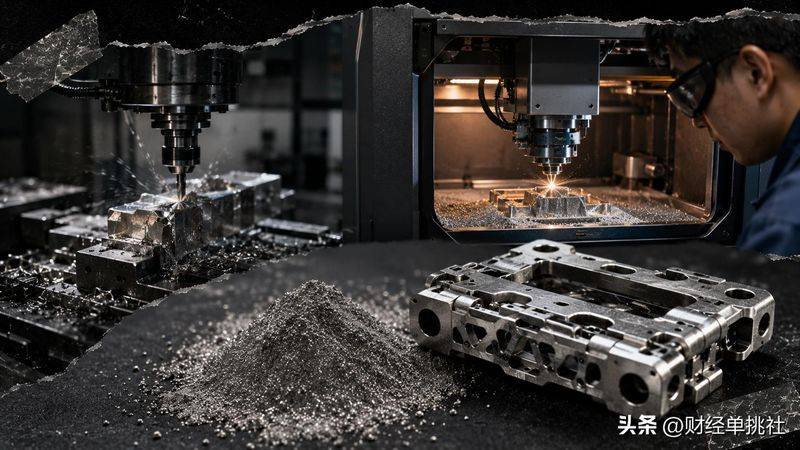
The titanium alloy is very hard, traditional cutting is extremely time-consuming and it is very expensive to use. What is more crucial is wasteful. In order to make a complex part of a few grams, it may be necessary to cut off dozens of grams of peripherals, which are difficult to recycle. The cost of processing titanium alloys from traditional processes is very high and cannot be used in large-scale consumer electronics because of the high cost of materials, loss of knives and long processing times。
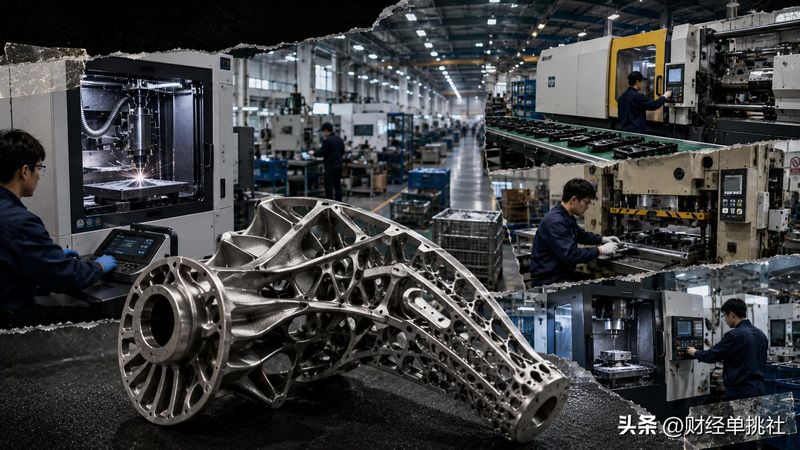
And the logic of 3d printing is completely different, and it is called "extension material manufacturing". It does not need to cut a full piece of metal, but to make a very fine powder of titanium alloys. Based on the design of the drawings, the machine melts a layer of metal powder by lasers, stacks it up and produces the required parts directly。
The greatest benefit of this approach is that material is not wasted at all. As much weight as you need, you can consume metal powder. At the same time, because it is a one-off form, it is completely unnecessary to consider the loss of knives. In the face of these complex emptiness structures within the folding screen chain, the traditional machine-beds simply do not fall under the knife, but the 3d printing can be done easily with a layer up。
The combined cost of printing specific titanium alloy parts in 3d has been lower than in the traditional cutting process with the technological maturity of domestic 3d printing equipment in recent years and the decline in the price of upstream metal powder materials。
This is the underlying reason that 3d printing suddenly became the core of the plant's current line. Not because people suddenly love new technologies, but because they make certain products that are really cheaper, less expensive and more efficient。
Now that 3d printing is growing so fast that it solves the problem that the traditional machine-beds cannot solve, is it not logical that it is called “the next trillion-class track” or even a complete replacement for traditional manufacturing
That's not true. This is also the place where ordinary people are most prone to be misled when looking at this hotspot。
Let's start with a set of real industry data. According to the summary of the relevant departments of the ministry of industry and communications, during the period of 14th and 5th, the size of the production industry increased from $20. 8 billion to about $70 billion. At present, the entire industry is moving towards a phased target of $150 billion。
From billions to more than 100 billion, this is a very solid and rapid growth. But if you compare it with the real "mega-billion track" you find a gap. The new energy automobile industry, the smartphone industry, is a solid trillion-class market. 3d prints the current volume, i. E. The size of the hundreds of billions. It is in itself a “false boom” created by capital markets in order to attract the eye。
Why is 3d printing difficult to reach trillions in the short term? Why can't it replace traditional factories in their entirety
This involves a basic common sense of manufacturing: the size effect。
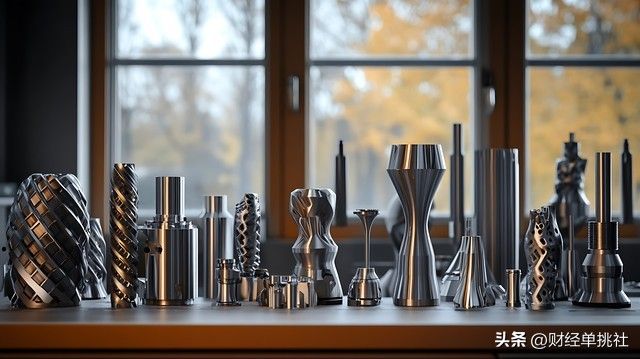
The absolute advantage of 3d printing lies in “customization” and “manufacturing complex structures”. As long as the product structure is extremely complex or only a few items are produced, 3d printing is the preferred option. This is why it is popular in the medical field, such as customizing patients with unique dental orthotics, skeletal implants and aerospace, to produce very complex engine parts。
But if we look at the most common commodities in life, the situation is completely different。
Let's say we need to produce 10 million ordinary plastic pots, or 100 million standard metal screws. If you use a 3d printer layer, not only is it too slow to bear, but the cost of a single piece is far too high。
At this point, the traditional plating and pressing processes still leave 3d printing far behind. Turn on a mold. Hundreds of machines. This large volume of production is the most efficient and cost-effective response to standardized industrial products。
3d printing is a process of “additional” and is limited to objective patterns of material condensation and physical stacking. It is bound to be unable to replace traditional processes in the area of “large scale standardized production”. The factories of the real world are extremely rational. There is no one-size-fits-all technology, and the plant is for everyone who is cost-effective. 3d printing does not run a volume-standard business, which determines that its industry has a visible physical ceiling。
3d printing is by no means a “terminator” of traditional manufacturing. It's more like a “special forces” deep inside the traditional manufacturing industry. When confronted with hard bones — such as extremely complex structures, extremely expensive material processing and highly personalized tailoring needs — that force strikes and solves the problem perfectly。
As ordinary people, we have absolutely no need to think that this technology is overestimated because it is not what is called the “mega-billion track”。
In this multi-billion-scale market, chinese enterprises have managed to establish the advantages of the whole industrial chain. From upstream metal powder to intermediate domestic printing equipment and to global access to consumer markets, each ring generates real profits and offers real jobs。