After 30 years of medical attention, i've discovered that many people's heel pains are not stabbing
Last week at the clinic, there was a 50-year-old sister。
When she walked in, she was clearly on the right foot - the toe was on the ground, and the heel was gently down, like stepping on a needle。
When she sat down, she pointed to her heels: "doctor chang, my feet have been hurting for almost six months. Every morning i get up, my feet fall, my heel is like a needle, and it hurts my mouth. It's better to walk a few steps, but it hurts. I'm going to make a film, and i'm going to say, "did i have a bone tattoo?"
I told her to take off her shoes and press the bottom of her feet -- just a little bit in front of her heel, and then she hit her whole body, "yes, yes! This is it!"
And i laughed, "you're not a bone prick, you're a foot dysentery."
And she's like, "doesn't that look on her face?"
Today, i'm going to make it clear that two simple and effective methods — “crawling towels” and “rolling bottle” — can be cured at home。
I. What's the bottom line
Let's get to know this man。
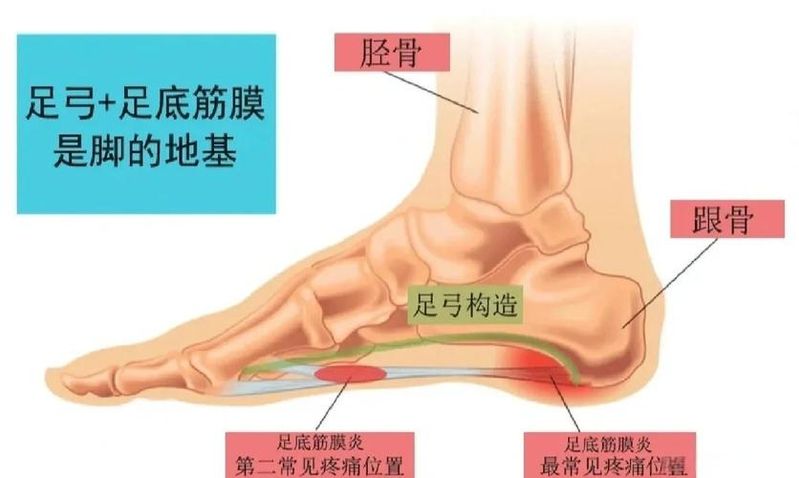
The foot-bed band is a strong bonding tissue on the soles of the feet, like a bow string, stretching from the heel to the toe。
What does it do
Every step you take, the soles are stretched out and you bounce back. One thousand steps a day, it's gonna be stretched 10,000 times。
The foot dyslexitis, the bow string, was pulled and inflammated。
Why does the first foot hurt the most in the morning
That's the most typical characteristic of foot-drain meningitis。
Why does it hurt the most in the morning
As a result of one night's sleep, the feet are relaxed and the soles are reduced。
When you get up in the morning, your feet fall down, your body weighs down, and your bottom is stretched。
It's like a rubber band, it's always loose, and suddenly it's pulling, of course it hurts。
Why is it better after a few steps
It's not that painful because it's active and it's slowly stretching。
But why does it hurt
Weary, inflammation, and pain。
So, the pain pattern of foot-drain meningitis is:
It hurts the first foot in the morning
Iii. One self-measure: are you foot-dural
This test can be done at home。
Press pressure test
How:
Take off your shoes, relax your feet, press your thumbs 2-3 cm in front of your heel, and feel the pressure near the inside of your feet
Result judgement:
There's another simple way:
Get up in the morning, get down first. Does it hurt
Iv. Why is the bone sting not the killer
A lot of people took pictures and found bone marks on their heel, which they thought they were。
This is the biggest misunderstanding
Bone puncture is a long-term drag on the soles of the foot, a cocoon formed at points attached to the bone — the result, not the cause。
It's like writing on your hands, grinding out cocoon. Does it hurt? No, it hurts to write itself。
The sting itself does not hurt; it hurts the inflammation of the bottom of the leg。
What's the evidence
So, don't stare at the bone。
The towel-sleeping bow
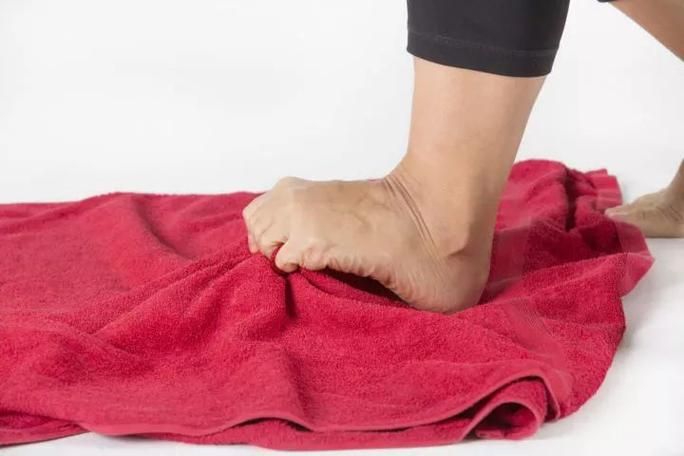
The scratching of towels is a classic exercise for the rehabilitation of foot-panditis. It activates small muscles on the soles of the feet, sharing the pressure on the bottom band。
How to grab a towel:
A towel
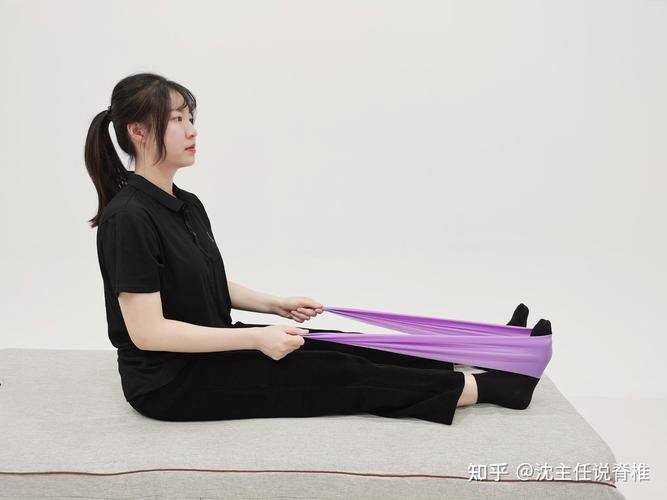
Step 1: sitting
Step 2: grab
Step 3: release
Step 4: repeat
Key points:
Advanced:
The rolling water bottle method - easing the fragmentation
Rolling water bottles are the most effective method of self-emancipation of foot-drain meningitis. It stretches directly, massages the inflammation。
How to roll the bottle:
Prepare: a mineral water bottle (or portable can) filled with water and frozen into ice
Step 1: sitting
Step 2: rolling
Step 3: strength
Step 4: time
Why the ice bottle
If there is no ice bottle:
In everyday life, the three pillars of “care” are:
Requiring “shoes”
To be “extended”
To “walk”
Three don't:
Do not “walk barefoot”
In particular, hard floors, tiles, barefoot walks have the greatest impact on the bottom band。
No “shoes”
The tarp shoes, ballet shoes and human drags are not supported by a bow, which increases the burden on the band。
No “sudden increase in motion”
Unmoveable and sudden mountain climbing and running are the most likely to induce epidural disease。
Viii. What conditions require access to hospitals
This approach is effective for most of the foot-dense membranes, but in some cases it is not surprising:
1. Rheumatism, fever: possible infection
2. Symptoms and stings: possible nerve card pressure
3. Unidentified loss of weight and fever
4. Rest and exercise for one month is ineffective
5. Severe pain, unable to walk
At the end
For 30 years, i've seen too many people scared by bone stabs。
Some of them thought they were terminal, others spent a lot of money on surgery to sharpen their bones and others were afraid to walk。
And every time i told them, "your feet are not bad, your soles are asking for help."。
Today's teaching of “striking towels and rolling water bottles” is an internationally common way of rehabilitating foot-dread meningitis, which is simple and efficient and cost-free。
Starting today:
For a month, you'll find -- the "first foot of the morning" that scares you -- no more pain。
I'm a surgeon in pain. I've been here for 30 years. If you have problems with the vertebrae, the vertebrae, the knee, the shoulder, the bottom of the foot, etc., please leave a message in the comment area and i will take time to respond