It's the lowest in history
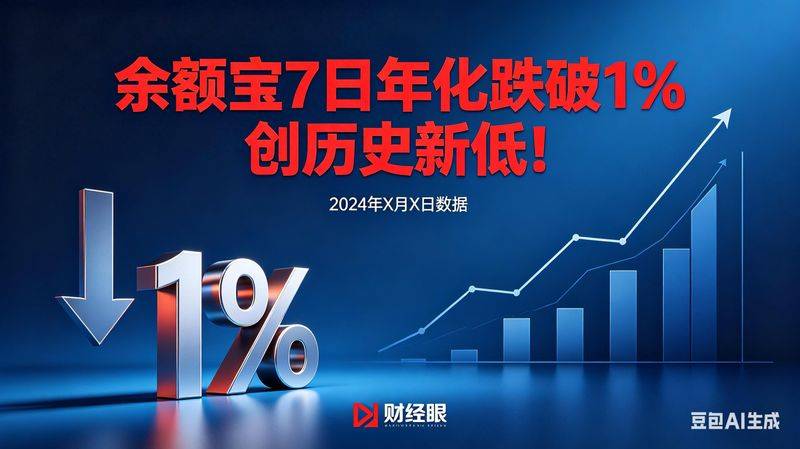
It used to be 6. 7%, and now it's only 0. 99% and $10,000 less than 3 cents a day
How can ordinary people put their change when the era of low interest rates has arrived
On 2 may 2026, the annualized rate of return of the tienhong balance 7 fell by 1 per cent, reporting 0. 999 per cent, and then continued to decline, triggering a whole network of discussions。
As you know, the return rate of the peak balance period, which was once above 6. 7 per cent, was the first option for millions of people to manage their finances。
And now the revenue is going to go straight into the "hundreds of the century" and the 789 million users can't read it。
Why did you fall so hard? There are three core reasons for this:
Monetary policy has been easy, market interest rates in general have been downsized and central banks have remained reasonably liquid, with short-end national debt and the return on the bill of exchange at historically low levels, leading directly to the collapse of the base of revenue today. Regulatory tightening, with the new limits on high-interest deposits being compressed, the previously negotiated 1. 5-1. 6 per cent interest rate is now generally down to about 1. 4 per cent, with no return. Market-wide risk-free interest rates have moved downwards in bank bookings, large bills of deposit, and full proceeds of finance, and balances have followed the trend, not an example。
And what's more, it's not just balance treasures, it's almost 3% of the market's base fell by 1%。
The data show that of the total market 351, 107 of the imf alone had a rate of return of less than 1 per cent, double the rate at the end of last year。
Low returns are becoming a new normal for cash management。
It's hard for netizens to comment:
"a hundred thousand dollars for a year, not enough for two hot pots, and it's getting boring!"
“a little higher than the current period, the victory will be convenient, and the allowance will have to be set.”
“the returns are getting lower and less likely to be invested, but only to be reassured.”
A lot of people ask: "do you want to put the balance of the profit so low?"
The answer is realistic: do it, but not all of it。
The core value of the balance is flexible, secure, directly payable, suitable for living expenses and reserves。
It is no longer realistic to use it to make money and win inflation。
For ordinary people, three simple and viable options for change management will be:
The money you need to use at any time: to keep the balance / change, to ease, to keep, to keep. 1 to 6 months of idle money: short-term debt funds, business-as-usual funds with an approximate yield of about 1 point higher than the base. For more than six months: a small combination of “consolidated harvests +” to withstand small fluctuations in exchange for a higher yield space。
Low interest rates are not terrible, but they are terrible when you don't know how to set up, and when you're looking for high returns。
The balance gains are low, the times are changing, and our financial thinking is changing。
Safety is the most stable path for ordinary people。
Finally, i want to ask you:
Do you still keep the balance
Where do you think the change is best in the low interest rate era