The driving friends have recently refuelled, and they should notice the savings. From the end of april to the present, domestic oil prices have fallen in two consecutive rounds, with a cumulative decline of more than $0. 85 per litre, which has been a rare and sustained decline since this year. It is even more gratifying that the next window for rotation prices was opened on june 18, at 2400 hours, and that all data now point to a continuing downward trend, with an approximate “triple drop” for the owner and a further reduction in the cost of using the vehicle。
First of all, the hard-on data from the two most recent rounds of oil prices have been published officially by the national commission for development and development, with no water。
The first major drop, which took place on 21 april at 2400 hours, marked the first significant reduction in oil prices this year. At that time, petrol had been reduced by $530 per ton, diesel fuel by $510 per ton, converted to retail prices, petrol 92 had been reduced by approximately 0. 44 per litre, petrol 95 by 0. 47 per litre and diesel 0 by 0. 45 per ton。
The second major drop was at 2400 hours on 4 june, just in the past, which was directly higher in the year. Petrol is reduced by $525 per ton and diesel by $505 per ton。
Taken together, these two reductions resulted in a cumulative decrease of more than $0. 85 per litre for petrol 92 and a cumulative decrease of nearly $0. 90 for petrol 95. Most of the cars we use are 50 litres, two loads are down, full of a box of 92 oil, with a direct saving of about $42, equivalent to a meal, a month's worth of savings a year。
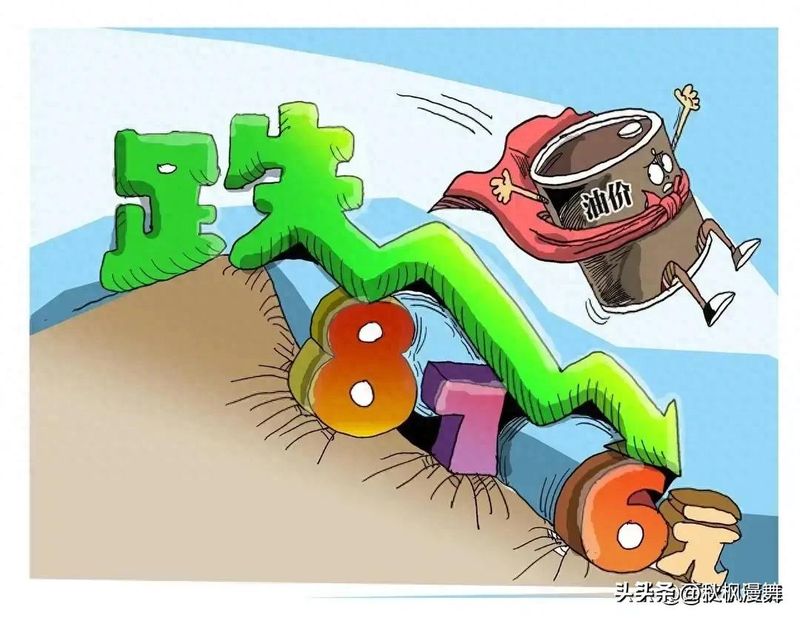
What is the national price of oil? Following the 4 june price increase, petrol 92 entered the “eight dollar era” and prices varied slightly from 8. 35 yuan in beijing to 8. 31 yuan in shanghai, 8. 37 yuan in guangdong and 8. 16 yuan in xinjiang. The price of petrol at 92 was generally close to $9 at the end of may, and the fuel is now far more profitable。
Why are oil prices falling? The central reason is the continued weakness of international crude oil prices。
Domestic oil prices are not random, and there are clear pricing rules: adjustments are made every 10 working days to link international crude oil prices, and only fluctuations exceeding $50 per ton will trigger the adjustment, and shortfalls are added to the next cycle. Prior to april, international oil prices had been rocking, and brent crude oil had risen to $109 per barrel, so domestic oil prices had risen eight times in a row and twice in may, crushing the owner enough。
Since late april, however, international oil prices have fluctuated and continue to fall. On the one hand, the pace of global economic recovery has slowed and market expectations of demand for crude oil have weakened; on the other hand, the major oil-producing countries have maintained steady production levels, with a sufficient supply of crude oil, and the easing of supply and demand has directly led to a fall in oil prices. As at 11 june, brent crude oil prices were around $93 per barrel and new york crude oil was around $90 per barrel, a decline of nearly $20 compared to its april height, providing ample space for a downward adjustment in domestic oil prices。
Focus! At 2400 hours on 18 june, a new round of price-adjusted oil prices for finished products, the twelfth rotation this year, will be opened. The current round of price calculations is now halfway through the five working days, and the rate of change in crude oil continues to be in the negative range, based on monitoring data from authoritative institutions such as information from the public and information from zhuang, with the expectation of a downward revision very clear。
As at 11 june, the reduction of diesel fuel from the current wheel is expected to be around $180 per ton at a reduced retail price of $0. 14 per litre for petrol 92 and $0. 15 per litre for petrol 95 and diesel 0. Although the reduction in the current round was not particularly significant compared to the previous two rounds, it was crucial - this will be the first “triple drop” since this year, and it will be too rare for the owner of the car to keep the price down。
One might ask, "is there any sudden reverse price increases?" it is clear that the probability is extremely low。
First, the current rate of change in crude oil is negative, and even a small rebound in international oil prices over the following working days will hardly offset the previous period's decline and fall short of price increases. Second, the domestic price increase, with a threshold of $50 per ton, is now projected to fall by 180 yuan per ton, well above the threshold, and the downward base will be pegged unless international oil prices rise by more than 10 per cent in the short term。
Make it clear that if the price drops on 18 june, an additional 0. 14 per litre, the cumulative decrease in petrol 92 will be close to $1 per litre from april to june. A 50-litre domestic fuel tank, filled with 50 dollars at a time and four times a month, would save 200 dollars and $2,400 a year, equivalent to an additional month of fuel subsidy。
Apart from the owner of the private car, it is even more obvious that the truck driver and the internet driver felt more clearly. Truck tankers have a large capacity of more than 100 litres at a cost of $0. 85 per litre, saving $85 for a full tank and reducing the cost of travelling long distances; networked vehicles run hundreds of kilometres per day, fuel consumption is high, and sustained price reductions directly reduce operating costs and income is more stable。
Of course, there is also an objective reminder that the “triple drop” in oil prices is an event of probability, but not absolute. International oil prices are more volatile owing to a variety of factors, including the geo-situation situation, oil-producing country policies and the global economy. In the event of subsequent contingencies, such as the surge in international oil prices caused by the tense situation in the middle east, the possibility of a narrow or even agrounded reduction is not excluded, but for the time being, it is unlikely。
In addition, the rumour that “oil prices are going back to the six-dollar era” should be rejected. Despite successive price reductions, petrol 92 still stands at more than $8. Domestic oil prices comprise taxes, processing fees, circulation fees, etc., which account for about 40-50 per cent. Even if international oil prices continue to fall, domestic oil prices will be difficult to fall to within six。
Finally, i would like to make a practical suggestion: if you need gas in the near future, you don't have to wait a few days. One saving point is to refuel when prices drop at 2400 on 18 june. The oil price adjustment schedule can also be kept in mind, with the remaining 2026 adjustment dates: 18 june, 3 july, 31 july, 14 august and 28 august, and advance planning of refuelling times to avoid excessive spending。
The successive declines in oil prices are real benefits for us all. Whether it's daily commuter, weekend self-drive, or transport, or internet connection, the cost of the car is reduced and the stress on life is reduced。
Discussion
How much have you spent on gas lately? Are you going to fill it with oil on june 18 after the “triple drop” in oil prices? Do you think oil prices will continue to fall? Welcome to the comment section