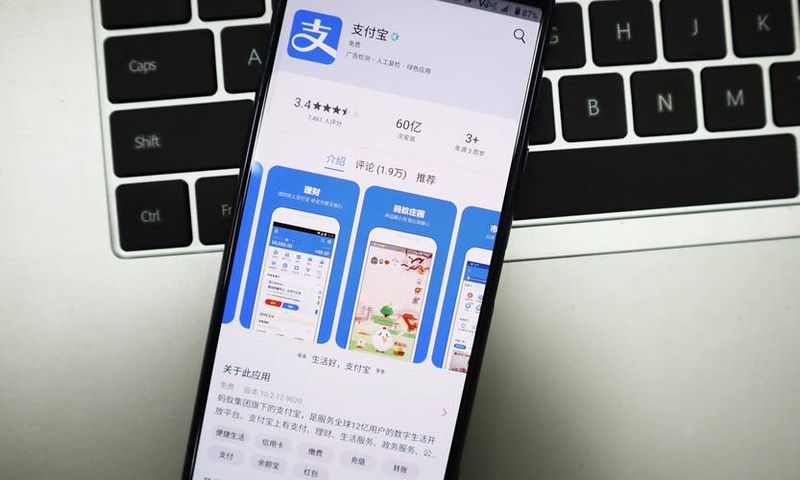
You couldn't find the flowers and the balance on the payment page, not the phone。
On 30 september 2026, the financial products network marketing management scheme was officially set aside, and the cash counter for micro-credit and payment treasures was forced to “sweep” — credit products such as flowers, white strips and so forth were moved to independent zones, and the payment function of monetary funds such as surplus treasures was adjusted. This is not a simple function shift, but a remeasurement of the border between “payment” and “financial”。
From the perspective of consumers, regulators and industry players, the signals released by this adjustment are quite different, but ultimately point in the same direction。
Consumer perspective, a “lost” and “gain” recalculation
The most immediate change is the longer payment process. In the past, the flowers were probably just below the bank card, and one did not pay attention; now, you need to enter an independent credit area on the payment page on your own initiative to complete at least three steps of confirmation. The surplus may no longer be a “one-key payment”, but needs to be redeemed manually。
This “problem” is exactly what regulation wants. The number of complaints from individual credit products on the black cat complaints platform exceeds 100,000, and almost all the problems are “opened” “unrefundable””. When users close their accounts on the delivery platform, they find themselves in debt only when they receive late text messages because they are anxious to pay the default check。

These “insensitive liabilities” are rooted in the visual confusion and default selection of credit products at the payment chain。
What is “lost” is convenient, and what is “taken” is absolute control of their wallets. The payment page shows only the bank cards, the balances, the real silver and silver, and the lending is put back in the framework of "i need, i choose, i take responsibility."。
The perspective of the chain of custody, a red line that has been redrawn repeatedly. Clear
It was not just the location of a few buttons, but rather a business model that had existed for many years。
The central problem is that internet platforms weld “payment” and “credit” together, using paid high-frequency flows to channel financial products. Specific operations include the parallel display of credit products with bank cards, the marketing of “lower” “interest-free” terms, and the hiding of real annualized interest rates on folding pages. The essence of these practices is to mask the risk of “lending” with the convenience of “payment”。
From a regulatory point of view, there is a triple risk of this model: at the consumer level, the right to know and the right to self-determination are violated; at the individual debt level, the “payment-to-loan” triggers irrational consumption and debt accumulation; and at the financial system level, a large number of credit products are outside the prudential regulatory framework, with an unknown risk exposure。

Thus, the core logic of the new rule is that “payment goes to payment and borrowing to borrowing”. Non-bank payment agencies may not include loans, management products or provide them with marketing services. This amounts to the re-establishment of the physical separation wall between “payment” and “finance” and the destruction of the platform's access to payment streams for financial gain。
The perspective of competition in the industry, the pain, the policy package
The lending industry was the most heavily charged party in this adjustment. In the first quarter of 2026, the scale of lending by chifutech was reduced by 18. 45 per cent in comparison with the same year, and net profits decreased by 51 per cent; the size of lending by small win-win technologies was reduced by 58. 4 per cent and net profits fell by 91. 7 per cent. In the past, growth patterns driven by “flow + high interest rates” have been reversed after compliance costs had risen and the costs of integrated financing had been strictly limited。
The credit card industry was the one that accidentally picked up the policy package. The new regulations make it clear that credit cards are currently the only legally licensed product with the dual attributes of “payment + credit” and that their mature communication, risk management and insurance mechanisms are regulated。
When internet platforms can no longer disguise the loan product as a payment option, a significant proportion of the diverted payment scenes and credit needs will flow back to credit cards。
Bank credit is also taking advantage. The sino-chinese bank increased its micro-credit rate by over 40 per cent, and the national average interest rate on new inclusive micro-enterprise loans fell to 3. 64 per cent. The wind-control advantages and financial cost advantages of licensed institutions in a compliance environment are being translated into market shares。
The essence of this adjustment is the redrawing of the “operational boundary”
Taking three perspectives together, the signal from this adjustment is clear: any financial activity must be regulated, licensed and similarly regulated。
This is not a simple “product move”, but a general correction of the “pay-up, financial show” model of the last decade. The payment instrument is a payment tool that cannot become an entry point for credit products; the management product is a management product that cannot be disguised as “payable cash at any time”。
This does increase operating costs in the short term for consumers who are accustomed to “insensitive” conveniences, but in return for clearer financial boundaries and fewer debt traps。
Short-term shuffles are inevitable for the entire financial and technological industry, but in the long run, innovation will have real space only if the base of “compliance” is stabilized。