Every time a parent talks about math, it's a big lawsuit。
"the kid at my house, with a brush at 11:00, is still wrong."
"don't mention it, my daughter's formula is so full of shit, she's a fool."
"what should we do with the math? Is it true that only the tens of thousands of dollars a year will be reported?"
As one of the companions who worked all the way from a “mathematician scum” to the top of the class, i would like to tell you the truth: the most laborious and clumsy way to actually help children to build up this building of mathematics is often the “shortway”。
At the beginning of this year, i paid attention to several articles on primary and secondary education published on the website of the department of local education, whether it is a “return book” review in hangzhou, west lake, or a “three-wheel-in-the-way” review of some of wuhan’s primary schools, in which one of the words that has been repeatedly emphasized is not “pull the puzzle,” but “basket the foundations.”。
Many of the training institutes out there, in order to get you to pay, always say math, what's a “thinking trick” and “second kill technique”. Don't believe that! The children of our ordinary family, whose minds are not so bent, should be like old farmers who grow land, do not slack, do not slip, do well, and grow their crops。
Today we share the “three stupid tricks” that we have used in our home, which, although slow, counts every step。
Number one: death textbooks, the feynman learning method
My first reaction was to buy tutorials and papers, and i thought it would happen if i did more. And? The subject of the meeting is always the same, not the vest or the wrong one. It's like a foundation that's not locked up and piles up more bricks, and that's a “dangerous house”。
Now the stupid trick is to sell books like the bible。
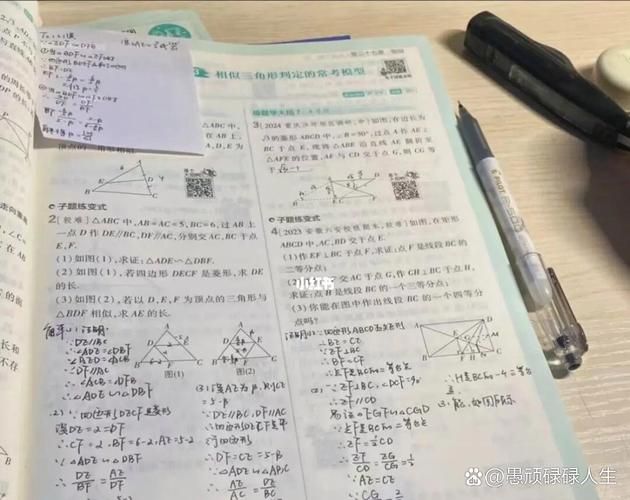
Don't think the textbooks are easy to ignore. My kids used to be so grumpy that they looked at the subject and said, "i will." then i forced him to use the feynman learning method to read books. It's just, "assume you're a teacher and tell people what you know."。
For example, today's review of the “minus multiplier”, i won't let him do it。
First, cover up the case: read the title yourself, for example, “how much does a $2. 5 pen cost 3?” and let him count it in his own stupid way。
2. Read again the textbook solution: why, by comparison, does the textbook have to be vertical? Why does that decimal point have to be in that position
3. Address me: this is the most critical step. Let him hold a pen, point to a book, and say like the teacher taught me, "mom, 2. 5 is 25 cents, 25 cents equals 3 times 75 cents, then 7. 5 cents, so the decimal multiplication is based on integers and decimals..."
Did you find out? When he was able to make a concept clear in the most popular terms, he was truly full of it. Many children call themselves “not understand”, but they're stuck in a basic conceptual logic. Reading books, speaking books is the way to get rid of the puss. Don't be afraid of taking time. It's better than a hundred questions。
Second move: calculating death. Clearing down the "low-level error"
There's a problem with being a mother, and the child is miscalculated, and he likes to comfort himself with "a careless": "it's all right, the child understands, it's all right."
Don't think about it! Counting careless is essentially a lack of capacity, a lack of proficiency
What's the big deal? The difficulty, though adjusted, has never been less demanding. What difference does it make
Many school programmes in 2026 refer to a term called “calculating daily exercises”. This is how we do it in our home. We can't do it for six months。
How? It's not sea tactics。
Time-bound quantification: 10-15 questions per day, few, but must be limited. For example, it has to be done in five minutes. There's no time pressure, the kids are always grinding。
Building a “fault bank”: this is a method shared by wuhan's teachers and is particularly useful. It's not a common mistake. We've got a "bank," and the mistake is "debt." today, for example, the decimal division is wrong, and there is a “debt” in the “bank”, and it is necessary to “pay back” the weekend with three similar questions. Only by paying off the old bills can new knowledge be learned。
3. Writing is a norm: i require children to have a step-by-step process. Jumping is the biggest killer of the miscalculation. At first the child was in trouble, and then he found that writing more on the paper was less than a cent of the burden in his head and the accuracy was rising straight up。
One month, you look at the baby's papers, and the low-level errors of "-1" and "2" are less than half. This is not only a points-up, but also a exercise of his devoted and strict character。
Third move: breaking the rover one by one
Many parents have the illusion that a child's math is about learning new knowledge and “pacing”. It's a big mistake。
Math, this thing, it's a chain chain. The equation for the fourth grade was not understood, and the fifth grade application was completely collapsed. So the essence of completion is not to look forward, but to look back, it's to look missing。
And that's why schools now place great emphasis on the precision of the diagnosis of the “peyo-saving”. We can do it at home。
How? I'm just looking at the error on the paper and the workbook。
Our children used to fear that i would let him read the wrong question, because he thought, "i've changed everything。
Then i changed my strategy. One night a week, without learning anything new, there will be a "basket."。
Let's get this week's blunder out, sort it out:

• is this confusing? Go through the textbooks, copy the definition three times and tell me again。
• is this not clear? Read the subject three times and circle the keywords。
• this is pure miscalculation? Two equally difficult calculations。
It is essential that each and every misdeed be eliminated and that the same type of subject, when it comes to the third time, never be mistaken。
It's a very boring process, and it even looks slow. But education is "slow work." you're closing a loophole, and the road's gone。
At the end
Sisters, i know we're all anxious to watch other people's kids report classes, and we're afraid of falling。
Please believe, however, that the most expensive education is often hidden in the most modest company。
In 2026, a variety of ai teaching tools emerged, but the essence of mathematics learning has never changed: it is a refinement of logic and resilience。
Let the child study his or her books, study his or her calculations, and learn his or her mistakes. These three things are done, and even if he's an iq, he's definitely not bad. It's like that saying, "it's so awkward," in this learning thing, slow, fast。
(note: this paper represents only the sharing of experience in child-rearing, both individually and in the home, for the benefit of a wide range of parents, with specific learning methods adapted to the actual situation of the child