It costs $4,000 to buy a ticket, refunds 400, nothing left, so it's gone. What makes the plane so expensive
Many people do not know that the airline's refund fee is not on a daily basis, but on an hour-minute basis. The system locks the seat for you as soon as you press the payment, and starts at the countdown of the high deduction。

The seat of the aircraft is extremely time-barred and has a zero value directly after take-off, and you buy a hundreds of dollars special fare to back off, but the seat is close to take-off and it's worth two or three thousand。
So the deeper the discounts, the harder the kickbacks, the more essentially the division shifts the risk of idle seats to you, but it's not the worst, and sometimes the high refund fees are not an airline pot, but the platform from which you buy them。
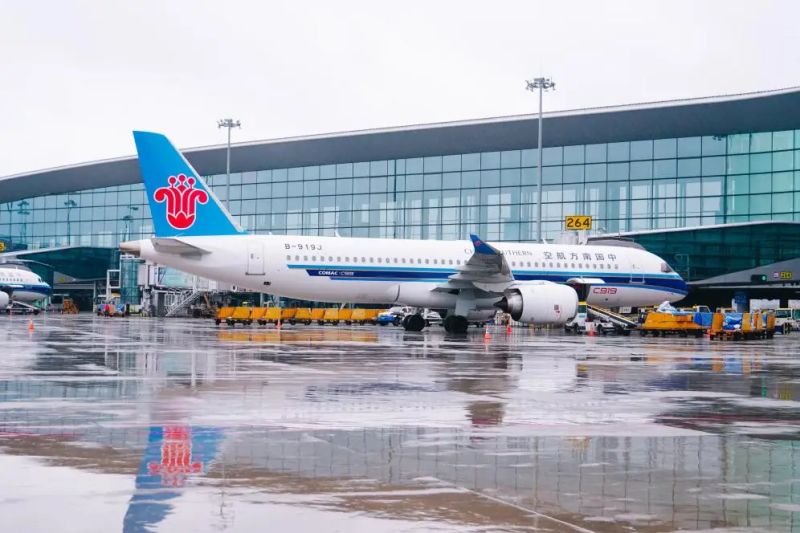
Airline bill: zero seats as soon as they take off
There is an iron discipline in the aviation industry, with aircraft flying together, empty seats valued at zero, and fuel, air fleet, air pipelines, airport landings and landing fees are fixed at a flat cost to each seat。
The sale of seats covers a portion of the costs, and failure to sell them is a loss, so the division is extremely sensitive to refunds, particularly those that are close to taking off。
As of june 2026, the domestic ticket rebate policy had generally adopted the “stairway rate” mechanism, whereby the reimbursement fee was adjusted to the level of accommodation and the length of flight departures requested, and the lower the discounts, the higher the refund costs。
Full economy class is usually retrofitted free of charge, while a 30-40 per cent special fare refund may only be paid back, and the sooner it is processed, the greater the discounts, the higher the cost of re-signing。
In the case of national voyages, economy class full fare (y class) is refunded at a fixed rate of $100, while discount class is charged between 5 per cent and 30 per cent at the nominal price, and special fare class (e/t/s) is not reversible。
The closer the time of application to take off, the higher the fees, the 20 per cent refund within four hours of the take-off, and the 70 to 80 per cent deduction for low-cost aviation, such as nine dollars。
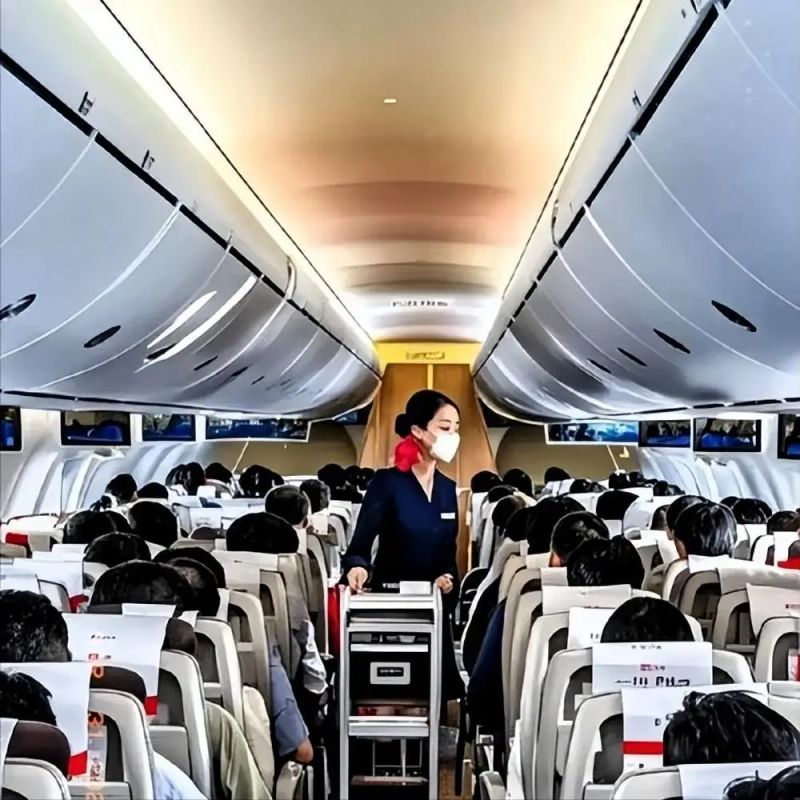
In particular, according to the schedule of rates of the divisions, the discount class for shandong airlines is 40 per cent for a period of 7 to 48 hours prior to take-off, 70 per cent for a period of 48 to 4 hours and 90 per cent for a period of 4 hours. Air economy class l (70 per cent of the fare) in beijing capital is refunded 48 to 4 hours in advance, with deductions ranging from 70 to 80 per cent。
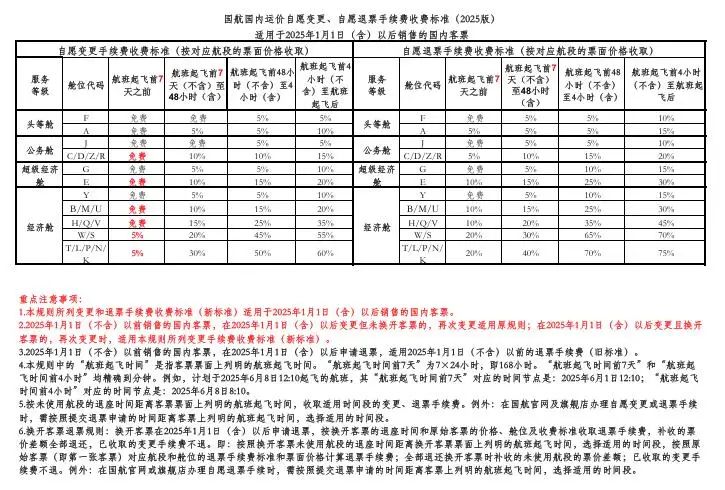
The southern aviation ladder is more detailed, with a 5 per cent refund of the full first-class fare, 10 per cent refund of the full economy-class fare, 20 per cent refund of the six-off class and 50 per cent refund of the three-quarter class。
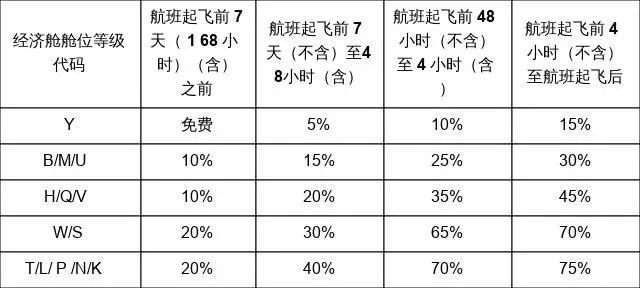
That's the logic of the airline industry, the deeper the discounts you buy, the greater the benefits you get, the higher the risk that division will take, and it's natural to take back the benefits。
Why did high steel give back 80%? Since the seat is far less time-barred than the plane, the seat can be re-used if it is not on board for more than a day。
Moreover, the high price of iron fares is free of fuel surcharges and the cost of refunds is mainly based on seat occupancy costs, unlike for aircraft, where a one-day flight is always missed, so railway refunds are up to 20 per cent and aircraft up to 75 per cent, depending on the differences in the mode of transport itself。
The platform's knife: change the rules and charge fees. A ticket swallows most of your refunds
It's the platform that's worse than the fare refund. Civil aviation experts pointed out that third-party marketing platforms could filter, distort the airline's retrofitting policy, or even charge service fees, which would be the main source of profit。
Where do consumers buy a national airline ticket of $1848, refunded more than 24 hours in advance, the platform refunds only $18, the deduction fee of $1830, which is almost fully confiscated, and the tax is required to be refunded in full, but the platform is appropriated in the name of “refund fees”。

There have also been more egregious cases in which ms. Wu was charged a re-signing fee of $2560 for the same travel platform, and only $820 for the actual shipping division, with an additional $1700 being swallowed up by the platform。
The court eventually awarded a three-threshold refund for the same journey, which was not a case in point, but a routine operation of many third-party platforms。
There are three main ways to increase the price of the platform, namely by directly tampering with the percentage of the division's withdrawals, such as 20 per cent for the division, 50 per cent for the platform, and an additional “service fee”, which is nominally a surrogate fee and which does nothing。
Third, there is a very short “free refund window”, which is free of charge within 15 minutes of the following, exceeding the high rate of deduction, which many consumers do not know at all。
There are more subtle ways. Some platforms, by default, tick “refund insurance” at the time of the user's order, claiming that they could be paid back more, put obstacles in the way of actual settlement, and even insurance itself。
Some of the platforms deliberately do a lot of work on the return page with the button "approving the rule of retortion" and the link "see the detailed rule of retortion" is too small to see, and you click on the consent to accept the hegemony clause。
Regulation by the civil aviation authority: the regulations are in place but not implemented in an equitable manner, and consumers have to defend their rights themselves
As early as 2018, the civil aviation authority required airlines to be visible on the official network and the app, and to announce the re-signing of fees and refund provisions。
But the question is, what happens when this “no” is not accompanied by punishment? The maximum amount of money collected by the platform is returned after a consumer complaint, with little cost of fines。
In 2025, the civil aviation authority re-emphasized the need for an express withdrawal rule, but the ceiling remained to be determined by the division itself, and you went to the divisions to review the regulations, with a maximum fee of around 75 per cent generally。
Until 2026, the civil aviation authority finally introduced a mandatory requirement that the fees for the refund of domestic flights should not exceed 15 per cent of the nominal price, a new rule that directly changed the rules of the game。
According to the new rules, a $4,000 ticket, refunds at a maximum of $600, not the original $2,000 to $3,000, and a few dozen percent less seven days in advance? A complaint can be filed if it exceeds 15 per cent。
The problem, however, is that the implementation of this new regulation has been uneven, with the three main flights largely compliant and a 15 per cent ceiling on refund fees。
However, a number of low-cost aviation and some third-party platforms are still swiping edgeballs, continuing to implement high deductions for reasons such as “special-price activities” “except for international air tickets”. Consumers are easily exposed without careful checking。
In addition, the new rules apply mainly to domestic flights, and the rules for the refund of international flights are still established by the respective divisions without a uniform ceiling. Some international flights can be reimbursed up to 90 per cent。
So how do we avoid getting caught? Before a ticket is bought, the rules of retreat are clearly seen, the charts are kept, the coupons are not necessarily unrefundable, and the key depends on which shipping and channel。
According to the civil aviation authority, the refund fee is charged only at the nominal price, the tax fee must be refunded in full and no platform has the right to appropriate the fee in the name of “refund fee”。
With this evidence, the new rule of 2026, which is the most basic respect for the blood and blood of the money, was taken to a telephone call for the surveillance of civil aviation services in 12326 or a complaint on platform 12315。
Every effort is made to select a network of shipping magistrates or official apps, and although prices may be dozens of dollars more expensive than third-party platforms, the rules are changed in a transparent and direct manner。
If they have to be purchased on a third-party platform, select those channels that are clearly marked as “dividian direct camp” or “official flag stores” and avoid agent layer subcontracting。