By purpose
Industrial boilers: for industrial production, heating, etc., mostly low-parameter, small-capacity boilers, burning of hotbeds, lower heat efficiency
Station boiler: used for power generation. Mostly high-parameter, large-capacity boilers, fire room burning, higher heat efficiency
Ship boilers: for ship power, mostly low, medium parameters, fuel, small size, light weight, mobile
Truck boiler: used for engine power. Most are low-parameter, small-capacity boilers, hotbeds burn, and require tight structures that are mobile
By type of work and its output status
Steam boilers: the export mass is steam
Hot water boilers: the quality of the export is hot water
Special industrial boilers: export of special industrial materials such as certain organic matter, mercury vapour, etc
By parameters
The boiler equipment level is classified as a, b, c and d according to parameters。
Class a boiler
Class a boiler means a boiler at p (table pressure, same, note 1-5) ≥ 3. 8 mpa, including:
(1) supercritical boilers, p≥22. 1mpa;
(2) subcritical boiler, 16. 7 mpa≤p
(3) superhigh pressure boilers, 13. 7 mpa≤p
(4) high pressure boilers, 9. 8 mpa≤p
(5) secondary high pressure boiler, 5. 3 mpa≤p
(6) crushed boiler, 3. 8 mpa≤p
Class b boiler
(1) steam boiler, 0. 8 mpa
(2) hot water boilers, p
(3) gas phase organic heat carrier boilers, q>0. 7 mw (q is rated thermal power, same below); liquid phase organic heat load
Body boiler, q>4. 2 mw。
Class c boiler
(1) steam boilers, p≤0. 8 mpa, and v>50l (v designed for normal water levels, same);
(2) hot water boilers, 0. 4 mpa and t
(3) gas phase organic heat carrier boilers, q≤0. 7 mw; liquid phase organic heat carrier boilers, q≤4. 2 mw。
Class d boiler
(1) steam boilers, p≤0. 8mpa, and v≤50l;
(2) hot water boilers, p≤0. 4mpa and ≤95°c。
Note 1-5:p refers to rated working pressure for boilers, rated vapour pressure for steam boilers, rated water pressure for heat boilers and rated export pressure for organic heat carrier boilers。
By heating capacity
Small boilers: evaporation less than 20t/h, heating less than 1395kw or generators with less than 3000kw group
Medium boiler: 20, 35,65t/h with 6,600-50,000kw generators group
Large boilers: generators with 100,000 kw and above group
By hot water
Low temperature hot water: boilers supply hot water at temperatures less than 120°c
High temperature hot water: boilers supply hot water at temperatures greater than 120°c
By fuel or energy used
Coal-fired boilers: coal for fuel
Fuel boilers: fuel, including heavy oil, for fuel
Gas boilers: fuel with gas such as natural gas
Mixed fuel boilers: combination with coal, oil or gas
Waste boilers: for example, garbage, bark, waste oil, etc
Residual heat boilers: residual heat from the metallurgy, petroleum, chemical, etc
New energy boilers: steam generators using energy sources such as atomic energy, solar energy, geothermal energy, etc
By combustion
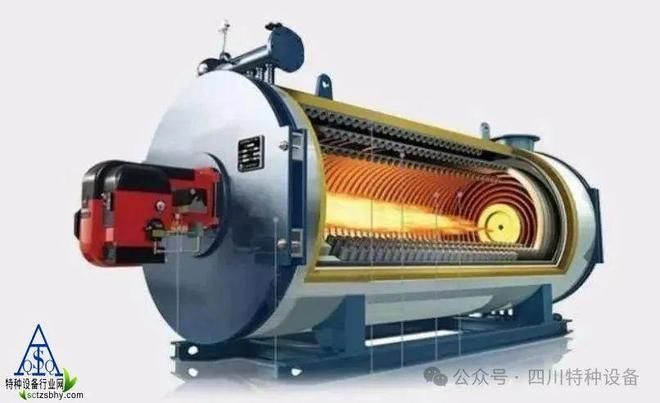
Boiler boilers (screeching, boilers): the fuel drum layer is burned on the stove line and constitutes a firebed. There are hand-fired stoves, chain-laying stoves, cooling stoves, coal-throwing stoves, vibrating stoves, feed-down stoves, etc. Mainly for industrial boilers
Fire room (suspension) boilers: fuel jet chamber space is suspense. Coal powder stoves, fuel stoves, gas stoves, etc. Mainly for power station boilers
Boiling burning (floating bed burning): boiler fuel is lifted from the boiling bed (floated bed) by a higher up-and-up flow of air, and is burned upwards and down, and can be burned down, and is currently used mainly in industrial boilers, and large-scale boilers have been developed
Cyclone furnaces: rotate burning in cyclones using powerful air-flow-driven fuels (coarse coal powder or coal crumbs). The particles are suspended burning in the centre of the barrel, large particles are attached to the barrel wall burning, liquid sludge. There's two types of undercover and vertical
By scum
Solid-state slag boilers: ash from fuel combustion is released in solid form and is the main slag method for coal-fired boilers
Liquid slag boilers: the ash generated by fuel combustion flows liquidly out of the slag and is washed away by human drains that crack into small particles in the cooling water of the cracker
On ventilation
Natural ventilator boiler: use the self-generated wind gravitational force created by the density gap between thermal flue gas in the chimney and the cold air outside to overcome the flow resistance of ventilation in the boiler. It's only for small boilers with little flue gas resistance and no tail to heat
Mechanical induction boilers: in addition to the use of chimneys, pre-coast winders are installed to overcome smoke and wind resistance, with negative pressure inside the stove
Balancing ventilation boilers: both wind transmitters and transmitters. Wind transmitters overcome wind resistance and wind transmitters overcome smoke resistance. It's got a negative pressure inside it
Mechanical boilers: only wind transmitters to overcome smoke, wind resistance, positive pressure inside the furnace and strict sealing requirements
Fire pressure on the stove
Negative-pressure boilers: boiler pressure maintains negative pressure and is the main form of coal-fired boilers
Micro-correct pressure boiler: bulk surface pressure 2000-50opa suitable for low oxygen combustion
Pressure-added boilers: fence table pressure greater than 300,000 pa for steam-gas combined cycle
By cycle
Natural cycle boilers: boilers with impurities, which are used to produce a work cycle using a drop tube with a difference in the working density of the lifting pipe, only for subcritical pressure boilers
Multiple forced cycle boilers: with boilers and recycle pumps, production of the mass cycle using the density differential of the work mass in the loop circuit and the circulation pump head. Among them, there is a low cycling rate and the boiler is replaced by a soda separator, known as the low cycling rate boiler. For subcritical pressure boilers
Straight-stream boilers: no boilers, first-time steam from water pump to heat surface for high pressure and supercritical pressure boilers
Composite cycle boilers: with a recycling pump, the boiler operates in a recycling mode when its load is low and in a direct stream when it is high. For subcritical pressure and supercritical pressure boilers
By boiler structure
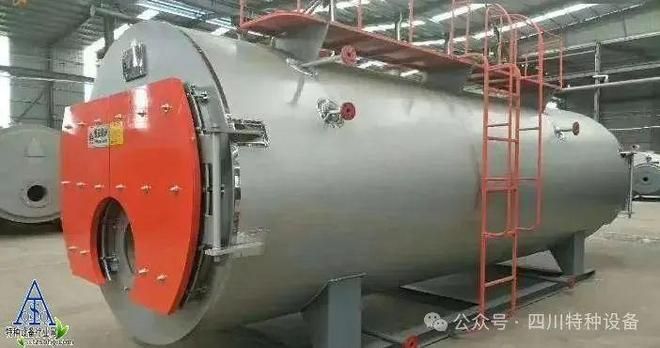
Boiler-shell boiler: with a boiler-hull that accommodates water, steam and boiler-shells, thermal surface is mainly placed inside the boiler-hull. The impregnated boiler is laid inside the boiler (coward), also known as the pipe boiler. The impregnated boiler's chamber is placed outside the boiler's shell, which is also equipped with a water pipe and a hot surface, constituting a “water, caustic boiler”, which cannot be fully integrated into the boiler's shell
Pipe boilers: boilers with hot-faced internal pipes placed on the walls of the furnace, water flowing within the pipes and smoke flushing outside the pipes
Cast iron boilers: boilers made of cast iron. It's made of pans
Battery by pan
Boiler vertical boiler: a boiler with a simple vertical centre line parallel to the central line before and after the furnace, with a single pan, double pan, etc
Boiler transversal boiler: a boiler with a vertical centre line and a pre- and post-boiler line vertically. There are single pans, double pans, etc. Modern boilers are all single; industrial boilers are single or double boilers
By stove type
Type d, o, a, m, reverse u, back-to-back t, n, u, tower, half-talent, box, l
Type d, type o, type a, type m for industrial boilers
Other stove types (including m) for power station boilers
It's a boiler
Quick boilers: boilers are loaded out of the plant for transport and installation. Small boilers for fast-loading
Bulk boilers: the boilers are out of the plant for a large number of parts and components, and they are hanged in one piece at the installation site, where they are assembled, and they are fitted for assembly
Combination boilers: boilers are assembled as combinations, assembled at the installation site, and they are hung in large pieces in order onto the furnace
Can the boiler move
Rounded boiler: the boiler is installed on a fixed basis and is not mobile. Industrial boilers and electric boilers are fixed boilers
Mobile boilers: boilers can be moved, such as ship boilers and machine boilers
By boiler room
Open, semi-open, indoor, underground, inner: industrial boilers are generally built indoors, power station boilers are mainly set indoors or open-air
Whether or not to be monitored
Supervisory inspection: only after certification by a state-designated supervisory inspection body。
Not subject to supervision:
(1) a boiler designed to have a normal water volume (a boiler with no fixed vapour boundary, such as a direct boiler, which is calculated on the basis of the geometry of the total volume of imports and exports of the soda system, down to the same level) of less than 30 l or a steam boiler with a rated vapour pressure of less than 0. 1 mpa
(2) hot water boilers with rated water pressure of less than 0. 1 mpa or rated heat power of less than 0. 1 mw
(3) organic heat carrier boilers with rated heat power of less than 0. 1 mw。
Manufactured under inspection, installation and use of non-inspection boilers: d-class boilers