The modernization of my country has gone through a long process of exploration and has been carefully studied to take stock of that process and its valuable experience, with great relevance and far-reaching historical significance. Three-line construction is a matter of concern in our party-led quest for modernization. Its rapid decision-making, mobilization, scale and length of time are miracles in the history of the development of the new china and of industrial construction throughout the world. Three-line construction has had an important and far-reaching impact on the country's national economic structure and industrial layout, with the construction of an industrial transport infrastructure and new industrial cities in the western region, which have contributed to the economic and social prosperity of the local economy and to the progress of the scientific and technological culture and laid a solid foundation for the modernization of the western region。
Comprehensive third-line construction and the construction of a framework for modernization of the western region
Three-line construction was the major strategic, war-prepared decision taken by the central party in the 1960s to safeguard national security in the light of the critical international situation at that time. From 1964 to 1980, the third line of construction was fully implemented in 13 provinces and autonomous regions in the interior of china. During the three-line construction period, the state invested more than $20 billion, mobilized millions of people and carried out large-scale defence, industrial, transport, scientific research and infrastructure in the west. Despite the fact that the three-line strategic decision at the time was motivated primarily by the need for national defence, large-scale infrastructure, such as transport, industry and the establishment of scientific institutions contributed objectively to the construction of a framework for modernization in the western region during this period, as well as to the establishment of a material basis and a general framework for the development and development of the west following the opening up of the reform。
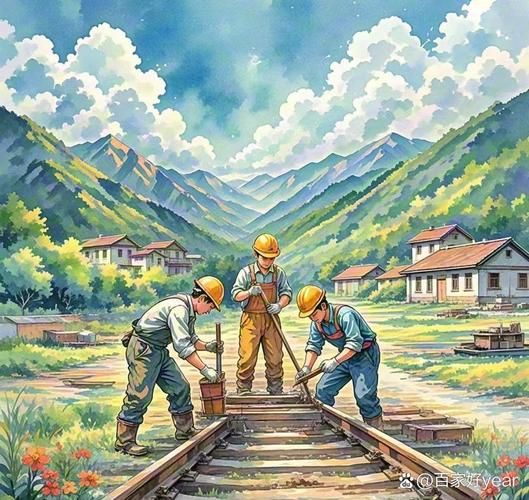
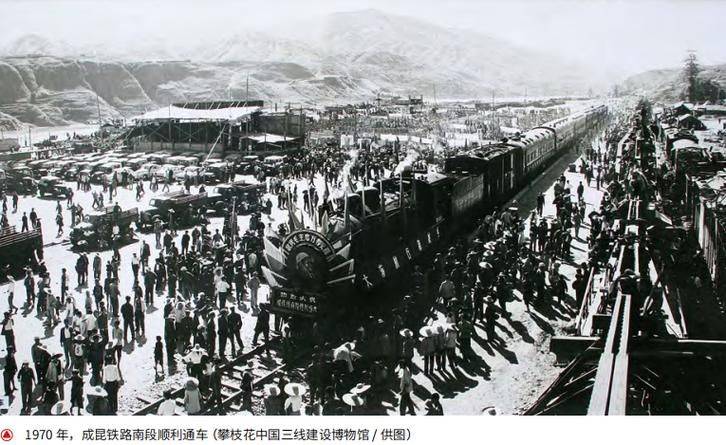
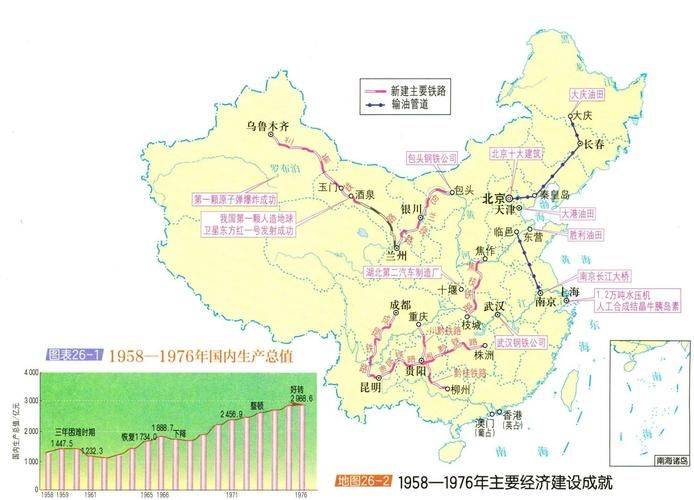
The formation of a railway-centred transport network in the western region was facilitated. In the current wave of three-line construction, the three-line zone has been followed by the construction of 10 main railway lines, such as those of kawakawa, guikun, sungkun and quan, as well as a number of feeder and special lines, which form a railway network centred on the cities of chengdu and kunming, covering the greater south-west. In the north-west, a railway network skeleton centred on lanzhou was built (contemporary chinese railway business (lower edition), 1990 edition of chinese social sciences press, pp. 214-215). These railways, in turn, are connected to east and west and north-south rail lines in central and eastern china, facilitating the formation of a modern chinese railway network. At the same time, the construction of roads centred on provincial and autonomous capital centres and the construction of inland waterways dominated by the yangtze river have also made considerable progress with the large-scale development of the three-line construction. According to statistics, more than 8,000 kilometres of new railways were added during the construction period of the third line, and the turnover of goods increased more than fourfold; 220,000 kilometres of new roads were built, increasing almost onefold; and inland water navigation was also rapidly developing in the area of routing and throughput, with large quantities of goods entering the western region by water (li chaohua: three lines construction study, university press 2003, pp. 47-49). The establishment of a network of railways, roads and waterways in the western part of the country during the three-line construction period has contributed significantly to the flow of communication between the western regions and between the eastern and western parts of the country. It has led to economic development and social progress in the central and western regions, particularly in the remote mountainous regions and ethnic minority areas. It has increased the speed and scale of material and human flows between the eastern and western parts of the country. It has laid the foundation for the formation of a multifaceted and rapid traffic development pattern marked by high-speed railways。
The foundation was laid for the formation of a modern industrial system in western china. Three-line construction has pushed the country's dominant enterprises and technological strength to three-line areas, enabling the western region to establish, in a short period of time, more than 2,000 business enterprises, and to build a more complete industrial development system that combines the western region's advantages with its own resources to form industrial patterns and industries focused on energy, raw materials, mechanical manufacturing, electronics, defence technology, etc. In the case of the mechanical industry, for example, a new chinese-centric industrial base in chongqing has been created, with a three-line construction, and in the north-west, industrial cities such as han, tianjia, silvergawa and sining have been built, with relatively well-developed systems in automobiles, heavy machinery, instrumentation, machine beds, agricultural machinery, etc., changing the industrial layout that had been too concentrated on the coastal areas (chen donglin: third line construction — western development in the period of war preparation, ccp central school press 2003, p. 264-265). The initial formation of a modern industrial system in the west of the country during this period laid the foundation for a complementary and balanced industrial layout of the east and west and a well-developed modern industrial system。
There is a pool of talent for modernization in western china. Following the development of a large-scale three-line construction, science- and technology-centred research institutions have also begun to deploy in three-line areas. During the third line of construction, sichuan alone had nearly 600,000 technologists and more than 300,000 people in hubei, henan, hunan and shaanxi provinces. Since 1978, a number of research and development institutions have gradually been established at the local level, in higher education institutions and in medium- and higher-sized enterprises, further enriching the scientific capacity of the three-line zone. By the mid-1980s, the three-line zone had thousands of research and technological development institutions and over 300 higher education institutions, creating a well-defined and well-qualified team of scientific researchers. The structure of these research institutions has developed a multidisciplinary and multi-level system of scientific research based on defence science and technology, supported by research institutions and institutions of higher education, in particular in the nuclear industry, aerospace, armaments, electronics, shipbuilding, metallurgical, chemical, electrical and geo-mining fields, together with scientific and agro-medical specializations in institutions of higher education, which have developed a pattern of talent and industry complementary to that of the eastern region. These scientific and technological skills and research institutions have been instrumental in the follow-up to the development of the three-line zone, as well as in the modernization of the country’s industrial and defence reserves, the development of a large pool of scientific and technological personnel, the integration of the east and west regions and the subsequent development of the west。
The three-line construction of this period, through the newly built major railways, roads and waterways, has brought together industrial zones in the three-line zone, creating a deep-seated industrial configuration of the whole industry, forming a substantial strategic rear industrial base with a combination of defence and heavy industries, comprehensive clusters, production and scientific research (maquan hill): new china industrial economic history (1966-1978), economic management press, 1998, p. 265. Three-line construction has created a framework for modernization of the western region in the areas of modern transport networks, industrial systems and talent patterns, as well as a more solid foundation for development and transformation in the western region following the opening of the reform。
Relocation of third-line enterprises and modernization of the western region
Large-scale three-line construction has changed the development model and path of western china and has gradually brought the western region into line with development in the eastern region. However, the third-line construction was carried out under specific historical conditions, with inadequate layout and location, a relatively single product structure, too long a front and too high a cost. At the same time, the modernization of china has entered a new era of reform and opening up, following the 11th plenum of the party, as the domestic and external situation has changed. With the implementation of the “adjustment, reform, restructuring and upgrading” approach in 1979, the state began to adjust the ratio of accumulation and consumption, to reduce the size of the infrastructure, and the third-line enterprises established to prepare for the war entered the transition period. Starting with the phase of integrated governance during the “seventy-five” period, the third-line construction enterprise has undergone a longer adjustment transition. Through the restructuring of enterprises, products and business structures, third-line enterprises have gradually been linked to long-term development planning, resource use development and urbanization throughout the country and in the western regions, thus identifying new opportunities for development. Many of the three-line enterprises in the post-transition period have become local and even national champions, which have had a positive impact on the improvement of industrial structures and industries in the western region, the increase in urbanization in the west, and the development of local economies and societies, thereby contributing to the modernization of the west。
The transformation of third-line enterprises has further improved the industrial layout of the three-line area and the country as a whole. After a period of relocation and transformation, three-line enterprises have undergone major adjustments and improvements in product orientation and type, industrial structure and patterns, and a significant number of three-line enterprises have succeeded in transforming and promoting new industrial patterns. Taking the example of the third-line defence technology industry, by 2005 the space layout of the third-line defence science and technology industry had culminated in the formation of a conventional weapons industry base centred on chongqing, a nuclear industry base centred on the cities of guangwon, tian shui and songyang, a nuclear industry base centred on the sun and chengdu, an aerospace industry base centred on the xiyang and liang springs, a naval industry base centred on luoyang and sun, and a ship industry base centred on chongqing and yichang (zhou myong: third-line construction and adaptation and urban development in priority regions), and social sciences of guizhou, no. 10, 2016). The emergence of new industrial patterns has accelerated the new industrialization and urbanization of the region and led to the refinement and deep development of related industrial chains. In addition, third-line enterprises have concentrated their technological advantage in the transition process to create high-technology development zones, which have made continuous breakthroughs in high-technology technologies and created new development advantages. Sichuan kamyang, for example, is the western e-city, built on technological advantages, to become the silicon valley in western china. A number of high-technology development zones have also been established in central cities in the west, such as guiyang, chongqing, kunming, lanzhou and urumqi, in an ongoing process of international integration (ten lines — western development in the war preparedness period, p. 382). The successful transformation of third-line enterprises has changed the pattern of dependence on first-line aid and has resulted in a growing level of modernization in the western region。
The transformation of third-line enterprises has contributed to an increase in the new level of urbanization in the third-line areas. The development of third-line enterprises has contributed to the growth of many emerging cities and has brought new dynamism to former towns with an industrial base. Cities such as branches, taoyangs, self-contribution and japan occupy important positions in the country, such as steel, mechanical equipment, precision equipment and electronics. In addition, the transformational development of the three-line construction has contributed to the development of the cities of central transport hubs, such as sinkawa, taihara, chongqing and chengdu, whose radioactivity has contributed to the economic and social prosperity of the three-line region. The development of cities and towns brought about by the construction of the third line has played a constructive role in the subsequent flight of the chinese economy and the development of complementarity and integration between east and west cities. During the transition phase of the 3rd-line enterprises, the number and size of cities in the 3rd-line areas increased significantly, as did the level of new urbanization, which to a certain extent deconstructed the pre-industriality and backward urbanization in the region of origin and advanced the harmonious development of new industrialization and new urbanization in china。
Three-line business restructuring has led to local economic development. The successful transformation of third-line enterprises has not only opened up opportunities for their own development, but has also become a new source of economic growth and radiation in the western region, leading to the formation and development of the surrounding industrial chains and clusters of enterprises, which have contributed significantly to the development of the local economy. According to statistics, by the beginning of the twenty-first century, more than half of the relocation projects planned for local economic development zones or high-tech parks had created a new set of industrial subdivisions and enterprise groups and gradually formed groups of enterprises with greater technological power, creating new economic growth points for economic development in the central and western regions, which played an important role in local industrial development and local economic prosperity。
In conclusion, the third-line construction has had a profound impact on china's modernization process, as a result of a strategic overhaul of the country's defence, industry, transport, scientific research and infrastructure, in accordance with the prevailing domestic and external situation. Three-line construction is of great importance for the development of the wider western region, where prosperity and prosperity cannot be achieved; without modernization of the western region, there can be no ultimate success in the modernization of our entire socialist society (eds. By the editorial board of the party: report on major decisions and events in the republic, people's press 2005, p. 578. Despite the fact that its construction principles of “hidden, mountainous and fragmented” have to some extent cost resources and human, material and other resources, the establishment of a strategic rear base in the western region, with a focus on the defence science and technology industry, has significantly changed the backwardness of the western region and contributed to cross-border development in the western region, as well as to the development of a nationwide transport, modern industrial and human development system. The hard work of many third-line enterprises and a large number of third-line builders, who have forgotten the “triple-line spirit” that i have put together, is not only an important driving force for the growing growth and innovative transformation of third-line enterprises, but also a valuable spiritual asset for the continuing development of our modernization。
(by liu yibo, professor, faculty of history and culture, tianjin teacher university, european institute of civilization)