[party hooks slamming]
Third-line construction was the first-generation central leadership group of the party, centred on comrade mao, in 1964, and a major strategic decision was taken in response to the critical international situation at the time, with a view to strengthening the preparedness and building industrial bases in the interior. The three-line project, which lasted three five-year periods, was funded with unprecedented levels of participation and geographical coverage. According to incomplete statistics, between the second half of 1964 and 1965 alone, more than 300 new and expanded medium-sized projects were established and continued in the north-west and north-west, and 49 of the first factories were moved from the first line to the third line (kingko, third line construction and western development, party book, no. 6 of 2000). The western region was at the centre of nation-building at that time, and thousands of builders came to the site, and a series of modern industrial bases were created, which significantly advanced the construction of the western region and laid a solid foundation for its development. An in-depth study of the history of third-line construction is important in order to enhance the region's overall strength and capacity for sustainable development in the new context and to build a new chapter in china's modernization。
Three-line construction has a distinct geographical and temporal dimension
In 1964, the national planning commission (npc) recommended that the focus of its work during the “3 by 5” period should be on solving the problem of food and clothing and on further increasing investment in agriculture, in its " elements for the preparation of a long-term plan " and in its preliminary vision for the third five-year plan (1966-1970), which were submitted to the party's central report. However, the growing complexity of the surroundings of china and the international environment at that time, the continuing deterioration of relations between china and the sudan, the continuing conflict along the border between china and india, the pnp reactionary incursions along the coast, and the creation by the united states of events in the northern gulf, have put the nascent people's regime to a serious test. In order to consolidate the victory of the chinese revolution, comrade mao, in his report to the preliminary vision of the third five-year plan (1966-1970), emphasized that “two fists — agriculture, defence industry, one ass — basic industry, and set it right” (mao zedong year book (1949-1976), vol. 5, central documentation press 1993, p. 348), disagreeing with the cancellation or delay of some industrial and defence projects that give priority to agriculture. He pointed out that “the wine springs and the climbing steel mills are still in the business, and i am not always comfortable with it, and what should be done with the war” (selection of key documents since the state was founded, vol. 18, central documentation press 2011, p. 559), expressing the importance attached to the construction of basic industries and defence。
In may 1964, the centre of the party held a central working session in beijing. At the meeting, comrade mao stressed the need to develop basic industries and recommended that the country be divided into one, two and three lines, with a determination to build three lines. He noted that the original plan was not sufficiently focused on the three lines, “to lay the foundation for the south-west” and “to form a base for metallurgy, defence, oil, steel, coal, machinery and machinery industries” (chen donglin: differences in decision-making on the three lines in 1964 and its revelations on development in the west, party history study paper, no. 6, 2011). He also said with humor that if there was opposition, he would meet in chengdu and sichan and expressed his willingness to pay his own wages for the three-line construction. Under the auspices of comrade mao, the party centre quickly unified its opinion and reordered its initial vision of investment, focusing on industrial and defence-based construction based on a shift in agriculture. In view of the country's precarious financial situation at the time, comrade mao pointed out that the three-line construction should not be rushed and that it would be important to prioritize and do everything possible. According to comrade liu, “there are only a few things to do that cannot be done in general” (liu shaqi, “continue to control the capital, start the south west three lines”, party papers, no. 3, 1996). Subsequently, the three-line deployments were carried out quickly: firstly, the national planning commission (npc) fully integrated the construction or expansion of the three-line plant; secondly, the nec organized the physical relocation of the first and second-line part of the plant; and thirdly, the nec organized equipment and materials for the construction of the three-line area to ensure proper material security. Subsequently, the south-west and north-west three construction commands were established to better lead and coordinate this huge project。
Three-line construction has built industrial systems and structures for major developments in the west
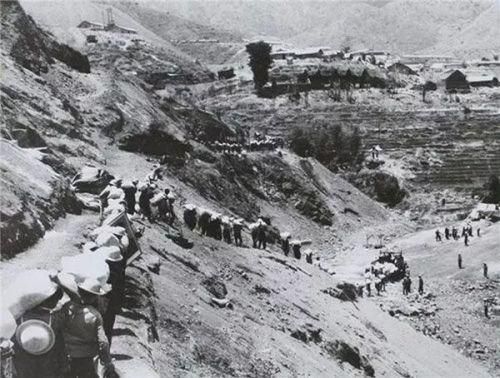
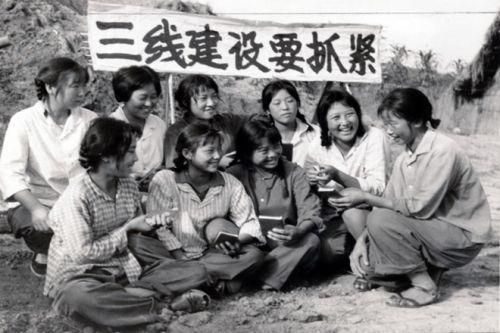
Three five-year plans for the third line of construction, with a combined investment of more than $200 billion, involved millions of people and thousands of successive construction projects. Some provinces and cities, such as sichuan, xiang and chongqing, have leapfrogged into well-developed industrial and mechanically equipped areas. The construction of the three lines has initially changed the state of our interior, particularly in the western region, where defence technology lags behind and basic industries are weak, creating a more complete industrial system and structure for subsequent major developments in the west。
With regard to defence science and technology, the third line of construction has led to the establishment of a large and comprehensive defence technology industry in the western region. According to the relevant data, the state has invested approximately rmb 30 billion in the development of the defence science and technology industry in the three-line zone, accounting for more than 15 per cent of total investment in the construction of the third-line sector. At the same time, the creation of a number of complementary industrial sectors has greatly accelerated the formation of a strategic base for the defence science and technology industry. During the third line of construction, there were more than 800 defence technology-related units in the western region, with fixed assets amounting to more than 27 billion yuan, workers in the labour force totalling millions, and productive capacity representing more than 50 per cent of the total capacity of the defence science and technology industry. Our country has developed its own atomic bombs, hydrogen bombs, artificial earth satellites, nuclear submarines, jet bombers and long-range rockets, the vast majority of which have been developed and tested in the first three-line zone. In terms of specific geographical areas, chongqing has gradually built up a system of conventional weapons industrial bases; sichuan and xingxie cities have been created as strategic nuclear weapons research and production bases; and sichuan and parts of hubei have focused on developing sophisticated space industries. In addition, the liquor spring missile base, the xichang space launch base and the sunxi, osei and xinxi weapons industrial bases have been successively built, significantly enhancing defence capabilities. By 1975, the level of equipment, technology and production capacity of the defence industry in the three-line zone had exceeded the level of the first and second-line areas and achieved the goal of establishing a strategic rear end。
With regard to basic industry, the third line of construction has enabled the western region to establish a large number of major enterprises and production bases in the mechanical, energy and raw materials industries. In the early days of the new china, the country's industrial base was weak, its industrial system was not comprehensive enough, and industrial development in the west was almost blank. The party and the state have placed high priority on addressing the economic problems of the central and western region, particularly the acute underdevelopment of the basic industries in coastal areas. Comrade mao has a long-term plan for the construction of the third line, stating, "is the third line only for railways and only for coal and steel? It should be machinery, chemicals, military and gas (mao zedong year book (1949-1976), vol. 5, p. 472), emphasizing greater exploitation of basic industries. Guided by this idea, all efforts have been made to build steel bases such as the climbing of flowers, wine springs, chongqing, and coal bases such as six rolls of water and mibei; the completion of the construction of hydroelectric plants such as the isthmus liu, eight canyons, the gou dam and the ujiang ferry; and the opening and operation of major manufacturing enterprises such as the second automobile factory, the shaanxi motor plant, the sichuan motor plant and the deyung orient steam plant, which have enabled the rapid development of the basic industry in the western region. After more than a decade of efforts, the industrial fixed assets of a number of provinces and cities have increased significantly, and the basic industrial system has continued to improve, thus facilitating the process of industrialization throughout the western region. The three-line construction has laid the foundations for a modern industrial system in the west, reduced the development gap between the west and the central and eastern regions, and provided important support for the optimization of the country's industrial structure and the sustainable development of the country's industrial economy, including energy and raw materials。
Three-line construction provides a convenient transportation and economic base for major developments in the west
Transport is an “advanced officer” of economic development, and the ease of transport is directly related to the allocation of resources and the size of the market, with significant implications for the urbanization process. In the early days of the establishment of the new china, the western part of the country was in the throes of the world, and “there is an urgent need to find a way out” (dun xiaoping collection (1949-1974), people's press 2014, p. 29). In the west, the transport infrastructure is poor, transport is inefficient and urbanization is low. Following the third line of construction, the rapid construction of a network of transport infrastructure in the western region and the rising number of emerging cities have greatly increased the level of urbanization in the western region and contributed to economic and social development in the western region。
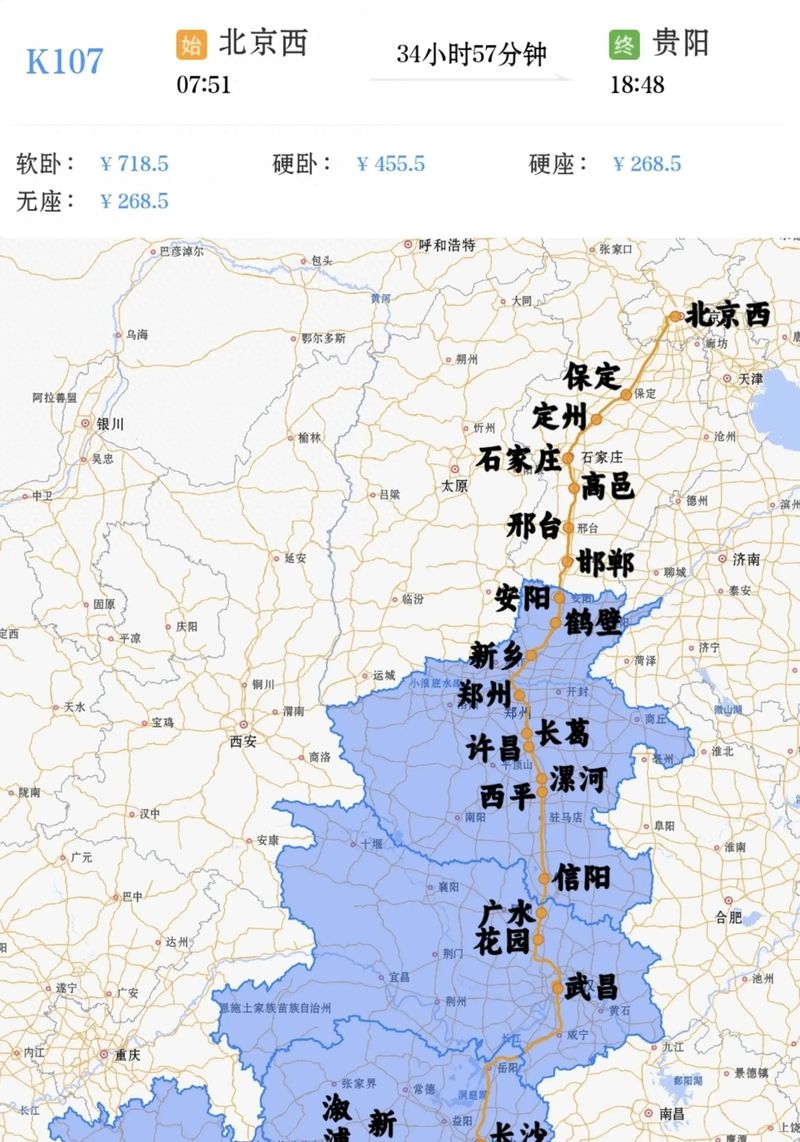
During the third line of construction, more than a dozen major trans-provincial railway lines and several intra-provincial railways were built in the western region. According to statistics, between 1964 and 1980, the main rail line in the three-line area increased by more than 8,000 kilometres in total, and the number of railway miles increased from 19 per cent to 35 per cent of the country (chen donglin, third line construction - western developments in the period of war preparedness, ccp central school press 2003, p. 271). At the same time, road construction and waterways have grown considerably. During this period, the central provincial highways were renovated, asphalted, paved and upgraded, and more than 220,000 kilometres of new roads were built, accounting for 55 per cent of the country's total during the same period (power editor, economic history of the people's republic of china: list, china economic press, 1999, p. 687). At the same time, the state has made great efforts to overhaul shipping, which is dominated by the yangtze river, with a marked increase in the mileage and traffic of inland waterways (li chaohua, third line construction study, jilin university press 2003, pp. 47-49). The basic formation of transport infrastructure networks has changed the previously closed state of the western region, strengthened connectivity with the central and eastern regions, facilitated regional economic trade and narrowed regional development gaps。
During the three-line construction period, the number and size of cities in the western region increased significantly and the level of urbanization increased considerably as a result of high levels of investment, inflow of people, development of resources and concentration of factors of production. For example, chengdu, chongqing, lanzhou, and sengchuan are gradually becoming regional transportation hubs, with a steady increase in radiation and connectivity to their surroundings. Growing flowers, six bowls of water, and gold-chang, as well as steel, coal, nickel mining, processing and transportation, have made new cities from the old wilderness. The gradual rise and prosperity of urban groups, rapid radiation and the impact on backward areas such as the qinba region, the umun mountains and the cool mountains, which have brought technology, talent and culture to modern industries, and the progress of the “fifty-five years”, have considerably alleviated and improved the insufficient imbalance in economic development in the western region, “generally a big one” the construction of three-line construction enterprises has led to the construction of a small town (chongqing city economic complex, chongqing press, 1991, p. 12), which has contributed to the economic and social integration, synergy and cross-border development of the western region。
(author: zhong chong chong chong chong chong, zhong chong chong research fellow, associate professor, chong chong business university)