Three five-year plans for the third line of construction, with a cumulative investment of 205. 2 billion yuan between 1964 and 1980, have led to the construction of about 2,000 large and medium-sized enterprises, facilities and research institutes in the central and western regions. The establishment of a three-line strategic rear base based on energy transport, a focus on defence science and technology industries, a combination of raw materials and processing industries, and scientific research and production has largely achieved the desired goal of establishing a solid national defence strategy. Three-line construction, both in size and time span, is a strategy of economic construction unprecedented in the history of the new china。
Great achievements in industrial construction
The three-line construction is a comprehensive strategic decision with the aim of preparing for war. The most notable achievement is the successful establishment of a more complete national defence strategy, which has greatly enhanced our national defence capacity and deepened our national defence strategy, which has been crucial in breaking the blockade and threats against our country by foreign hostile forces during the special years and in moving our national defence towards a path of independence and self-empowerment。
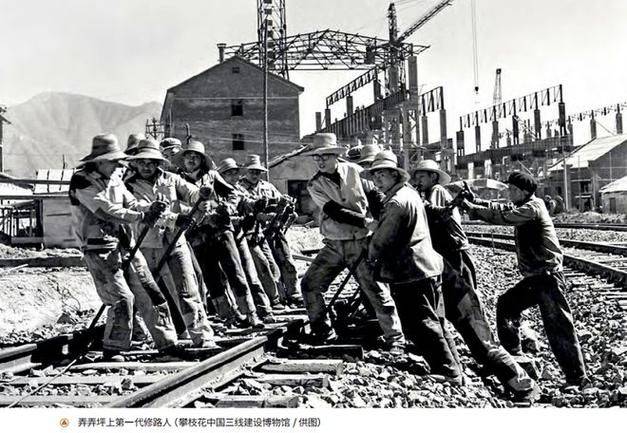
Over 400 military-industrial enterprises, 80 national defence research and research institutes have been built in three-line areas, including the chongqing-centric conventional weapons industry base, the sichuan, guizhou, shaanxi electronics industry base, the sichuan, shunxi, gansu, qinghai nuclear industry base, the guizhou, sichuan and sichuan aviation industry base, the sichuan, guizhou and hubei space industry bases, and the ship industry base in the upper yangtze river. During the three-line construction period, my country has made remarkable achievements in the field of defence science and technology industries. On 16 october 1964, the first self-developed atomic bomb successfully exploded; on 17 june 1967, the first self-developed hydrogen bomb successfully exploded; on 24 april 1970, the first artificial earth satellite, the eastern red one, was launched successfully; on 26 december 1970, the first nuclear submarine was successfully underwater; and on 18 may 1980, the first full range test of the east wind-5 intercontinental ballistic missile was successfully carried out. The successful development of the “two-shot-one-boat” is a landmark achievement in laying the foundations of our great power. Deng xiaoping once said: “if since the 1960s china has not had atomic and hydrogen bombs, and if it has not launched satellites, china cannot be called a major power with significant influence, and there is no international standing like this.”
The basic industry and the transport industry also developed during the construction period on the third line, initially changing the irrational state of the country's industrial layout, the construction of steel bases such as the climbing of branches, wine springs and the chongqing steel plant, the construction of coal bases such as six rolls of water and mets, the sichuan 2nd heavy mechanical plant, the orient power station equipment plant (including the oriental electric power plant, the orient wheel plant, the oriental boiler plant and the east wind electric plant), the hubei second motors plant, the sichuan heavy vehicle manufacturing company, the guizhou llec company and the xuan qincheon machine bed company, the guzhou dam, liu jia canyon and liang pis, etc., have become the industrial pillars of china's development in the west and west. Ten main railway lines have been constructed, with an additional railway distance of 8046 km. By 1978, industrial fixed assets in the central and western regions accounted for 56 per cent of the country's total, surpassing the eastern coast, and the number of workers had increased from 3. 2565 million to 11295 million, compared to 1964, with a 3. 92-fold increase in the gross industrial product. This has provided energy, raw materials and transport support to countries in the early stages of reform and liberalization to implement strategies that prioritize the development of an outward-oriented economy in the east。
Main experiences in industrial construction
Industrial construction during the triple construction period has accumulated a valuable set of experiences。
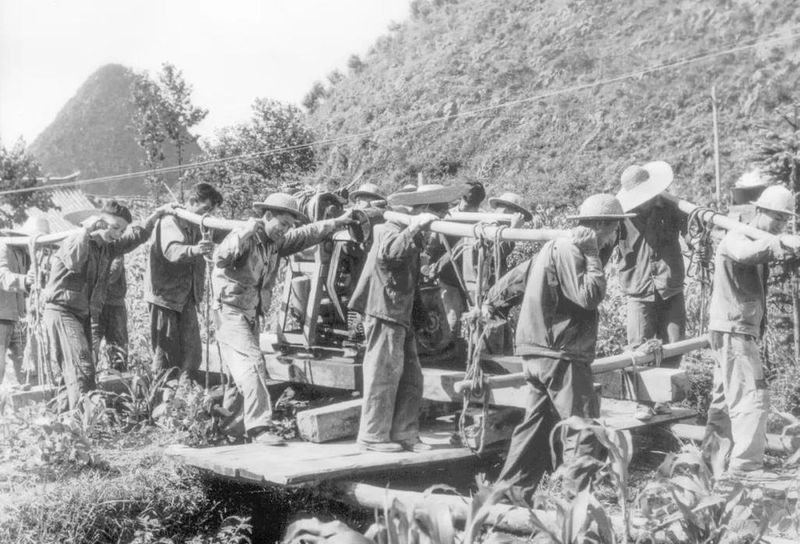
First, “focusing on the battle for destruction”. The eradication was the industrial application of mao's concept of “centralized strength to destroy the enemy” during the war, with a focus on ensuring that priority projects were put in place to lay the industrial foundation for the three-line zone. Third-line construction projects are numerous and urgent, and central ministries in the north-west, south-west, south-central and industrial management have prepared their own preparedness plans and third-line plans, with more three-line projects waiting to begin, with relatively limited capital personnel and supplies. As a result, projects have been queued from the central to the local level in the form of “focusing on neutralization”, with the selection of “strategicly important backbone projects, currently urgently needed preparedness projects, projects that quickly lead to important production lines using their original base, major construction projects in coal mines, electricity, gas and transport, and focused winding-up projects”。
Second, “self-reliance is paramount, supported by external assistance”. My country is a backward country in terms of industrialization, absorbing and benefiting from foreign experience and technology, and seeking international assistance would have been a viable way of rapidly developing industry. However, during the third-line construction period, owing to the harsh international environment in which we find ourselves, it was difficult to obtain external assistance in the areas of science, technology and economics and was forced to embark on the path of independent and autonomous industrialization. “independentness” here needs to be seen in a dialectical way, and self-reliance does not amount to isolation, closed-door construction, as mao emphasized in his 1958 speech: “since self-reliance, supported by foreign aid, independent and autonomous dry industry, dry agriculture, dry technology and cultural revolutions, the defeat of the idea of slavery, the burial of dogmatism, the careful study of good foreign experience and the study of bad foreign experience — this is our route. In the face of a dire international environment, the third-line construction demonstrates the determination and capacity of our country to develop its own industry independently, while at a time of international de-escalation, we seek opportunities to introduce international advanced industrial technologies. Between 1972 and 1973, with the advent of chinese diplomacy, mao zedong and zhou eun approved 26 large-scale technology equipment programmes (the “four-three programmes”) totalling $4. 3 billion from western countries, which were accompanied by the construction of dozens of large-scale fertilizer and fibre-optic enterprises, creating a second external import boom since the establishment of the new china. This introduction coincided with the second culmination of the three-line construction, with the almost simultaneous occurrence of two internal and external climaxes, illustrating the richness of the country's path to independent and autonomous industrialization, with the underlying causes of self-reliance at its core, without excluding the contribution of external causes。
Third, “innovation on its own, seeking to transcend”. The development of our space industry during the three-line construction period is a good example of how to explore the path of independent and autonomous industrialization in china. “technology is organizational and can only be generated within the organization and never be bought from the market. The introduction can be a complement to the beginning of innovation, but it is by no means a substitute for the process of innovation. Otherwise, once reliance on foreign technology has developed, it may lead to the targeting of the technology track, mistakenly entering the trap of `introducing - backward - re-introducing - backward'.” as a result, the space industry has developed a “four-generation” experience of “producing a generation, developing a generation, preparing a generation and exploring a generation”. “`producing a generation' is the production of stable products and the generation of equipment to be used by users; `developing a generation' is the rapid development and development of new products to meet demand, after solving any problems or problems, upscaling and enhancing efficiency; `pre-development of a generation' is primarily the tracking of the world's advanced space-type frontier technologies and the presentation of space-related development plans appropriate to our national circumstances, breaking through technology-critical and new technology development that hinders space development; and `exploring' a generation is no longer limited to tracking catch-up, but seeks to transcend and lead dynamics through original and autonomous innovations.”
Fourth, “the combination of regular and irregular forces”. The third line of construction relies not only on the middle- and medium-sized backbone of the centre, but also on the active development of local industries, street industries and social groups, combining large-, medium- and small-scale projects, working together to form a rear strategic base. The commission calls for the application of the “principles of the sanctuary, with the main forces taking the guerrillas and the militia”, and the secretary-general of the north-west bureau, liu lantao, demands that “industrial construction must be combined in large, medium and small, as must the field forces, the local army and the guerrillas and the militia. The industrial layout of the three-line zone is also characterized by the role of the central enterprise as a field force, the role of local industry as a local army and the role of the guerrillas and militias as part of the collective-owned economy, such as the street industry and social-unit enterprises。
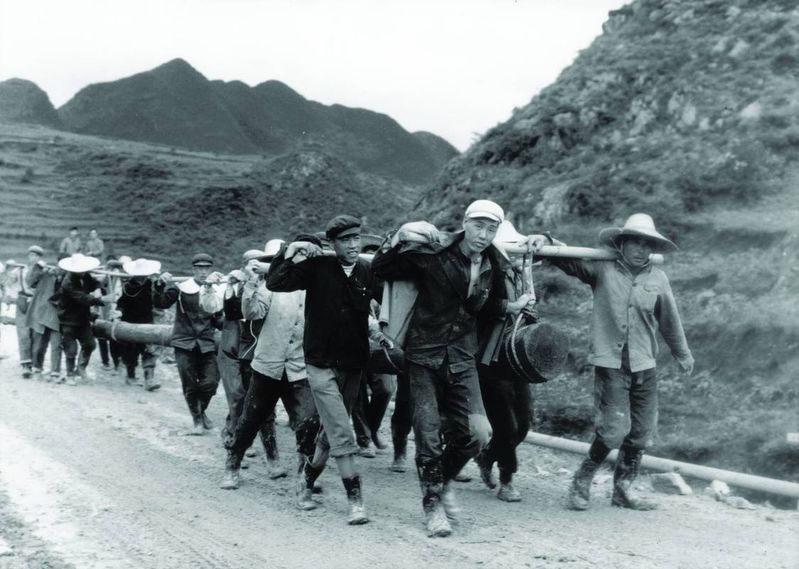
Fifth, “universal leader of the party”. Three-line construction involves many sectors at the central and local levels, and in order to avoid a back-to-back approach, there is a need for greater regulation between different sectors. The third line of construction is “one-ist leadership of the party”, with the establishment of a field party committee at the construction site, headed by a senior cadre selected by the central ministry. The on-site party committees have commands, political departments, etc., and the leadership must be present to strengthen party leadership on the third line. The on-site party committee during the third-line construction period was the main form of “one-ist leadership of the party”, and its intellectual resources came from the practice of local authorities during the war years。
Three-line construction, an attempt by industry and large-scale migration of populations to the interior half a century ago, has provided a solid foundation for strategic hinterland building, and its experience is worth building on in the new era。
(professor, faculty of history and culture, sichuan university, faculty of authors)