Marx and engus's communism doctrine has been in question since its birth, but none of the doubts can obscure the illuminating ideology of this doctrine, because marx and engus's doctrine of eradicating all unjust social systems, such as exploitation and oppression, and achieving the liberation and well-being of all humanity represents the idealistic pursuit of a progressive human being. Moreover, the communism doctrine is also of a strict scientific nature, which today is not only not perjured, as some have said, but, on the contrary, increasingly confirmed by the practice of human social development, showing infinite vitality。
Human social development is a natural historical process that is not diverted by the will of human beings
Max has spent his entire life engaged in a vast and difficult scientific research. He treated his scientific research with the utmost seriousness and relentless self-criticism. Everything created by human society is examined in a critical manner; everything built by human thought is revisited, criticized and tested by the workers ' movement, which leads to conclusions that cannot be drawn by those who are restricted by the narrow nature of the bourgeois class or bound by the bourgeois bias. Despite the many major changes that have taken place in the world for more than 100 years after the passing of marxism, none of these changes is divorced from the patterns of human social development revealed by marxism, which can be interpreted and explained in terms of the rationale of marxism。
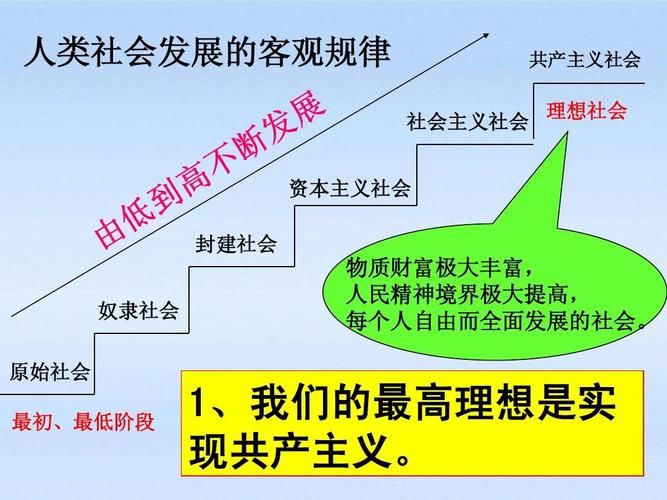
Marx's scientific research has shown that the development of human society is a natural historical process that is not diverted by human will. The ability of people to practice and the results they achieve depend on the historical conditions of their societies and ultimately on the level of productivity and its social form. In creating new ways of survival, from the use of stone to the use of metal tools, the people of the primitive society are not aware of the social consequences of such a change. Slavery was the most brutal system of exploitation in history, but under conditions of low labour productivity, it was the social form through which human development had to be developed, and there could be no modern society without slavery. To a certain extent, the way in which slavery is produced has created the material means of eliminating it, the emergence of iron, cattle and new farming systems, which are compatible with self-sufficient individual production, and the creation of feudal systems based on the small farmers ' economy. The capitalist system, which is based on the accumulated civilizational achievements of feudal societies, is the highest form of private society. The transformation of individual small-scale production into social production is the historical function of capitalist production methods, and it is precisely through intense growth in social productivity that the bourgeois class finally overcome the feudal system and established its dominance. However, socialization of production and private ownership are incompatible in nature, and the weapons that capitalism once used to overthrow the feudal system inevitably have to evolve into weapons directed at capitalism itself, replacing capitalist societies would be a new form of socialism — socialism and communism — based on public ownership that is compatible with socialized productivity。
Whether socialized productivity is the starting point for theory and practice is the final and fundamental dividing line between scientific and imaginary socialism. Marx's scientific socialist theory is scientific in that it is free of any subjective arbitrariness, but is based on the objective requirements of the ultimate determining force of social development, namely, the development of productivity, which is the natural consequence of the spontaneous forces of capitalism that drive the development of socialized productivity。
Communism is the general trend in the future development of human society
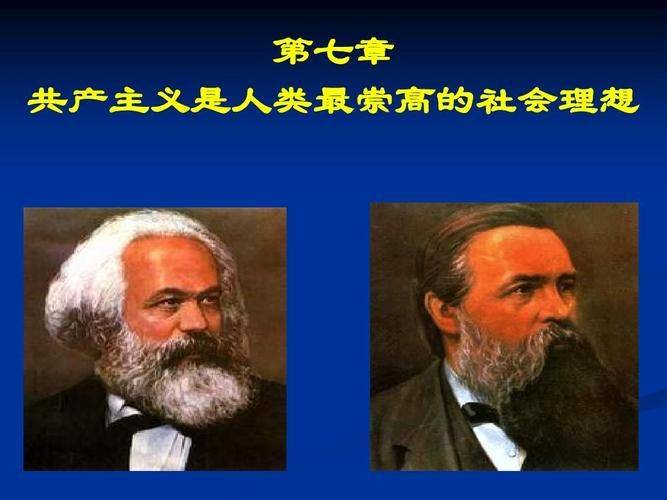
According to max engels, socialist society is only the first stage of a communist society, and the true ideal for a human society is a communist social form. Communism not only liberates people from private rule, but also opens unlimited prospects for free and comprehensive human development. All peoples, regardless of the historical circumstances in which they live, are destined to follow this path in order to finally reach an economic and social form that guarantees the highest level of social and labour productivity while guaranteeing the most comprehensive development of humankind。
They noted that the universal development of productivity had led to the general development of world interaction and that the history of peoples would be transformed into world history. The mere creation of world markets by large industries has closely linked peoples around the globe, especially those of civilized nations, so that the peoples of each country are affected by what happens in another country. The self-sufficiency and isolation of local and ethnic communities in the past were replaced by the interaction and interdependence of various ethnic groups. Communism, on the other hand, is premised on the universal development of productivity and world interaction。
They concluded that communism could not be geographical and that the communist revolution could only be a worldwide revolution. Large industries had made social development more or less the same in all civilized countries, so that in all those countries the bourgeois and bourgeois classes had become the two decisive classes of society, and the struggle between them had become the main struggle. The communist revolution will therefore not be a one-state revolution, but a simultaneous revolution in all civilized countries, at least in britain, the united states, france and germany。
They noted that the full development of human liberation and freedom could only be achieved if history was transformed into world history. The degree of emancipation of each individual is consistent with the degree to which history is completely transformed into world history. It is only because of this that individual individuals can move away from different ethnic and geographical limitations and have a real connection to the production of the whole world, including spiritual production, and may have the power to take advantage of all the civilized achievements created by humankind. The full interdependence of individuals, the form of their spontaneous and historic common activity in the world, which has been transformed by the communist revolution into control and conscious control over the power of those who are different, has finally become the master of their own social union, and thus the master of nature, the master of their own freedom. It is only then that people are fully conscious in creating their own history。
In their view, with the abolition of private ownership and the universal application of the principle of communism, nation-states will gradually disappear. The first action taken by the state as the representative of society as a whole, namely, the possession of the means of production in the name of society, will then become redundant in every sphere of social relations and will cease to exist on its own. At that time, domination over people would be replaced by management of the property and leadership of the production process. The state is not “abandoned”, it is self-determinating. Linked to the demise of the state are class and class rivalry, the old social division of labour and the gradual elimination of rural-urban disparities, the self-diversion of human beings and the progressive elimination of human-natural rivalries. “replacement of the old bourgeois society, where class and class are opposed, will be such a union, where the free development of every human being is a condition for the free development of all.”
The marxist founder's account of the future society was based on an analysis of the critical capitalist realist movement, “discovering a new world in the old world” and merely indicating the general trends in the future development of human society, rather than providing a priori model for the concrete evolution of history and specific details for the future society. However, their discourse is undoubtedly based on rigorous scientific reasoning, with compelling and powerful logical forces that show irrefutable scientificness. The globalization of the economy and the various trends that confront us today are strikingly consistent with the picture depicted by max engels。
General patterns of historical development do not exclude specificity
Marxism, in revealing the general pattern of human social development, does not exclude the special nature of historical development. Max had pointed out that his analysis of the path of capitalism to its creation and development was clearly confined to the countries of western europe, and that, in the case of the russian rural community, it was possible to enjoy all the positive results of the capitalist system, not through the “kaftin canyon” of the capitalist system. Lenin later stressed more clearly that changes in the order and form of historical development did not negate the general pattern of social development, that the socialist revolution should not be rejected by “russian productivity has not reached a high level sufficient to achieve socialism”, that the october revolution did not run counter to the general pattern of world historical development, that it was fully in line with the general path of world historical development and that it merely created the preconditions for the development of civilizations needed for socialism in a different way from that of western european countries。
The special political situation of the world economy in the age of imperialism, which led to the socialism of a group of economically and politically backward countries through the socialist revolution and the democratic revolution of the people, has led to the emergence of a situation in the world where both socialism and capitalism coexist. The socialist system has fundamentally changed the historical fate of the working class and the working people. It has achieved great achievements in the eradication of exploitation, the elimination of polarization, the achievement of social equality and people's ownership, and the construction of a new intellectual and moral culture. It has accumulated considerable experience and demonstrated its superiority. After all, however, socialism is a nascent social system and is still in the early stages of practice and development. In just a few decades, the socialist countries have endured the harsh test of success and failure。
Comrade deng xiaoping fully estimated the long-term and challenging nature of building and developing socialism. He pointed out, on the one hand, that the consolidation and development of the socialist system would require a long period of history requiring our generations, generations and even generations to struggle relentlessly, and that the path was a twist, while, on the other hand, he strongly believed that there would be more in the world in favour of marxism, which was science, and which, after a long process of evolution, would inevitably replace capitalism, which was the general trend of irreversible social history, and that we had confidence in the future of socialism. He noted how many dynastys had been re-established in the centuries since capitalism replaced feudalism. Thus, in a sense, a temporary recovery is also a regular phenomenon that is not entirely avoidable. In some countries, there had been serious distortions, and socialism seemed to have been weakened, but people had undergone exercise and learned from it would lead to a healthier development of socialism. Comrade deng xiaoping also stated that chinese socialism could not change and that china would certainly follow the path of socialism of its choice. As long as china does not collapse, one fifth of the world's population adheres to socialism; as long as chinese socialism does not collapse, socialism will remain viable in the world。
A determined and conscious struggle for communist ideals
Some in the world believe that the result of economic globalization will be the globalization of capitalism, the ultimate social system of humanity. It's just a dream。

Capitalist methods of production, while creating wealth, cannot bring about general prosperity and shared prosperity, but rather a dichotomy between rich and poor, which is growing both within countries and internationally. Advances in science and technology and increased levels of automation of production could have replaced labour, reduced labour intensity and allowed more leisure time, but under the capitalist system, the wealth created by machines was owned by machine owners, most of whom were under pressure to take jobs away. The greed of capital and the free flow of capital had turned the world into a big casino, financial speculation into a super-profit industry, and the excessive expansion of the “virtual economy” created enormous risks. The capitalist system inevitably creates greed, corruption and injustice, and causes enormous and intractable social problems throughout the world. Terrorism, religious extremism, drugs, smuggling and violent crime plague governments and threaten the normal lives of people. The nature of the profit motive, the trend towards an unlimited expansion of production and the anarchy of the production of society as a whole have also created growing resource and environmental problems. There is a growing realization that there is also a confrontational contradiction between capitalist methods of production and the basic conditions of human existence, and that there is no future for humankind without changing those methods of production。
Capitalism was never just an economic system, but it was also a political system, and the politics of western countries, however democratic they might seem, could not change the very nature of capital rule. In the united states, the greed of the financial oligopoly culminated in the 2008 financial crisis, which caused not only a large number of american families to go bankrupt, but also global damage. But in the aftermath of the crisis, the united states government was forced to use taxpayers' money to finance large banks, large companies, and there was no accountability in the aftermath of the crisis, and the obama administration's bill on financial regulation ended with no outcome, because these financial capital held the core and lifeblood of the united states economy, “too big to fail”. In the world, the united states has always tied western democracies to free-market economies, bringing political strife, political instability and weak states to exporting countries and regions, a situation best suited to the needs of capital, behind which “capital is political breast milk, serving capital is a natural function of government.”。
There is an irresistible contradiction between production methods and social systems, one that constantly breeds confrontation, crisis, conflict and even war-torn production systems, one that only aims at seizing wealth, one that builds the wealth of a few and a few on the poverty of the majority and of most countries, one that produces wealth while also producing greed, corruption and injustice, and one that is doomed to no future. History's dialectic tells us that the flourishing of capitalism is merely paving the way for it to be replaced by something new。
The scientific conclusion should be that all progressive developments in the world today, including in developed capitalist countries, are conducive to the growth of socialism and communism. The revolutionary leap in science and technology and productivity has ushered in an era of “global villages” in which history has become the material and technological foundation of world history. Increased labour productivity and changes in industrial structures are leading to a profound transformation of the working class that will become a more conscious and influential social force. The growing development of methods of organizing social production will make it possible to prepare for the abandonment of private capitalism. The increasing number of global challenges, such as climate change and the security of humanity as a whole, will force common action to address them, leading to a substantial “community of human destiny”. All of this gives us reason to look positively and optimistically at the general trends in world history。
We are marxists, whose basic principles must not be lost; we are communists, and we must firmly believe in the ideals of communism or lose our way. As comrade xi has pointed out, what we are doing now is in the early stages of socialism, but we must not forget our original intentions, our supreme struggle, and we must not consider the realization of the ideals of communism as an empty mirage because it is a long process. There can be no ambiguity or ambiguity on the subject of ideal conviction. “the earth has the power to sow rivers, not the sea, and the wind to sow wood, not mountains”. To fight for the ideals of communism, we can truly achieve “twilight and strength, the east-west wind”。
Daily people's journal (06/04/06/07)