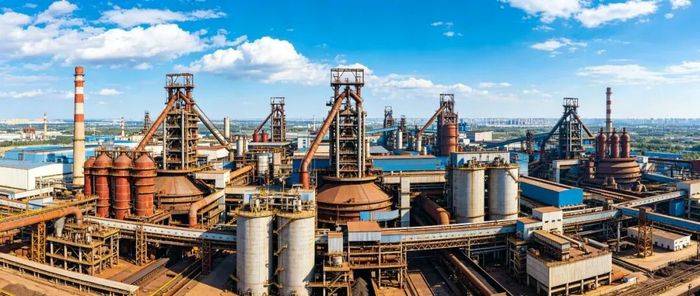
In 2026, the domestic steel industry was at the bottom of the cycle in its re-programming phase. The industry had long been plagued by overcapacity, weak demand and reduced profit margins, and most steel factories had been struggling to operate. In the middle of the year, there has been a marked shift in market fundamentals: a global wave of declining production, a sustained contraction in industry supply, a combination of repair of downstream demand structures, higher feedstock costs, a resonance of multiple positive factors, a gradual turn of the industry cycle, and increasing certainty over the long run in steel prices。
I. State of the industry: structural mismatch between supply and demand, full release of bottom pressures
The current core contradiction in the steel market is a structural mismatch between supply and demand. Overcapacity has been reduced in demand and the industry continues to be suppressed, and steel companies are generally caught in the dilemma of “increasing their earnings and reducing their lost share”。
Gross domestic crude steel production exceeded 1 billion tons, with an official production control target of 930 million tons in 2026 and surplus capacity exceeding 100 million tons. The overall industry capacity utilization rate is less than 80 per cent, below the industry health capacity utilization threshold of 82 per cent. The national production of crude steel in the first quarter was 248 million tons, which was 4. 6 per cent lower in comparison to the same period, less than the reduction in end demand (about 7 per cent in the same period) and continued the pattern of easing supply and demand。
Industry profits are close to the red line, and earnings from different types of steel are clearly divided. Long-process screwd steel cost $3270 per ton and only $63 per ton of maori; short-flow furnace steel lost $89 per ton; and cold-rolled products lost $138. Most steel plants have chosen to maintain production, influenced by market share, recovery costs and local growth factors, and micro- and loss production has become normal. During the first quarter, the ferrous metal smelting and processing industry as a whole lost rmb 3. 34 billion, a gain/loss over the same period, while the main steel industry in china and china has a profit of rmb 1. 03 billion, with a profit rate of only 0. 1 per cent。
This year's steel consumption structure has been characterized by weak property, infrastructure floors, high-end build-up, and a historic switch in demand focus. The share of steel used in real estate was approximately 40 per cent, affected by industry adjustments, with an estimated 173 million tons of steel used in real estate for the entire year, a decrease of 5. 3 per cent over the same period, corresponding investments and new construction areas falling by 14. 9 per cent and 16. 1 per cent, respectively. The 13. 6 million tons of steel in real estate in may, a further 2. 3 per cent decline in the ring ratio, remains a major drag on the demand for construction materials。
In may, the new special-purpose debt issued exceeded 1. 8 trillion yuan, completing 45 per cent of the year's total, and 2. 6 million tons of steel used in capital construction that month, representing an increase of 2. 9 per cent in the ring, but in volume it was difficult to bridge the real estate demand gap. Manufacturing has become a major consumer, with an estimated annual steel consumption of 420 million tons, an increase of 2. 5 per cent over the same period, with new energy vehicles and wind voltages contributing more than 20 million tons. The current share of steel in manufacturing has exceeded 53 per cent, surpassing real estate for the first time and rewriting industry demand logic。
Ii. The first half of the year is retraced: the season is not strong and markets are convulsed bottom
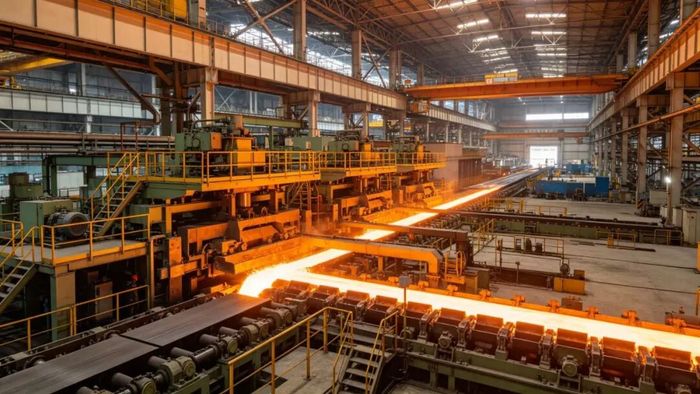
Looking back at the situation in the first half of the year, steel prices were characterized by “failure and weakness” at the bottom of the season, where prices competed repeatedly between weak demand and cost support, and pessimism was fully released。
February-march is the traditional spring season, but after this year's season, the resumption of work is slow, procurement needs are delayed and stocks accumulate rapidly. In late march, the stock of key steel companies increased by 8. 7 per cent over the same period, social stocks rose by 10. 2 per cent over the same period, high stocks rebounded prices and the market maintained a vulnerable shock。
In april, as market discipline, environmental production restrictions and crude steel flattening policies landed, the mood warmed up, steel prices rebounded in the first round, and the screwdriver futures contract reached a maximum of $3247 per ton. In may, the southern part of the country entered the may rainy season, where outdoor construction was hampered, the demand for construction materials weakened, steel prices fell again, and the price gap for rolls widened to 245 yuan/tonne, with a rising mood. After successive shocks, the first half of the year was fully absorbed, laying the groundwork for the second half of the course。
Iii. Typologies change: the spread of global production reduction and the introduction of supply into the contraction cycle
Under industry micro-normalization, the willingness of steel plants to reduce production continues to rise, the behaviour of reducing production has been extended from domestic to global, and the supply of crude steel has led to a phased contraction, becoming the core variable of the market shift。
World iron and steel association data show that in march 2026, total production of rough steel in the 69 major steel-producing countries worldwide was 159. 9 million tons, a decrease of 4. 29 per cent over the same period, and a global reduction cycle was established. At the subregional level, the middle east experienced a sharp drop of 33. 5 per cent in output affected by geo-conflicts, while the eu reduced production by 4. 6 per cent owing to high energy costs and by 7. 9 per cent in russia and the cis countries. Domestic controls led the world, with crude steel production of 8. 704 million tons in march, a decline of 6. 3 per cent over the same period, with more significant contractions。
Under pressure from crude steel regulation, environmental monitoring and increased prices of raw materials, domestic production reduction became the norm. In mid-may, the average daily production ratio of crude steel in priority steel companies decreased by an additional 0. 7 per cent, with continued production efficiency. The new version of the iron and steel replacement policy, which implements the 1. 5:1 reduction replacement rigidity standard, is clear that production capacity will not increase. The regularized annual net exit capacity is expected to be about 30 million tons. The cross-regional trade in capacity indicators has been fully limited since 2028, and small and medium-scale backward production capacity has accelerated. As of mid-may, the national steel social stock had dropped to 9. 54 million tons, and price stability had been underpinned by the conductive effects of changing demand for low-level stocks。
Iv. Cost bottoming: strong feedstock prices and construction of price floors
Upstream raw materials are operating at high prices and increasing production costs in the industry, limiting lower steel prices and forcing steel plants to keep production under control。
Domestic imports of iron ore amounted to 315 million tons in a quarter, an increase of 10. 5 per cent over the same period, at an average import price of $100. 7 per ton. On 6 may, 62 per cent of the p-6 grade iron ore index went up to $112. 05 per ton, followed by a small reversal but price-resilient. At present, iron ore costs account for more than 40 per cent of total steel costs and are at the heart of steel prices。
Coal-charting prices have risen since late february, with the prevailing bid of $1530 per ton in may, representing an increase of more than 12 per cent over the same period. As a result, the cost of focusing single tons of steel increased by $80 compared to the end of last year, and the price of raw and finished materials was significantly different from that of scissors, further reducing business profits. In the long term, the eu carbon tariffs are set and the domestic carbon market is expanded, and long-term green costs for tons of steel are expected to increase to between $120 and $150, increasing the industry's access threshold and accelerating market success。
V. Between enterprises: a pattern of power and weakness emerges, leading to opportunities
The bottom-up pattern of the industry has been reshaped and the market has been characterized by an “ice-fired” pattern: high-end special steel, plate-heads are operating with robust product advantages, traditional construction-material enterprises have suffered losses and industry concentration has steadily increased。
In the sino-sino-sino-sino-sino-sino-sino-sino-sino-sino-sino-sino-sino-sino-sino-sino-sino-sino-sino-sino-sino-sino-sino-sino-sino-sino-sino-sino-sino-sino-sino-sino-sino-sino-sino-sino-sino-sino-sino-sino-sino-sino-sino-sino-sino-sino-sino-sino-sino-sino-sino-sino-sino-sino-sino-sino-sino-sino-sino-sino-sino-sino-sino-sino-sino-sino-sino-sino-sino-sino-sino-sino-sino-sino-sino-sino-sino-sino-sino-sino-sino-sino-sino-sino-sino the share of precious steel is maintained on high-end plates and fine management, with a net profit of $10,346 million in 2025, an increase of 40. 53 per cent over the same period, and the size of the collections in the first quarter of this year remains the leading industry. South steel shares, double-wheel-drived plates and special steel operations, received $14. 414 billion in a quarter, representing a net profit of $597 million for the mother, an increase of 3. 23 per cent over the same period, to hedge market pressures by optimizing product structures。
The pressure on businesses to look at traditional commons has increased. New steel shares received $7. 36 billion in a quarter, a decline of 15. 9 per cent over the same period and a loss of net profits of $731 million; shandong steel was also dominated by construction steel, a decline of 18. 59 per cent in the same quarter, a sustained loss for businesses and a weak traditional track cycle。
With shrinking supplies, low stocks and a warmer demand, the industry booms resonate with the dominant positions. Small and medium-sized production capacity has been phased out and the capacity utilization rate for such taps as bowloon and chinese sint steel has remained above 85 per cent. At the top of the line, high-end steel is more bargaining power, with the cost advantages of superstitious mineral resources, with the head enterprise taking the lead in terms of volume, price and synchronization。
Vi. A post-market outlook: multiple strengths and resonances, with up-to-the-centres clear
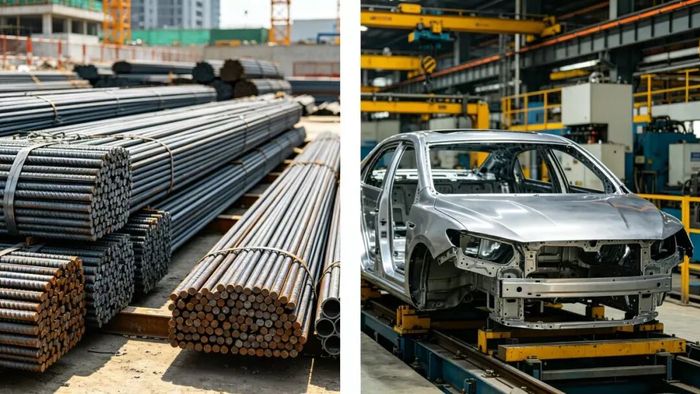
As at 15 june, the price of the screwdriver futures contract was $3184 per ton, an increase of over 8 per cent over the april low point and a maximum of $3247 per ton in the disc, which reached new prices during the next year, intuitively reflecting the expected market shift. The current industry pricing logic is completely changed, with three main drivers of supply contraction, cost rigidity, demand repair and a solid steel price rise。
Global production reduction and domestic capacity control lock-in supply increases are difficult to reverse; the price of raw materials is high and steel prices are largely closed down; manufacturing and infrastructure continue to bottom, superimpose property policies are marginal, and terminal demand is expected to be repaired; low-level stocks continue to improve supply and demand, and the booming of leading firms boosts market confidence。
In the short term, the southern moe rainy season will cause disturbance to outdoor construction and steel prices may cause small shocks. In the medium to long term, however, the steel industry is expected to rebalance supply and demand in the second half of 2026, with a steady shift in price hubs. With the dual effects of tight supply and cost-depending, the industry cycle reverses deserve sustained attention。
Risk tips: this paper is only a compilation of industry logic and equity and does not constitute any investment proposal. Factors such as market volatility, policy adjustments and faster-than-anticipated technological substitution may affect industry and individual unit performance and require careful investment