Last month, a screenshot was turned to and an older brother, who had been buying on behalf of japan for three years, said that his order in 2024 had risen more than in 2023, but the profit was less. There's a lot of people in the comment area who agree: where's the money
That's a pretty typical question. I've been looking at the surrogate industry for years and i've found a phenomenon
** not the market has become smaller, but the logic of making money has changed.**。
Let's look at some data sets
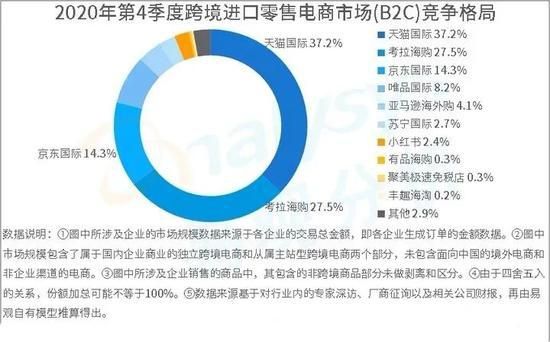
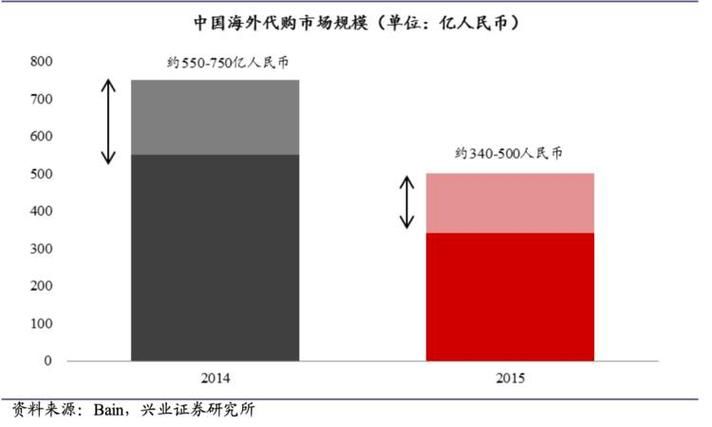
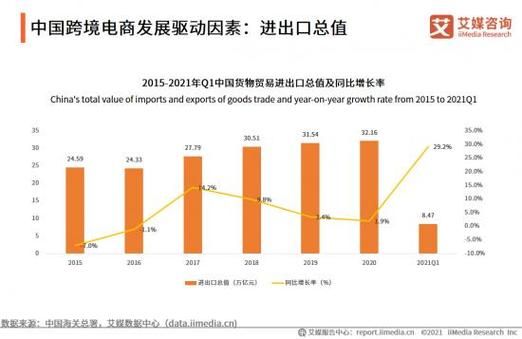
According to the report of the institute of cross-border electricians, the size of the reverse purchasing market increased by 18. 7 per cent each year, but the average profit margin of individual buyers fell from 28 per cent in 2021 to about 15 per cent in 2024。
** the cake's getting bigger, more people split cakes, and the cost is rising**。
I know a friend who's been working 1688 for europe and america, and he told me the details: he used to check orders manually, handle 50 orders a day, and now he's on 200, it takes two or three hours to reconcile. Wrong one, free three。
** it's not a question of capacity, it's a matter of scale, it's an old approach.**。
The cost structure is changing
Many focus on the difference between the purchase price and the sale price, ignoring the hidden costs of the middle. I'll comb it
** purchasing end**
: the parameters of the 1688 platform are highly variable, the link is still available today, and will go down tomorrow. Hand-to-hand items, 800 times a day, blinded。
** logistics end**
(b) international freight costs are highly volatile, there are numerous links to combined shipments, leakages, breakdowns, delays, and each link may eat profits. The share of logistics costs purchased on behalf of japan ranges from 8 to 15 per cent (data source: 56sys buys cip operating data), and food items can reach 18 per cent。
** backend**
Error sheets, leaks, wrong sizes, return rates of 20-30% in clothing. The processing cost of a post-sale order is almost three times that of a normal order。
** the biggest hidden cost is actually time**
I don't know. Selectives, prices, translations, shelves, billings, purchases, inspection, packing, shipping, reconciliations, sale of goods - a person doing 10 work, may ultimately be paid less than a delivery。
What's the problem
I've seen too many people, i've earned money from a lack of information at first, and i want to replicate it. It turns out
** reproduced as workload, not profit**。
Take an example. There's a korean girl who earns $20,000 a month on a human back. Later on, when he tried to be big, he hired two men and rented the warehouse, the profit was reduced. Why? Because her core competitiveness is product selection and customer trust, but when scaled up, these cannot be replicated. After procurement, inventory, logistics and sale, every link consumed her energy and turned into a high-load machine。
** the problem is not that there is no choice, but that selection requires too many dimensions.**
— prices, inventories, logistics costs, tariff risks, customer preferences, real-time renewal of each dimension, and manual uncertainty。
Where's the chance
To tell you the truth, the buy-in business will not disappear, but will be divided into two forms:
One is..
** small and beautiful shop**
Food is based on personal taste and trust, with high individual prices and a high repurchase rate, but not much。
The other is..
** systemic purchasing platform**
:: automation of repetitive work with tools, focusing on selection and customer relations。
I met a reverse purchasing team, which began in 2023 with a system linking procurement, reconciliation and logistics tracking. Previously, the reconciliation took two to three hours, and now the system automatically aligns the order and payment with 10 minutes. They are now three, handling the same amount as the previous eight。
** all the problems that the tools can solve are solved, and the remaining systems are unwieldy judgement, and it is the purchase of a true moat. **
My judgment
The surrogate business is shuffled and three categories of people will be eliminated:
Category i
** purely poor information**
Yeah. Now that 1688, the price of treasure-hunting, is almost transparent and can be checked by overseas clients themselves, the dividends of poor information are disappearing。
Category ii
** not willing to use tools**
I don't know. After more than 50 units per unit, the cost of manual operations increases exponentially. It is not an issue of efficiency but of error tolerance. One wrong one, the accent is damaged。
Category iii
** anything.**
I don't know. Without focus, there is no supply chain advantage or customer intelligence. A japanese make-up makes a deep-earned make-up, a european-american fashion card focuses on the tide, and a vertical premium。
** it's not too late? **
To be honest, it would have been too late if it had been the old manual bookkeeping system. But it is time to combine selection, procurement, logistics and reconciliation with tools and to focus on where real value is created — choice and customer trust。
We've got the spot. It's not impossible to do it, it can't do it the same way。
The back end of the multi-year electrician system was performed in a number of areas, including substitute purchase, cross-border logistics and carbon power monitoring. What's the problem。