We're looking at the life of the people
Leung wei-jin
Introduction: the world is changing
The salt of woody oil contains the most veritable warmth of the population, and the pyrotechnic pyrotechnics of the stoves reflect the deep-seated issues of rural and urban development. The current volatility of the energy market and the long-term high price of bottled liquefied gas and pipe gas have added a stable and rigid cost of living to farmers and rural operators in the xinxi mountains. The fertile land surrounding the forest is defined by the cloud, on the one hand by the pressures of rising energy costs, and on the other by the demands of the era of rural habitat management and green, low-carbon development, and on the other by the population's local attachment to the smell of wood and fire, on the other hand, by the fact that traditional earth stoves are thick and inefficient. Paradoxically, it happens to be the growth point of the industry。
From the old mountain stoves to the standardized smoke-free and energy-efficient wood stoves, from the subsistence tools used by farmers to the wealthy industries that support local niche manufacturing and provide access to 10 million projects, it has been determined that technological innovation will break the costs of energy, and that the local industry will address the concerns of the population. Small stoves, a living book with thousands of families, and a grand proposition for the economic transformation of the county-based entities, both respond to the real pains of high energy prices and write grass-roots responses to local adaptations for rural renewal, integrated development and livelihood。
I. The time question: high-level gas performance and the dual dilemma of rural kitchens
People eat first and cook with energy. International energy fluctuations in recent years have led to rural and urban livelihoods, and gas sales continue to be at high prices, a burden that cannot be ignored by mountain populations. On the hilltops of rodundo, many remote villages are not yet connected to the gas pipeline and farmers are dependent on bottled liquefied gas. For rural households, where agriculture and low income are the main sources, especially for the elderly, the monthly expenditure on gas is accumulated over a period of time and is a constant and irreducible expense. A number of villagers have tried a number of times to make full-scale changes to gas-cooking tools, and eventually revert to old-fashioned earth stoves due to cost pressures, reflecting the simple logic of people's living calculations behind energy choices。
At the same time, traditional indigenous stoves themselves become more visible and constitute a second development challenge. The lack of specialized ventilation, concentration structures, inadequate firewood burning, smoke-filled kitchens, damage to the villagers ' respiratory system, less than 30 per cent of the heat efficiency and the high volume of fuel consumed are both a waste of agricultural and forest waste resources and an easy cause to pile wood and grass in front of the house and contaminate the village. Under the policy orientation of environmental remediation and atmospheric pollution control, old and loose stoves are incompatible with green development requirements。
On the one hand, gas is expensive and unusable; on the other hand, old stoves are dirty and ineffective. Under double squeezing, the rhomin kitchen reached a crossroads that had to be transformed: a simple one-size-fits-all approach to gas rehabilitation, neglecting the income reality of the mountain population and leaving the countryside productively to live in reality, allowed traditional land stoves to be preserved while departing from the long-term goal of ecologically viable, low-carbon development. The triple variables of energy costs, livelihood needs, environmental constraints, together with a realistic examination of the wisdom of governance at the grass-roots level and the innovative capacity of indigenous industries, are before us。
In a change, the way forward is not a dualist choice, but an inclusive solution to innovation. The energy-efficient wood-fired stove industry, which is home-grown precisely to anchor the pains of this age, has re-engineered rural cooking energy supply patterns with technological improvements, providing district samples to solve the human challenges posed by high gas。
Ii. Fragmentation: deepland innovation, technological remodelling of energy-efficient cookers
Industrial break-ups, rooted in technology; law-making, derived from deep cultivation. The rise of fuel-efficient wood-fired stoves is far from simply recalcitrant, but is a systematic technological innovation that has lasted for more than a decade and is based on local people's circumstances, with the core focus on balancing the needs of the four main sectors of the population, which are “cost-saving, smoke-free, efficient and effective”。
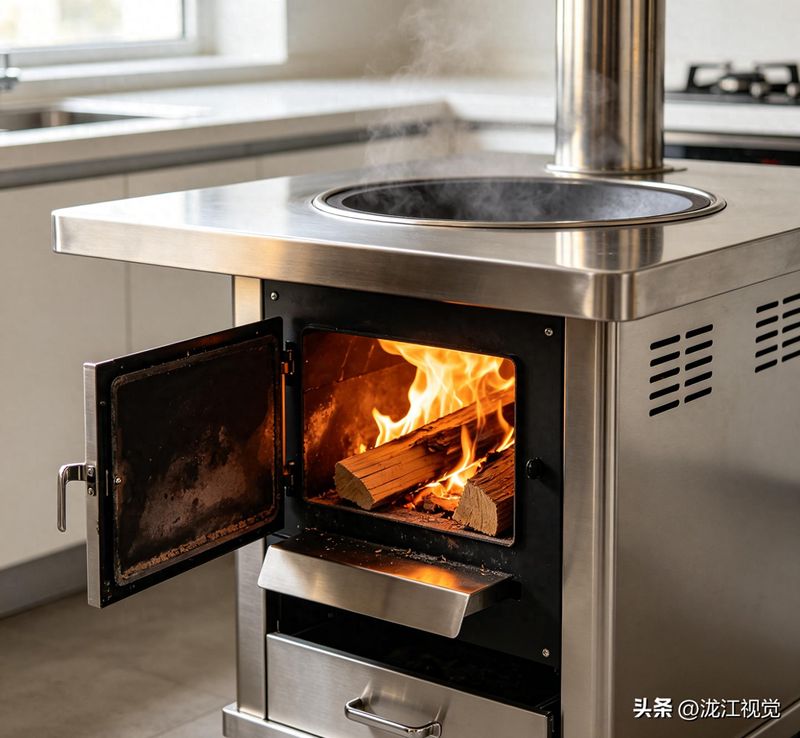
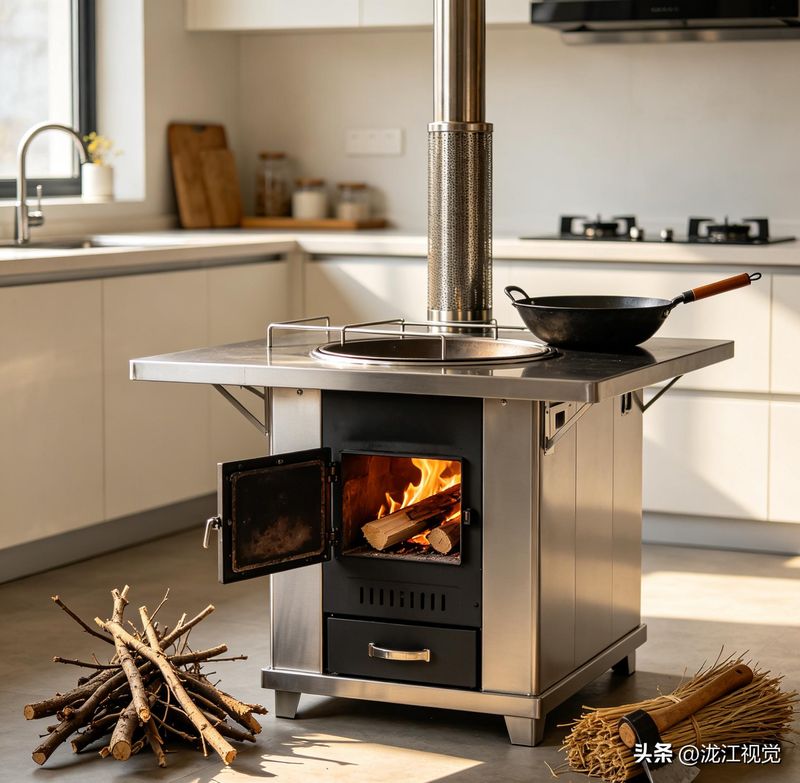
The leaders of the indigenous industry have travelled to 17 townships throughout the city to visit thousands of families to record cooking habits in the mountains and to carry out attacks on the characteristics of the country, such as wet wood, scattered wood and small kitchen space. More than 200 fire-resistant material formulations have been tested repeatedly, three years of uninterruptible field burning experiments to grind the furnace structure, creating a concentrated energy ring + secondary wind core technology, and adapting old stove slabs from the burning bottom logic. New energy-efficient wood stoves have achieved multiple key breakthroughs: heat efficiency has increased to more than 60 per cent, fuel spending has been reduced significantly by 40 per cent for the same food consumption; secondary oxygen combustion has been fully consumed, smoke has largely been eliminated, leaving the old smokeless kitchens out; dry and wet wood can be burned steadily, and raw materials for waste materials such as forest straw and wood in mountain areas can be adapted for local extraction and waste。
Compared to gas stoves, there is a clear cost advantage: farmers use mountain forests, orchards to trim branches, crop straws in situ, at almost zero fuel cost; and, in long-term use, the use of liquid gas in bottles at higher and sustained prices saves thousands of dollars a year in cooking costs and is tailored to the life pressure of higher fuel prices. The standardized modular design combines modern kitchen aesthetics, self-draining, integrated operating tables, installation and maintenance of easy-to-facilities, maintaining wood and wood cooking, a unique country-style smell, and adapting to the needs of the new age rural habitat for environmental clean-up and modernization, and facilitating the closure of products that “the people are willing to buy, use them well on a day-to-day basis and save money in the long term”。
Technological innovation emerges from the inherent pitfall of “environmentally friendly versus cost-saving” and emerges from a new path of clean use of biomass. Distinguished from the traditional ground stoves of flaring, fuel-efficient wood stoves that fully release the resourceization value of agro-forestry waste, significantly reduce the amount of burning pollutants, meet the low-carbon requirements of rural atmospheric management and achieve a two-way convergence between human losses and ecological protection, which is the core source of a reversible outcry in the cooking industry。
Iii. Industrial breakout: small cookstoves to become large-scale industries with a distinctive manufacturing power of 10 million projects
A technological breakthrough in a single product is only the first step towards a breakthrough; the cultivation of a full industrial ecology allows for sustainable rooting of the law. In the face of widespread market demand, fuelled by high gas prices, it was decided to jump out of the initial stages of sporadic workshops and single-manufacturing operations to promote the transformation of fuel-efficient wood stoves from fragmented handicrafts to standardized, branded county-specific manufacturing。
The government set up a platform, staged a show by businesses and brought together the country's people to build a synergistic development landscape. The local party councils have incorporated energy-efficient wood stoves into the special light-work industry breeding list, incorporated into the “big goods out” marketing campaign, organized local lead firms to expand the market for rural villages and online electric operators, improved production, distribution and distribution, and after-selling of the entire chain; developed indigenous lead companies as the main players in the production process, and developed production standards, promoted the development of local craftsmen and small and micro-enterprises, avoided irregular and low-priced internal rolls, and polished the regional industrial name cards of the “royal and broad-based fuel stoves”。
The industrial wealth effect continues to be released: the productive sector absorbs the idle labour of the towns and villages into the labour force and generates a steady increase in income from work in front of the home; the distribution of radiation clouds at the end of the day, as well as in the southern provinces, with a number of out-of-town people driving on a special trip to rome for procurement; and, at the grass-roots level of extension, the town and town union has launched a people-friendly replacement campaign to replace the old stoves for new energy-efficient stoves, lower the threshold for the replacement of farmers and promote the upgrading of rural kitchens. The mini-cookers jumped out of the narrow position of “farmers' own appliances” and grew into niche industries that boosted town employment, boosted the real economy of the town, broadened the channels for popular revenue generation, and became important players in the development of a billion projects to reduce disparities between urban and rural areas。
The deeper value of industrial outbreaks lies in the construction of autonomous, controlled public energy support systems at the county level. Against the backdrop of uncontrolled fluctuations in external gas prices, the indigenous wood-fired stove industry generates indigenous biomass resources, creates indigenous, low-cost, sustainable cooking energy supplement pathways, reduces the dependence of mountain populations on external commercial energy purchases and enhances livelihood security at the grass-roots level. In the face of ups and downs of the energy market, indigenous industries have built a buffer zone for their livelihoods, which is an irreplaceable and realistic value of subdistrict-specific manufacturing。
Iv. The release of governance: approaching people's responsibility to development and people's life province
In the context of a high-gas-efficient environment, rhodingwood stoves are not just a local industry development story, but a more integrated energy transformation at the grass-roots level, rural governance and shared wealth provide a three-fold insight。
The first is that people's lives are based on realism and reject “one size fits all” simple governance. There is no uniform standard answer to the energy transition, and the pattern of full gas coverage of the piping in plain urban areas cannot be directly replicated in the mountainous region of kansai county, where the population has low incomes. It is based on the current status of resources and people's income and expenditure in mountain areas, not on the unilateral rejection of biomass cooking, but on the modernization of traditional tools with technological improvements, taking into account the need for environmental policies to be cost-effective and to find a balance between policy orientation and popular demands. The temperature of governance is reflected in respect for the reality of the countryside, listening to the people's accounts, not being transformed from the reality of life, and not simply seeking forms of integration that ignore the burden on the people。
The second is to maintain industrial empowerment in order to solve the problem with local industry. Short-term subsidies can only ease the urgency of coping with the pressures of rising gas prices, fostering home-grown industries and home-grown low-cost energy solutions. The aim is to support the industrial chain of wood and fire stoves developed by indigenous craftsmen and local mountain forest resources, to transform the immediate needs of the population into economic growth points in the county area, to “solve one kitchen problem and boost one industry”, and to create a virtuous circle of people's livelihood improvement and industrial development mutually reinforcing, highlighting the central role of the real economy in stabilizing people's lives and stabilizing the grass roots。
Thirdly, green low-carbon development is compatible with multiple pathways that broaden the new dimensions of rural ecological governance. The twin carbon target, the remediation of the habitat environment, does not amount to a total elimination of biomass burning, with the focus on promoting the transition from widespread combustion to cleaner and efficient use. By upgrading fuel-efficient wood stoves to achieve smoke reduction, depletion and low carbon, integrating the resource use of agro-forestry waste into rural routines, and moving out of a low-carbon rural path that fits the mountains of the south, ecological conservation can be deeply integrated with rural and rich industries, widening the boundaries of practice for grass-roots green development。
Concluding remarks: the stoves are bright, the people are well protected, and the way to rejuvenation is good
The stoves are on fire, the fireworks are on fire, the people live and the industry works. Against the backdrop of an era of continued high gas prices, it was decided to break down with technological innovation to respond to the population's expectations, re-establish the roots of the country's specialty industry, and move out of the energy transition to a barrier that would fit the countryside and benefit all。
The pyrotechnics, which never stop three meals a day, are the value coordinates of district development: the ultimate point of development was the warmth of the people, and the fundamental mission of industry was to alleviate the difficulties of life, and the central thrust of governance was to be tailored and realistic. As we stand on a new journey to advance millions of projects and to fully boost the country's renewal, the short cut-off of energy-efficient wood stoves has revealed to us that, regardless of the volatility of external markets and the changes in the times, it is possible to create a new dynamic that will keep thousands of families warm and make the roads of communal prosperity even wider, provided that the people of the country have always taken root in their homeland, built on their own resources and built on technological innovations. (by vice-president of the yunan district council of the agro-industrial party, member of the political council)