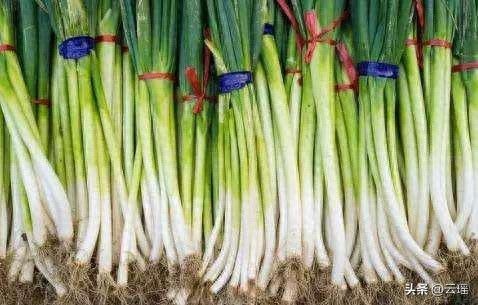
As a fish grower who has just entered the pit, there has been a great deal of grass, ranging from a very expensive water herb to a seemingly fine mose, who, after stepping on numerous pits, has finally been completely conquered by the mad grass in the fish tank. No carbon dioxide, no fine fertilization, no deliberate management, even fish whites, and throwing them into the fish tank, will produce a green waterfall full of tatters, with the so-called “facility of the strong”。
Today i'll share all my experience with weeds, from identity, planting to conservation, landscapes, hand-held hands to teach you how to heal underwater green landscapes, and new hands to close eyes
I. Why are new fish farmers preferred to grass
Many of our friends who have just come into contact with the fish tank are concerned about the choice of waterweed, fear of death, fear of trouble, fear of energy. And the grass, which is made entirely for the new hands, has so many advantages。
First, the ability to survive is full and adaptive. It is extremely low in terms of water quality, water temperature, which can grow normally between 18 and 30°c, even with piped water from the north, and can survive by simply laying in the cask, and the water body ph at 6. 5-7. 5 micro-acid to alkaline conditions, which can be perfectly adapted, unlike other waterweeds, with slightly water quality fluctuations and yellow leaf rotting roots。
Second, no carbon dioxide, zero cost conservation. Most of the good-looking weeds on the market require additional carbon dioxide for normal growth, not only to acquire equipment but also to periodically replace materials, which are costly and complex for starters. But weeds are not used at all, and the natural environment in the fish tank allows ordinary lights to be used for light-cooperative purposes and is still strong。
And, uh, it's growing so fast, so fast. The fish breeder's most eagerness is to see the results quickly, and the grass meets the expectation that, in a suitable environment, it can grow several centimetres a day, grow out of a few pockets in just one month, and without a long wait, it will soon be able to create a green and luminous fish tank landscape, with a direct sense of achievement。
Finally, clean up water quality and contribute to fish tank ecology. Salmon is called a “water-purification energy player” in a fish tank, which can rapidly absorb harmful substances such as nitrogen and nitrite in water, all of which are toxic from the decomposition and decomposition of fish, not only improve water quality, reduce the probability that fish casks will be full of water and algae, but also provide a healthier living environment for fish, while releasing oxygen, increasing the solubility of fish tanks and achieving symbiotic fish。
Moreover, the price of grass is extremely pro-people, and a few dollars can be used to buy a large amount of it, even if it is not well nourished, which is a perfect practice, and is entirely a new starting-up ceiling。
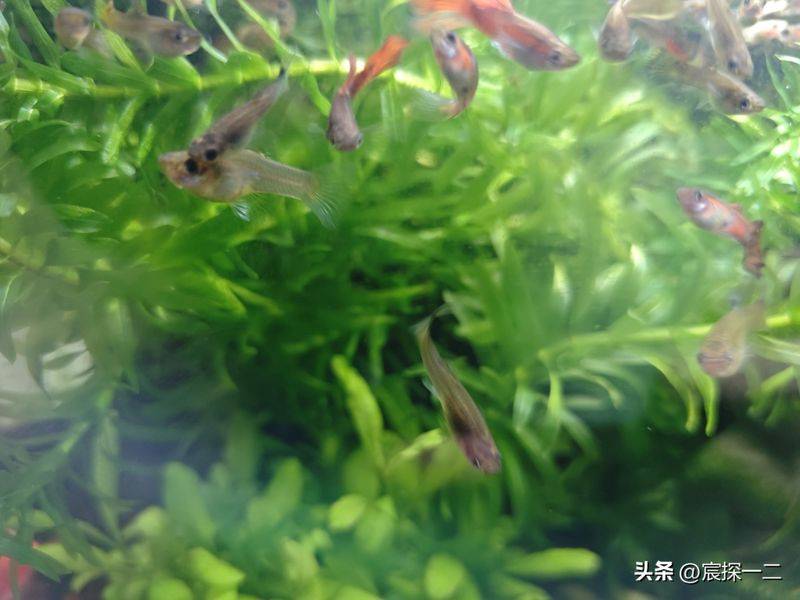
Ii. We can't save this before the grass enters the tank
Newly bought herbs cannot be thrown directly into the fish tank and pre-processed in order to adapt them more quickly to the environment and avoid bringing in bacteria, eggs and affecting the entire fish tank ecology。
Step one, simple trim. Newly purchased saps may have yellow leaves, rotting rods, broken branches, cut all the unhealthy parts, and keep the strong branches at 15-20 cm long. Sufficient branches can also be slashed appropriately to facilitate subsequent cultivation。
Step two, sterile. This is the most critical step, which many newcomers have ignored, leading to subsequent snails, algae, and even weed rotting. Prepare a basin of clean water, add a small amount of potassium permanganate, dilute it with light powder, immerse the trimped grass into a immersion of 5 to 10 minutes, then wash it repeatedly with fresh water and completely remove the disease and eggs from the surface. If potassium permanganate is not available, it can also be immersed with salt water, not at too high concentrations, and wash after 15 minutes。
Step three, stand still. Don't plant it in the fish tank. The water warms up to one to two hours of static water, so that the water grass adapts to the water temperature, reduces the stress after entering the tank and avoids yellowing and aging of leaves。
Three, two ways to grow
The method of growing grass is super simple, without complex techniques, and can be easily fed in both ways。
Mode i: solid bottom sand cultivation
If bottom sands such as volcanic rock, pottery, water and mud are laid in the fish tank, this option can be chosen so that the grass can take root and grow more steadily。
When planted, the root of the grass is inserted directly into the bottom sand at a depth of 3-5 cm, with no need to be inserted too deep to avoid oxygen depletion of the root. A large number of plants can accumulate behind the fish tank as rear grass, which, after growing later, naturally forms a green background with a deep sense of hierarchy。
Cultivation should be carried out in such a way that it is not too dense and leaves room for subsequent growth, with 5 to 8 plants per 10 litres of water, avoiding competition for light and nutrients。
Mode two: floating cultivation
If the fish tank is not covered with sand, or if it does not want trouble, it will simply choose to float and plant it and throw the well-treated grass into the fish tank so that it can float freely into the water。
Floating weeds can also grow and breed normally, and can be repositioned at all times and more readily. However, floating grasses, root systems, which are exposed to water, are relatively casual and suitable for friends who pursue the maintenance of lazy people。
Iv. Daily maintenance is extremely simple, 10 minutes per week
The conservation of herbs is a “lazy man's model” and it can be kept in a green state without much care。
Light management: the demand for light is low on grass, with a guaranteed light of four to eight hours per day and a regular fish tank led light. It is easy to cause hydrograss leaves to grow algae without strong light, and slow and yellow leaves without light. Working people can set their time-lined fish-cylinder lights and set them on a regular daily basis, with no care。
Water quality maintenance: it is sufficient to keep the fish tank clean, not to intentionally change water for grass, following the fish-breeding practice, to change water once a week at a rate of one third at a time to avoid deterioration. When changing water, be careful not to be too hot to prevent water herb stress。
Fertilizer techniques: in the case of fish cisterns mixed with fish and grass, the nutrients that decompose the fish and the bait are sufficient to meet the growth needs of the herb without additional fertilization. If the fish in the fish tank is small in quantity and insufficient in nutrients, it is only possible to drop a few drops of water from time to time, adding every two to three weeks during the boom, without frequent fertilization, to avoid excessive eutrophication。
Cutting the fractional strains: the grass grows too fast, it is easy to burst the tatters, block the fish tank light, and even affect the fish's swimming. Regular triming is therefore essential, usually once a week, cutting out long, too thick and yellow branches and maintaining the beauty of the fish tank。
Cutting down the health branches and replanting them directly will soon produce new plants, freeing the herbs and freeing them from the need to buy water。
Five: fish casks are made with grass, and seconds change. Yes
Don't think that grass is ordinary, but if it's a good match, and it's a good fish tank view, my fish tank is worth it。
The rearview green waterfall: gather the grass in the back of the fish tank, so that it grows upwards, the branches fall naturally, and form a layered, stacked green waterfall, with the scenery set up in the tank, the small fish shuttle, the atmosphere is so full that it is super curable, whether it is a photo or a daily view。
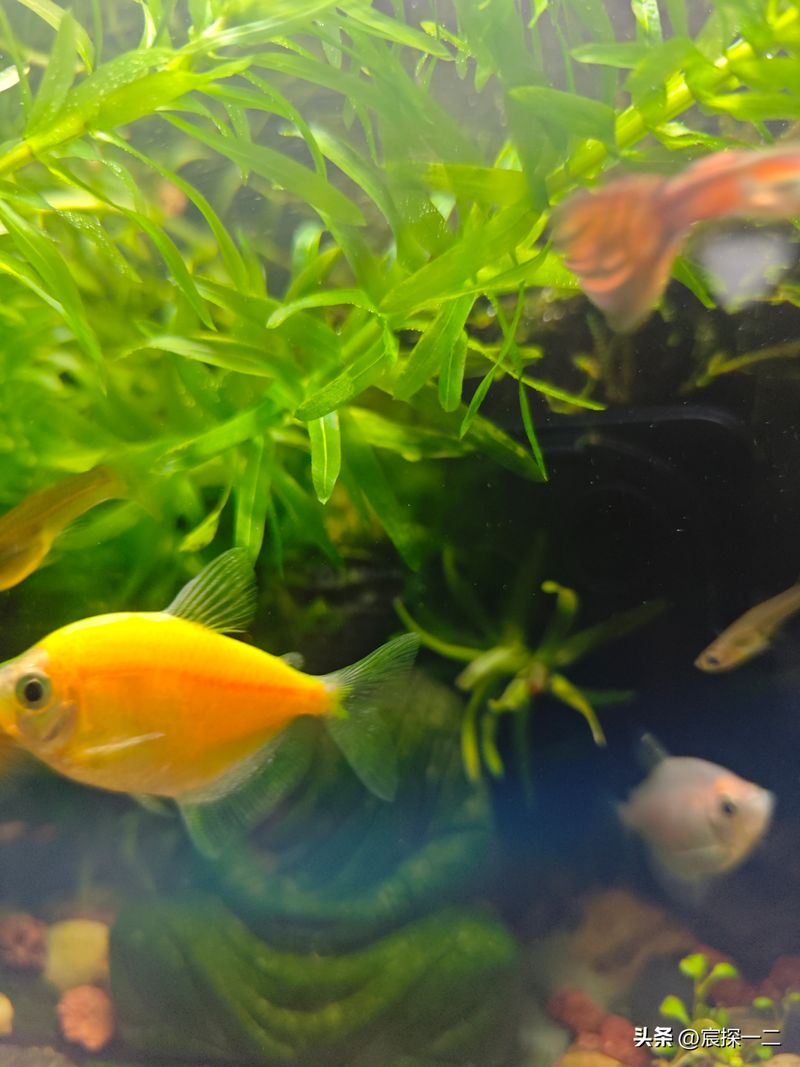
A combination of small-scale sightings of fish to create ecological senses: saplings, foliage, green leaves, suitable for mixing with small, moderate fish, such as peacock fish, red and green lamps, zebra fish, who prefer to travel, hide, lay eggs in the bushes, weeds to provide shelter for fish, and fish activities to make their casks more viable and to create perfect underwater microecologicals。
A simple set of scenery: without a complex mix, a layer of volcanic rock is laid on the bottom of the tank, a few pieces of plasters are sown, with a small, simple and beautiful setup, and with no care, an eco-fish tank, which is in the living room and the desk of the house, all brightly decorated。
Vi. Common problems of new hands, one-stop solutions
Small problems are inevitable in raising grass, and i sum up the most common ones, with solutions to avoid pits easily。
Snack leaves are yellow, rotten roots
Reasons: most are due to insufficient light, deterioration of water quality and lack of oxygen at root。
Solutions: appropriate increase in light time, timely change of water to improve water quality, direct cutting of the rotting roots, replanting and maintenance of root air。
Watergrass leaves and algae
Reasons: too much light, too much nutrients, not to change water for too long。
Solve: shorter light time, less fertilization, manual cleaning of algae, or a few black shell shrimps in the fish tank, easy removal of algae。
The grass grows slowly
Reasons: insufficient light, low water temperature, lack of nutrients。
Solving: adjusting the duration of the light to ensure that water temperature is within a suitable range and that a small amount of water and water fertility is added will quickly restore the momentum。
Death of the grass
Reason: the probability is that there is no disinfection before entering the jar, that the disease is brought in, or that the water quality is heavily contaminated。
Address: timely cleaning of dead and aging plants, replacement of part of the water quality, replanting of healthy weeds and sterilization。
Vii. At the end
The pleasure of fish farming lies not only in the beautiful little fish, but also in creating a small underwater world in which one party belongs. And the grass is the best partner that new hands can start this fun, and it's not cheap, it's not picky, it's with a lot of life, it's full of greenness for the fish tank, and it's a little less crooked and full of achievement for newers on the fishing road。
A green landscape that heals people can be created without expensive weeds, complex equipment, simple grass. If you're a fish starter and you don't know what weed to pick, try the grass, believe me, it will never disappoint you。
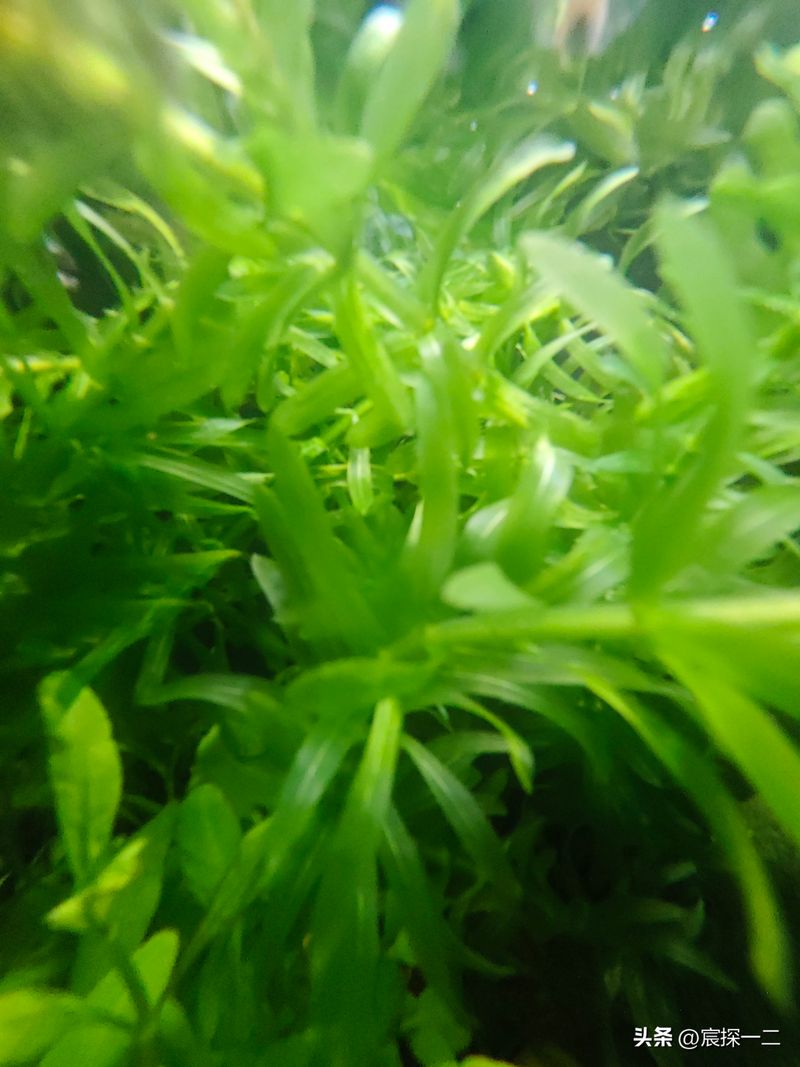
I will then continue to share conservation techniques and visions of all kinds of creatures in the fish tank, and friends who like fish can watch me, share fish experiences, and easily play with family eco-fish tanks
# fish, grass, grass #