After artificial insemination and three in vitro baby surgeries, liu yan gave birth to his daughter, which took more than two years. “now it feels like a relief, and it's really too hard to get there. It may be easy for some, but difficult for others.”
As one of the most effective ways to treat infertility, assisted reproduction offers considerable prospects for future development in the context of policies that encourage fertility. According to the sullivan report, the size of our auxiliary reproduction market is 43. 4 billion yuan in 2020 and is expected to reach 85. 4 billion yuan by 2025。
To increase the penetration rate of assisted reproduction in the country, prices are still a problem, such as having an in vitro baby, which costs 30,000 to 50,000 yuan. The success rate of in vitro babies is also not 100 per cent, and some people need to do a few cycles, which is more expensive。
Currently, the “door” for health insurance claims is gradually opening up to the auxiliary reproductive industry. The inclusion of assisted reproduction in health insurance can address some of the financial burdens of patients。
Increased integration of assisted reproduction into health care
Since 1 july this year, 16 projects on therapeutic assisted reproductive technology have been formally included in the beijing municipal health insurance and occupational injury insurance payments。
The 16 therapeutic assisted reproduction technology projects were described as including ovulation promotion examinations, sperm preferred treatment, sperm preferred treatment-density gradient centrifugal, intra-uterine artificial insemination, etc., covering both artificial insemination and one-generation, second-generation and third-generation in vitro-baby techniques, most of which are integrated into a。
Similarly, since 1 july, 18 assisted reproduction projects, such as embryo culture and embryo transplantation, have been included in the maternity insurance catalogue。
The market has long been calling for the inclusion of assisted reproduction in health care, and signals are being sent at the national level。
In september 2021, for the first time, the national health insurance agency stated that it would guide the localization of “basics of protection” in the context of clinical projects, gradually incorporating the technically mature, safe and manageable therapeuticly assisted reproduction techniques that health care can afford, based on scientific measurements and sound evidence, into the coverage of health care。
In february this year, the national health insurance board published a letter of response to the proposal to include free medical care for infertility, stating that appropriate birth pain and assisted reproduction technology projects would be gradually included in the health insurance fund。
Assisted reproduction techniques are primarily those that use medical techniques and methods to artificially process mates (sembling and eggs), concocts (fertilized eggs) and embryos for the purpose of fertilization, including, inter alia, artificial insemination techniques, in vitro fertilisation-embryvation (ivf-ef) techniques, also known as “in vitro-baby techniques”, which are most widely used。
On 25 july 1978, the world's first in vitro baby was born in england. On 10 march 1988, the first test tube baby was born in the mainland of china at beijing university hospital no. 3。
Over the decades, in vitro infant technology has evolved from the first generation to the third generation, where the first generation, the conventional in vitro fertilization technique (ivf), began to address the problem of female infertility from the egg; the second generation, referred to the single sperm microinjection technique (icsi) in the ovarian plasma, where embryoologists are responsible for the fertilization of sperm, mainly addressing the problem of male infertility; and the third generation, referred to the pre-genetic diagnostic technique (pgt), which is based on a generation and a second generation of techniques capable of implantation by screening embryos with no chromosomal disease or genetic disease。
The cost of treatment varies from one technology to another, with the southwest securities study showing that the first and second generation costs 30,000 yuan, while the third generation costs as much as 50,000 to 100,000 yuan。
“speculation began in may-june 2020 and attempted artificial insemination in september, but failed, and in october it was turned into an in vitro tube, and pre-operative screening preparations began until january 2021, when the first egg removal operation took place. The period from the beginning of assisted reproduction to the birth of a child is more than two years. Back then, back and forth in the hospital. Personally, it is important to find a good hospital and a doctor, but good hospitals and doctors are still small. Those who need to do in vitro baby technology are generally very willing to give birth, but the overall cost of treatment is not cheap, for example, three times at a cumulative cost of over $100,000. If there's some subsidy, i think it'll motivate more people with infertility to try assisted reproduction." liu yan says。
“a life cycle of in vitro babies begins with treatment and ends with the placement of embryos in the womb. This cycle, which typically costs between $30,000 and $50,000, is indeed a considerable expense, and, if included in health insurance, can reduce some of the costs, which can benefit economically disadvantaged families. It remains to be seen, however, whether there will be more people who try the in vitro babies after they are covered, because the success rate of in vitro babies is still subject to a number of factors, such as physical conditions for both sexes.” in an interview with the first financial reporter, liu jiang hui, director of the reproductive centre of the lok district people's hospital in shenzhen city。
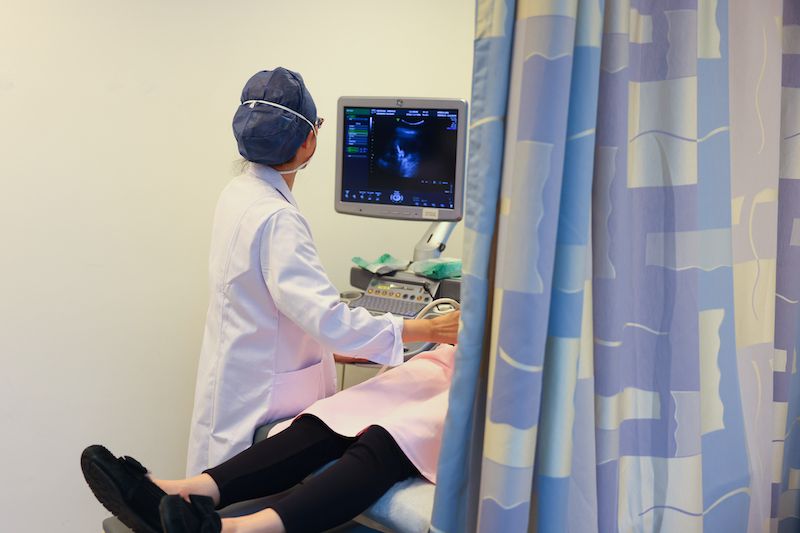
(photo: yen yuming)
The test tube baby is expensive
A complete in vitro baby technology is carried out through the irritation of ovaries, egg extraction, egg fertilization, embryo development, embryo selection, embryo transplantation, pregnancy testing, baby birth, etc。
The success rate of technical treatment of in vitro infants can be defined by clinical pregnancy rates or live births. Clinical pregnancy rates are calculated by dividing the number of induced clinical pregnancies by the number of embryo transplants, and live births by the number of births leading to live births by the number of embryo transplants. Although these two indicators are widely used in the united states, clinical pregnancy rates are more common in china。
Even today, in vitro baby technology is not 100 per cent successful. Data indicate that the current global rate of assisted reproduction live births is less than 40 per cent and that a successful in vitro birth usually takes place over two to three nurturing cycles. As a result, multiple nurturing also means higher costs。
“we certainly hope that a culture cycle will succeed, but different families, with different causes, one success, are not very likely, which, according to my estimates, is about 30 per cent, which is associated with specific populations, such as younger people, with a potential success rate of 40 to 50 per cent. The greater the age, the lower the probability of success, the lower the probability of a success over 40 years of age, which may require two to three cycles, or even five, and the associated high cost. Overall, two to three cycles are raised。
In the course of in vitro babies, most of the medical devices used are imported, which also results in higher overall treatment costs。
“the cost of assisted reproduction is higher when imported materials are used. Currently, the majority of domestic assisted reproductive culture products are monopolized by foreign products.” to the first financial journalist, prof. Zheng zheng, affiliated with the university of technology and the faculty of medicine, said that the nationalization of assisted reproductive medical devices would help to reduce the cost of assisted reproductive treatment。
In its research, the south west portfolio states that the cost of assisted reproduction is currently higher and the cost of surgical treatment is higher. In the various steps of the assisted reproductive treatment cycle, various kinds of medical devices are involved and can be broadly classified into liquid and operational categories depending on the nature of the product. Liquid-type products consist mainly of products such as semen extraction, egg removal, culture, transplant fluids and biopsy fluids that are involved in the steps of egg extraction, fusion and culture. Operating products include surgical instruments and specialized equipment such as egg needles, micro-injection needles, embryo transplant catheters, trophies, micro-injecting microscopes, embryo incubators, etc。
Due to the direct impact of the devices on the success rate of assisted reproductive surgery, the strict control of the equipment by our regulatory authorities, the slowness of the review process and the high technical difficulty of the product, it is still dominated by earlier and more technologically mature foreign producers, such as vitrolfe in sweden, cook in the united states, wallace in the united kingdom and origio in denmark, which have a large market share。
It was revealed to the first financial reporter that a common technical cycle of in vitro babies costs between $30,000 and $50,000, of which up to 30 per cent is spent on drugs。
Nationally produced medical equipment is gradually being replaced
The most basic and critical requirement of assistive reproductive technology is access to the highest quality embryos and their transplantation, the effects of which are critical to the quality of the embryos。
“the embryonic culture fluid is an essential part of our `manufacturing' offspring.”。
In the whole process of assisted reproduction, embryo culture fluids play an essential role as “food-and-food parents”, and the first days of each in vitro baby's life are spent in embryo culture laboratories, ranging from mates (e. G., egg-mother cells, sperm) to post-fertilized ovarian fibrosis, cystals, cystals, which are “swams” throughout the whole process. During the in vitro development of the embryo, the culture fluid simulates the inner environment in which the embryo develops in the mother, providing it with the air, water and food on which it grows, while mitigating external damage to the embryo. As a result, embryonic nutrients are also known as the first “false water” of the embryo's baby。
“in recent years, national production of assisted reproductive technology products, including domestic culture fluids, has also developed.”。
Public information indicates that the domestic market for embryonic fluids has always been the only one in sweden, vitrolfe, and in the united states, cook. It is worth mentioning that the embryo culture fluid sold in singapore by cook is actually authorized from genea biomedx, singapore (hereinafter referred to as “bmx”)。
On 15 may this year, the domestic company beccon medical announced the acquisition of bmx and seven subsidiaries。
Upon completion of the acquisition, the beccon medical programme brought bmx's third-generation whole-generation culture fluid to the chinese market。
“embroid incubators and incubator fluids are scarce embryo laboratory resources in china, and in the future we will bring higher quality and lower price products to china's assisted reproduction industry through local production.” at the recent launch of the genea biomedx new product, and the signing of a strategic partnership between the becon medical & genea group, the chief finance officer of becon said so。
In addition, data from the national bureau of medicine and medicine show that domestic enterprises such as vitto biology, alvefu, ayers, toshiya and others have been partially authorized to produce liquid products。
“with regard to embryonic culture fluids, we attach great importance to product stability, which is to be nurtured with eggs, sperm and embryos over a long period of time in order to promote the development of the embryo and, ultimately, to produce healthy offspring. In this process, the stability of culture fluids is important, and it is necessary to ensure that no changes are made during the period of effectiveness due to ambient temperature, light, gas, etc..”。
Liu jie said that it would take time and a process for clinical doctors to accept an alternative to domestic embryo culture。
“there is a need for a small range of indoors to be tested and experienced before they can be slowly spread.” it is indicated that, while almost all domestic firms are involved in culture-related reagents, very few are involved in all products, and it is expected that future domestic firms will be able to establish a full product chain, providing one-stop products and solutions around assisted reproduction laboratories, starting with sperm washing in the culture room, processing of egg cells, fertilization, embryo breeding, cystology, refrigeration and recovery. This would avoid possible disruptions between different plant products。
The national replacement of medical equipment has been a hotspot of industry in recent years and has been actively promoted by a number of state policies in recent years. Under the process of national substitution of medical equipment, the national substitution of medical equipment can be divided into import monopolies, accelerated substitution, dissimilarity and national production advantages. It appears from the industry that nationally produced assistive reproductive medical devices are in an accelerated state of substitution。
The barriers to assisted reproduction remain high
In recent days, at the 2023 auxiliary reproduction seminar launched by the shenzhen medical equipment industry association, the executive director of the investment bank of china international finance corporation ltd., zhang xiaoyong, considered that the three main drivers of demand in the country's assisted reproduction market are: infertility, penetration and per capita costs。
In his view, the phenomenon of late marriage and child-bearing was increasing, and policies to encourage childbirth had contributed to the demand for assisted reproduction, while the number of infertility cases in china was increasing year by year. At the level of assisted reproductive penetration, there are still many gaps within the target overseas market, but they are rising rapidly. These include the following three dimensions: the rapid increase in our ovulation cycle, which is expected to be close to the united states; the relatively low rate of birth of our in vitro infants compared to japan and the united states; and the accelerated integration of assisted reproductives into health care, which significantly reduces the burden on patients and increases penetration。
It is noteworthy that barriers to entry remain high for the entire service sector. To some extent, the high cost of assisted reproduction is also associated with high barriers to industry。
According to the study, the number of auxiliary reproductive services in the country is still small, the overall market is dominated by public hospitals, competition patterns are fragmented and market concentration is low. The dependence of the auxiliary reproductive industry on doctors is also high, and the expansion of enterprises is also constrained by the fact that the auxiliary reproductive industry is still in its early stages of development and by the limited number of experienced medical personnel。
“certifications, doctors and technology form three core barriers.” south-west securities indicate that our arb license is based on one institution per 3 million people, and that the united states market has strict policy barriers in the arb market, strict licensing criteria and long processes, and higher physical requirements for patients. By the end of june 2020, there were 523 medical institutions authorized to carry out human assisted reproduction technology and 27 medical institutions in the human sperm bank。
As a result of socio-economic developments, changes in population policy and changes in reproductive attitudes and lifestyles, fertility rates are declining year by year and the age of childbearing among women continues to decline, infertility has become one of the major reproductive diseases afflicting many couples of childbearing age, and assisted reproductive technology is considered one of the most effective ways of treating infertility。
The results of the latest national survey on reproductive health epidemiology, published by the team of staff from the university of beijing no. 3, school of jojay, show that the incidence of infertility increased from 12 to 18 per cent between 2007 and 2020。
“the world's first in vitro baby was born in 1978, the first in vitro baby in china was born in 1988, and in the interior of the country has developed rapidly in more than three decades. The total number of cycles now exceeds 1 million cycles/years, and the number of births exceeds 300,000 cases/years, with a success rate almost close to that of developed countries in europe and the united states. “the team of j. C. J. Says。
It was described that, with the rapid development of single-cell whole-genomic sequencing techniques and research on genetic functions, the team of chinese scientists had made remarkable progress in exploring molecular mechanisms for the occurrence of mates and early embryo development, providing effective diagnostic and therapeutic tools for certain genetic diseases or rare patients, including new pre-plant genetic diagnostic methods for single-genetic diseases and chromosomal transposition。
“although we have developed more than a decade later than abroad, the volume of domestic business is greater, and the technology in all its aspects is no less than that of the western countries and can even be surpassed.” liu jie said to the first financial journalist。
However, according to first financial reporter, there are still bottlenecks in the area of assistive reproductive technology。
“the most important link in the embryo culture room is the selection of a good embryo, which is a cell, which, although we have a set of criteria to judge the embryo at all levels, is not perfect, and the selection of the embryo is currently to be upgraded. In addition, with regard to basic research, the interaction between embryos and uterine membranes has yet to be explored. Some of the embryos looked good, and the membrane looked good, but the embryo was put in there and could not be conceived. On the contrary, some human embryos, as well as membranes of general mass, can be conceived for the reasons behind them, or related to the capacity of the membranes to receive embryos, but the study of this part is currently lacking.”。
Wenne liu yan