1, seo tool
The seo tool refers to tools that can help website operators to optimize search engines (seos). The seo tool can help website operators to analyse the status of the seo on the website and identify areas for improvement。
The variety of seo tools allows for the following types of functions:
1) keyword research tool
Help website operators to identify search keywords commonly used by target audiences。
2) web analysis tool
Helps website operators to analyse the status of their websites, such as website traffic, ranking, reverse links, etc。
3) content optimization tool
Help website operators to optimize the content of the website, such as checking key word density, readability, etc。
4) technical seo tool
Help website operators improve the technical seo issues of the website, such as speed, security, etc。
The following are some of the most common seo tools:
Free tools
Payment tool

2. Critical word optimization
The selection of the correct keywords tends to be time-consuming, to determine the appropriateness of the keywords, to use the above-mentioned seo tools selectively and to distribute the keywords rationally among web titles, descriptions, text, urls, etc。
1) how to develop a clickable title label
1 google displays up to 60 characters
If you contain more characters than that number, the title may be cut off and only part of it will be shown to the user. Testing using tools such as the serp preview is important to ensure that the title is shown as you want。
2 vertical lines and hyphens
Both of these symbols (| and - ) are easily read and understood by google, but technically, hyphenated space is slightly larger. Google's capture tools and other robots are considered to be interrupted or suspended when reading labels. In general, the use of vertical lines is feasible because they facilitate the decomposition of the text and make the title easier to read。
3 also include relevant qualifiers and secondary keywords in the label
You have the opportunity to let google know that the page is focused on a broader concept than just a single keyword or phrase. When inserting these long end words and key words, remember to use the natural language that humans understand. Do not insert meaningless keywords in any manner or quantity。
4 do not forget to optimize any title or meta description on your website
Write high-quality titles - not just those that follow formulae. Simply include your keywords in the generic 60 character titles. Now google also gives priority to quality and user experience, and if the title is up, people should really want to click on your title. Instead of making the same titles over and over and over again, we have to drive ourselves and the team to be smart and attractive。
2) how to develop a meta description of how to attract hits
1 use of the entire space
Google allows you to include a maximum of 150 characters in the meta description, so use all characters. They include brand names, key words (and, if possible, secondary keywords), target geographical location and call language. If the user enters a query containing these elements, all of them will be added to the serps. When users see these elements, they are more likely to feel that the outcome will satisfy their intentions。
Consider it a mini ad for your brand
You are trying to promote your brand and website. Write it in a way that attracts users and allows them to click。
3 google can ignore this
If google believes that there are other more user-friendly information on the web page, they will ignore your metadata label and use more relevant clips. That is why it would be better to consider this information carefully in advance. It will also be useful to experiment in real time with the look of your web page in serps。
4 visibility and context
You have to customize the description to the target audience so that the message is closer to their heart. Consider what kind of professional audience your brand serves, what industry they are in, and what their intentions are to make targeted queries。

3. Optimization of website structure
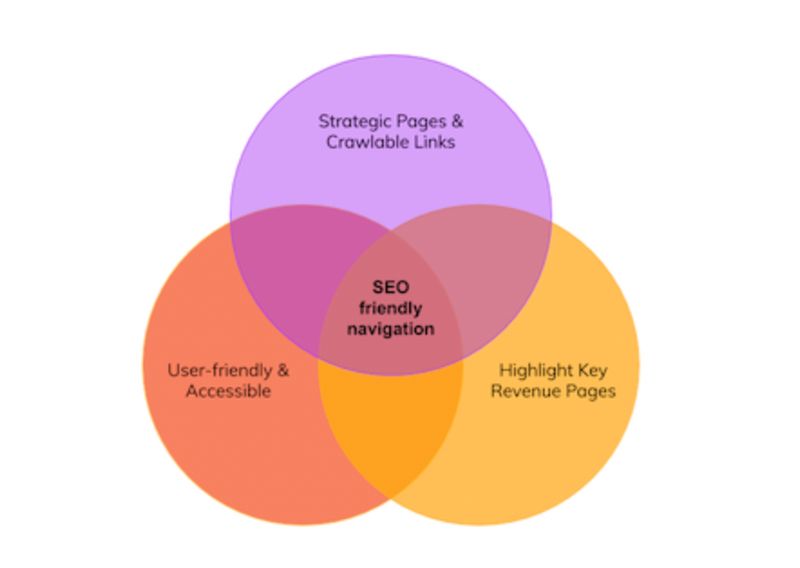
1) design of a clear navigation structure
Multisectoral collaboration is key
Before doing anything, you must talk to the relevant stakeholders in your business to understand their requirements and your flexibility to change your website's navigation. Do not forget that this is a process. If your argument is valid, you can build an example at any time to give priority to seo。
2 create a list of seos for each navigation type
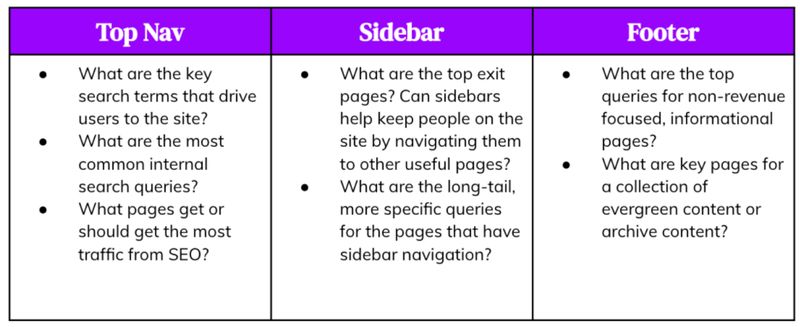
Upon request, create a list of key seo considerations for each navigation type。
3 create page type
The website is broken down by type of query, traffic, income and content. This means looking at the highest traffic queries and the pages to which they channel traffic. Consider the direct or indirect income generated by these queries and create your page type。
Strategic pages (i. E. Key categories and product pages)
Content: strategy
Query: high number of hits
Income: high sources of income
Recommended navigator: top menu
Opportunities page (i. E., underperforming categories and product pages)
Content: strategy
Query: higher number of missed hits (high number of displays but low number of hits)
Income: high revenue potential
Recommended navigation: top menu, sidebar or footer
Important non-income pages (i. E., information pages on delivery, refunds, etc.)
Content: permanent/information
Query: a considerable number of displays and/or hits
Income: not directly related to income generation
Recommended navigator: footer
Customize pages (i. E. Blog pages directly related to a particular product or category)
Content: customization, long tails or inspiration
Query: a considerable number of displays and hits
Income: related to pages with high income potential
Recommended navigator: sidebar
4 monitoring, audit, review, implementation
As usual, monitoring and auditing of navigation and its impact on accessibility and internal pagerank is also important with regard to website changes and seo. Check your page type and query regularly and update it accordingly according to the four-step process。
2) well-designed url structure
It is simple, easy to understand and facilitates the recording of search engines。
3) setting the right level of website
Controlled within 3 floors, easy for search engines。

4. Content optimization
1) preparation of high quality, original content
Improve user experience and engine evaluation。
2. Rationalizing keyword density
Avoiding multiplicity of keywords and keeping the body flowing naturally。
3) optimizing pictures
Compress the size of the picture, add an alt label, and increase the speed of the page loading and the friendliness of the search engine。
The alt tags generally recommend the keyword for the current page. If there is more than one picture on the page; you can add keywords along the lines of the picture. If the page keyword is: best apples, but there is more than one chart on the page; it can be optimized according to the page picture. Examples are:

The tag above can be: best red apples

The above diagramalt label can be: best apples for baking

5 external link building
1) access to high quality and relevant external chains answer
Quality >quality, relevance > authoritative, quality assurance and quality content help to improve the authority and ranking of the website。
2) social media marketing
If you have a large number of subscribers, you can immediately make them available to hundreds or even thousands of people。
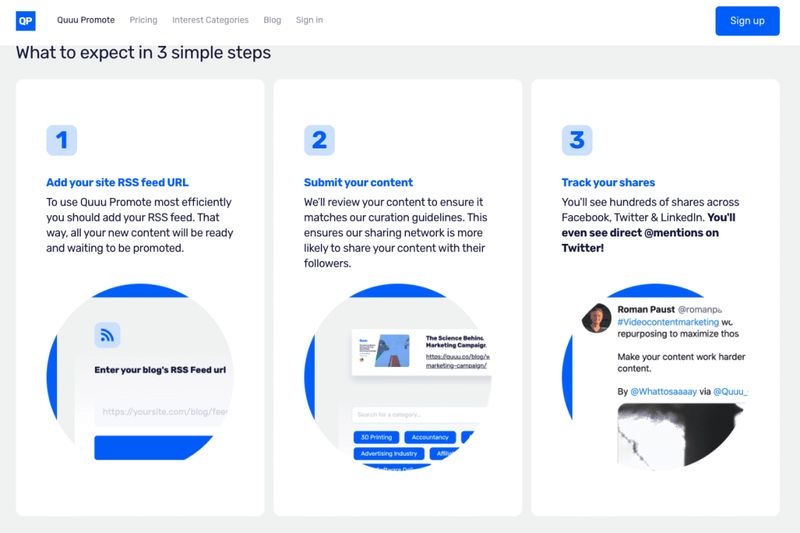
Or you can use a service like quuuu promote, in which you can interact with your followers and try to attract new ones so that you can share more strongly in the future。
3) content marketing
Create valuable content and attract active links to other websites。
4) cooperation in publishing articles
It's possible to try something like this through a collaborative posting. Find another expert in your field and work together to share content. You can write a blog article together, or you can contribute some of your own research, and then you can have it consolidated into a full narrative by one author。
5) enrich your own brand
It took some time to enrich the author's individual brand details. If you are a connection builder, start with an author. Ensure that the author has a clear field of specialization and that the author's profile contains detailed information on his career. The author should publish regular guest articles, participate in the social media community and establish contacts with other professionals。
Over time, they will build a better reputation, and their published, shared and distributed content will have more weight; in other words, it will be more likely to create more links。