An in-depth response from a chinese health coach: two paths, no heights, just different directions
It's in front
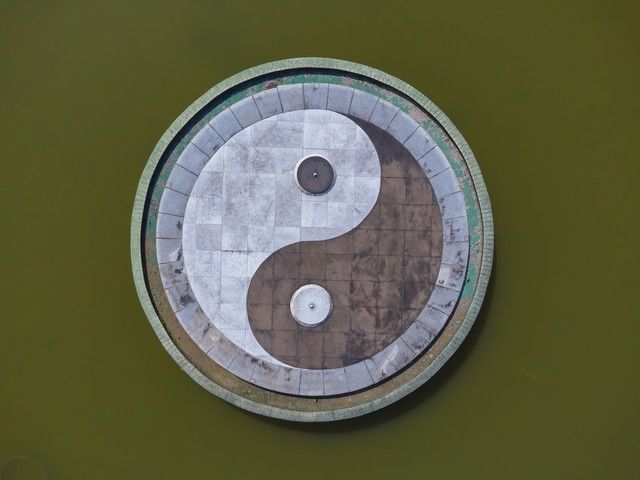
Yesterday i wrote an article about the difference between science and chinese medicine, and the comment area was very noisy. I was told that i was anti-scientific, that i was obsessed with medicine, and that i was asked “what is the scientific basis for the five lines of yinyang”。
I thought that behind these arguments was actually a deeper question that had not been said: the east and the west had taken two completely different paths from the beginning of the “how to know the world”。
This is not a dispute between chinese medicine and science; it is a difference in the way the two civilizations perceive. If we don't talk about this, the debate about chinese medicine is never clear. So i wrote this article, which is a response. No, no, no, no, no, no, no, no。

I. Why do westerners say there is no philosophy in china
Western philosophy began in ancient greece and followed the path of “knowledge”. At the heart of their quest is what is the world? How do i know the world is real? What logic do i use to deduce
The criteria of western philosophy are therefore clear: rigorous logic, clear conceptual definition, structured theory。
By this standard, china does “have no philosophy”. Confucius doesn't do logical exercises, i don't give conceptual definitions, and house is full of fables. Hegel had just said that the doctrine was a common sense of morality, not a philosophy。
That's hard to hear, but in the right direction. Like you can't say that fish don't have wings so they're like birds -- fish don't have wings, fish live in water. China is not without philosophy, which has not been on the path of “knowledge” from the outset。
The starting point of chinese philosophy is not “what the world is”, but “how people should live”。
And turn to the qin children: confucius speaks to jin, menzi speaks to meng, and i speak to him, and he is free, ink speaks to love, and koreans speak to him. They ask not “what is the essence of the world”, but “how people live is how” “how societies govern is how” and “how calm” is。
When i came to song ming, zhu zhu zhu zhu zhu zhu zhu zheng zheng zheng zheng zheng zheng zheng zheng zheng zheng zheng zheng zheng zheng zheng zheng looks like i'm asking the truth, but the core is asking the same question: how can i be a better person
Western philosophy is the science of “explaining the world”. Chinese philosophy is the subject of “peaceful mind and mind”。
Q: what is truth? China asked: where is the road
It's not down. These are different options for two civilizations to survive. The west chose to ask the outside world, and china chose to settle its inner life. Both roads, for thousands of years, are out of their depths。
Two roads each have advantages and disadvantages
The strengths of western philosophy are clear: logic, analysis, systematization. It breeds science, modern technology and the rule of law and democracy. But it also has a drawback: too much emphasis on “justification”, too much emphasis on “objective”, and it is easy to forget “human” itself. You see the history of western philosophy, from plato to kandeh to rolls, discussing “what is justice” and “what is truth”, but rarely asking “how do i live to be safe”。
The strength of chinese philosophy is also clear: it is thoughtful, practical and attentive to the real feelings of people. You read the word, and confucius says, without saying a word, that “whatever he does not want to do to others”, that “teach and practice is not happy” — it can be used directly. But its shortness is that it is not good at logic, that it does not care about objective knowledge and that it tends to lead to a “justification” ambiguity。
It's not about getting high. Human beings live in this world, not only western philosophy, but also chinese philosophy. There are many ways to know the world: science is one, philosophy is one, art is one and culture is one. Each is helping us understand the world and transform our lives. There can be no science alone — science is great, but science is not all. Science cannot answer “why am i not happy” or “what is the meaning of my life” or “how can i get along with people around me”. These questions are answered by philosophy, by art, sometimes by a bowl of hot soup and a hug。
Iii. How chinese health coaches use philosophy
I've been a health coach for over a decade. From gym teaching to chinese medicine, from action teaching to survival。
The client came to me, the most common introductory statement being: “mr. Wei, i have pains in my waist/sleeves/sleep/tired”
In western thinking, i look for structures: which muscle is tight? Which joint is crooked? Do you have any pressure on your nerves? Then stretch, loosen and train. It worked, i've been using it。
But now i'm going to ask, "have you been under a lot of stress lately?"
Not encyclopedia. Let me explain what's behind this:
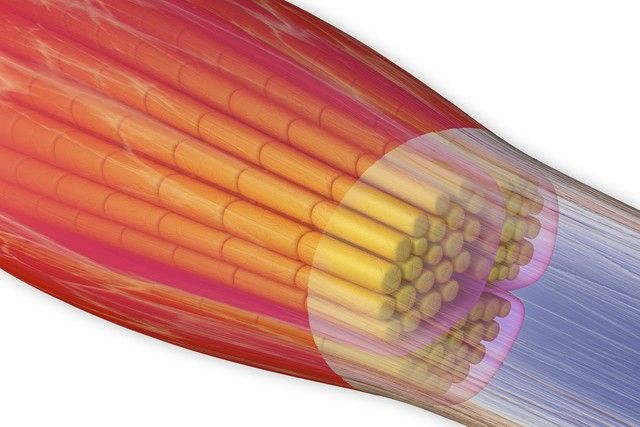
People with long-term anxiety, their bodies continue to be “stressed” and feel nervous excitement, muscle stress and shallower breathing. This situation lasts for a long time, and the neck is stiff and the back is hard. It's not the word "wet weight" that can be summed up. It's the nerve, muscle, emotion。
Long-suffering people can't open their chests and can't breathe under them. The movement of the muscular muscles is restricted and internal organs are affected by blood. It's been a long time, with chest problems, stomach swelling and worse emotions. A vicious circle。
People who stay up long, called “renal-depletion” and placed in modern medicine, are decorative, autonomous nervous and immune. I can't sleep during the day, i can't sleep at night。
These are not genres. It was i who saw the problem with a chinese mind, then understood it with the knowledge of modern science and dealt with it in a concrete way。
The way i give clients two steps:
First, a western approach to structure. The nervous muscles need to be loose, the weak muscles need to be practiced and the joint activity level restored. That's the foundation, can't skip。
Second, to find the rhythm with the wisdom of the east. Sleep, start, eat. Not against the body, nor against the heavens and the earth. At the same time, you can deal with emotions -- emotions are not something you can do if you want to do something about it, emotions are stuck in your body, and it's just an infatuation. You gotta give it an exit。
And i used to say to the people: "standing is right and sitting is right." “and you were relaxed in your practice, and should not be tense in your meetings.”。
It's called knowing one. It's not from wang yang-ming, it's from you。
Iv. Why does this age need more chinese philosophy
Our time is one of unprecedented material enrichment, but anxiety, insomnia and subhealth are also unprecedented。
Science and technology have solved many problems and brought new ones. What do we eat? Brushing our phones late at night gives us endless information, but how much sleep do we have left? Health apps help us record data, but we're getting less and less comfortable with the body。
It's not the fault of technology. It is in one way or another that we understand the world and understand ourselves — science。
Science is great, but it doesn't give you peace. You know what the lipid rate is, but you don't know why you're happy. You wear a sports watch, but you can't feel whether your body wants to move or be silent. You eat well, but not at all comfortable。
At this point, the wisdom of chinese philosophy is particularly precious。
It does not ask you to understand but asks: "have you slept well? Have you eaten well?" are you too tired
These questions seem simple, but point directly to the core. Because of the physical condition, it's mostly living. It's not working right, it's just the table, it's clean。
The special feature of chinese health trainers is precisely here — not just your “data”, but your “days”。
Not just your muscles and bones, but your emotions and rhythm. Instead of pursuing “more and faster”, the pursuit was “successful”. I don't give you standard answers, i help you find your own rhythm。
I've always said that i'm not trying to solve problems for my body, i'm teaching myself to solve problems. I'm just going to put all the holes through, make up for the weak, tell the body that you can do it yourself. Leave the rest to it. The body's smarter than you. You just need to keep it clean。
V. Conclusion to policies
Western philosophy makes us “thinkable”, and chinese philosophy makes us “live safe”. Science tells us how the world works, and chinese doctors tell us how to keep our bodies。
Both roads, they're true. A whole person, both of them。
I'm a coach who teaches people how to live better. My tools, half science, half philosophy. My goal is not to make you a better machine for data, but to make you a more secure person。
Bring the "choose" found at the stake to your life every day. Take the "relax" you feel in practice and leave it in every breath you breathe。
That's what the chinese health coach wanted for you: not a set of methods, a living method。
Live wisdom with your body。

At the end
It's a little long, and all who can read it are willing to think。
The comment section: have you ever given you a signal that you can't explain in science, but you've done it in the way you feel, and it's better
# chinese philosophy #