** when search turns into dialogue: are you ready to be recommended by ai? **
The internet is undergoing a quiet transformation. In retrospect, was it more common for you to open a dialogue box, throw questions and wait for a complete answer? Instead of knocking on a few keywords in the search box, as in the past, filtering one by one from the thick blue link。
This is not a distant technological prophecy, but a reality that is taking place at this moment. Google's ai overview already covers more than 40% of the search, while in the country, deepseek, kimi, beanbag and their assistants are rapidly becoming a new generation of information portals. Users have changed their behaviour, but many website operational strategies have remained in the previous era。

** two eras, two optimizations**
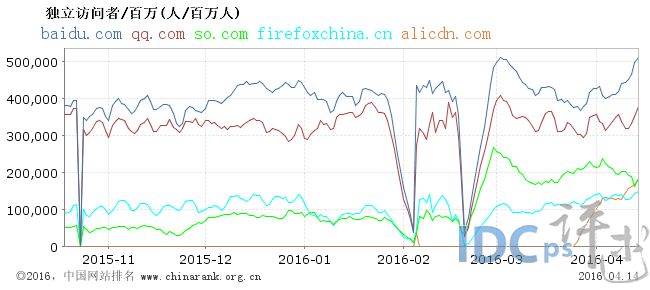
Over the past two decades, seo — the search engine optimization — has been almost the only gateway to the traffic available on the website. Its logic is straightforward: studying what words users search for, embedding them on pages, optimizing loading speed, accumulating external links, then praying that algorithms favour you and pushing you to the first page of the search results. Users saw, clicked, the traffic came。
The seo is not dead, it remains the foundation and still important. But it's not enough。
Imagine a big commercial street. Seo did a good job. It's like your shop occupied the most visible place on the street, and everyone passing by could see your sign. But now, more and more people stop shopping, and they're standing around the corner asking, "where's the best cafe around here? "if the passers-by — that is, ai — has not heard of you, or has no idea what you're selling, then even if your shop is being renovated in such a way as to be in such an excellent position, it will not be recommended。
That's the geo, the output engine optimization, the problem. Its goal is not to get you ahead of the search results page, but to allow ai to understand you, quote you, recommend you when generating answers。
You might hear another concept: aeo, answer engine optimization. It emphasizes having ai directly quote your website as an answer to the question. In practice, however, aeo and geo overlap almost entirely on the path to achievement. It needs the same thing, whether it's "extract a sentence" or "comprehensively recommended": well-structured information, clear semantic labels, easy-to-understand content formats. So, being a geo, basically being an aeo. The two are not opposing options, but two sides of the same coin。
** three-layer defence to build ai visibility**
To make ai truly "know" and "recommend" a website, it needs to work simultaneously on three levels. It is like building a house with attractive faces, a clear layout of the room, and complete construction instructions。
The first level is socialization and ai recognition, and the core tool is the og label. Open graph, open speculation protocol, which sounds like a technical term, is actually intuitive: when someone shares your web site links to twitter, corporate twitter or qq, it determines whether the user sees a dry web site or a card with a nice cover, clear titles and attractive descriptions. The latter will obviously be several times higher. But the value of the og label is much more than social sharing -- when the aig grabs the pages, it gives priority to reading the information in the labels and quickly creates a first impression of your website. It's hard to get ai's trust on a website where "self-presentation" is vague。
The second level is the search understanding layer, which relies on schema structured data. Humans see "price: 299" immediately knowing that this is the price of the commodity, but for machines, it's just a string of characters on the page, it doesn't know the price, it doesn't know the product, and it doesn't know whether it contains taxes or not. The role of schema is to label this information clearly: "it's the name of the product," "it's the price," "it's the company phone," "it's the date of the article." when ai had to answer "how much is this product" or "what is this company's connection" it had the schema label to extract it with precision, not speculation。
The third is the ai reasoning layer, an emerging concept in recent years - allms. Txt. If schema signs each room, allms. Txt is the guidebook for the entire building. This is a plain text file in the root directory of the website, which tells ai in a simple markdown format who you are, what you provide, where the core content is distributed. Currently, both domestic and foreign mainstream ai models support access to this document, from chatgpt, perplexity, claude, gemini overseas to deepseek, kimi, beanbag, mandarin, and questions. When users ask ai questions, this "notation book" helps ai to understand your website more quickly and make more accurate recommendations。
These three layers are not substitutes for each other, but are incremental. Og tags are for "to make people and ai recognize you" and schema for "to get search engines and ai to read every page" and llms. Txt for "to get ai to understand the whole site and recommend you." together, they form a complete link: from first exposure in social scenes to the capture of search engines, to the in-depth recommendations in the ai dialogue。
** not a choice, but a question.**
Some website operators might think, "my seo is doing well, the flow is stable, and need to devote more energy to the geo?"
The answer is that this is not an option. The relationship between seo and geo has never been one way or another. Seo put your shop in a good place on the commercial street, and geo lets everybody who asks for directions point to your door. Today, when ai is becoming an information broker, being a seo instead of a geo means you've voluntarily given up the fast-growing traffic entrance。
More importantly, geo's threshold is not as high as expected. For example, the three levels of core capacity described above have been developed as part of the search optimization module in the back office of website management. The og labels can customise the title, description and cover of social sharing; schema structured data supports various types of articles, product pages, business information, etc., and can be configured without writing codes; and llms. Txt files can be uploaded manually or imported using the ai key. The operational complexity of these functions is much lower than the external chain construction or code-level optimization in traditional seos。
** written at the end**
The search strategy for 2026 must answer two questions simultaneously: can your website appear in the front column of the outcome page when users enter keywords in the search box? When users question ai directly, can your website be understood, quoted and recommended
The former is the battlefield of seo, while the latter is the mission of geo. Both work together to cover the full search chain and maintain real visibility in the ai era。
The search has changed, from looking for links to getting answers. Your website, ready to be recommended by ai