

Model air conditioning repair and maintenance contract [standard version] author: legal representative: legal representative: communication address: communications address: air-conditioning cleaning maintenance profile cleaning maintenance profile cleaning of maintenance service subject matter category (please insert “√” in the selection): walled air-conditioning section cabinet air-conditioning windpipes other air-conditioning maintenance address and detail in annex ii air-conditioning cleaning maintenance content and hardware standard in reference to article ii of the hardware service standards annexed to this contract the parties choose to cooperate in the form of half-package drying cooperation where the b side is required to provide at least cleaning maintenance services to a per year in accordance with this contract. The maintenance period specified by the parties is as follows: one in the spring of march to april, one in the winter of october to november, and one in the other: , , , , , , , , , , , , , , , , , , , , , , , , , , , , , , , , , , , , , , , , , , , , , , , , , , , , , , , , , , , , , , , , , , , , , , , , , for normal maintenance and basic maintenance of air conditioners, b is no longer charged a separate fee. In the event of damage to air-conditioning spare parts requiring replacement, party b will charge a separate fee for the spare parts and repairs actually incurred. The cost of half-packed services under this contract was determined by the parties in consultation as follows: the total annual service fee is rmb . Duration of cooperation: the duration of cooperation between the parties shall be years from the date of this contract, i. E. From to . The parties agreed that the first six months of the contract period would be a probationary period for cooperation between them, during which the contract could be terminated unilaterally if the parties were not satisfied with the services of the parties. (b) within 15 working days of the completion by b of its first insurance policy for the current year and its submission to the department of procurement, 50 per cent of the total amount of this contract shall be paid by a to b. After the completion of its second protection in the current year and within 15 working days prior to the expiration of this contract, a party shall pay the remaining service fee to that party. Following each settlement of the contract costs, if a party requires an invoice, it shall issue a formal uniform invoice to that party within seven days, or pay a five-thousand-thousand-thousand-thousand deferred invoice. (b) a party should provide basic safe working conditions for its employees in a manner consistent with the working requirements for repair and maintenance; if a does not select spare parts as required by b, b does not guarantee the quality of air conditioners after repair. Where a change in the location of the air conditioner repair and maintenance is required for a, the parties should re-contract. The new contract was avoided. The costs paid by a party under this contract shall not be refunded, but may be converted in proportion to the time of performance of the contract to offset the costs of the new contract between the parties. B. The machine shall be tested by b before cleaning maintenance services and, if there is a problem, must be provided with a first-hand repair before cleaning and maintenance. (b) b should carry out the work in a civilized and safe manner without damage to the property of a; sewage, waste, disposable consumables and noxious hazardous substances from cleaning services should be collected and centralized in a timely manner. By means of forged documents, information, etc., the b party is unable to discover that the contractor is not actually qualified to operate, or that it is actually operating with an employee who is not qualified for qualified work, the b party is responsible for all consequences of its negligence, and the a party is entitled to a unilateral termination of the contract, the loss resulting from which is borne by the b party, which can and recover from the b party's liability for breach of contract, which is 20 per cent of the total amount of the contract, without exempting b from liability. The performance of the contractual obligation shall be carried out in strict compliance with the safety codes, fire regulations, construction codes and quality standards, and shall be carried out in a timely manner. In the performance of the contract, all liability for any security incident or loss of personal property (including that which occurred with any other third party) that is not the result of wilful or negligent performance by a shall be borne by b. The breach of article iv. The late payment of the price by a shall be paid by one tenth of the outstanding amount to b each day. If the late payment by one party exceeds fifteen days, the other party may unilaterally terminate this contract by written notification. Payments previously made by party a are not returned and party b no longer provides services to party a. A party shall be liable for breach of contract in accordance with article 4, paragraph 1, of this contract until the date on which the party has notified the party in writing of its unilateral termination. The cleaning and maintenance work was not performed in a timely manner for the reasons of b, and a has the right to demand immediate performance by b. Moreover, party a may require party b to pay the overdue breach of contract in accordance with the contract, calculated as one tenth of the single-year service fee per day of delay. If the delay in cleaning up resulted in a loss to party a, party a is entitled to compensation from party b. If the quality of the cleaning maintenance is not in accordance with the contract, party b shall again assume free responsibility for the cleaning up to the agreed standard and shall be liable for any loss caused to party a. In the event of damage to the equipment of the b party caused by the a cause, the employee shall be liable. In the event of damage to article a caused by the cause of party b, compensation shall be paid by party b. In the course of the performance of the contract, the parties are not liable to each other in the event of an event of force majeure that would have prevented the normal performance of the contract. Other breach of contract: article v dispute settlement dispute arising in the course of performance of this contract to be settled by mutual agreement. In the absence of such an agreement, the parties confirmed that the people's court in the territory of the country in which they are located had recourse to the law. All relevant information about this contract shall be referred to the address and contact information retained on the signature page of this contract. If a party needs to change the address and contact details of the communication, it shall notify the other party in writing and only after obtaining written confirmation from the other party. Article 7. Entry into force of the contract. At the time of signing the contract, the party must provide the corresponding qualifications and documentation: copies of the licence (copy), copies of the organizational code (copy), etc. This contract shall enter into force on the date of its signature. This contract is in two copies, each of which is in one copy。failure to complete this contract shall be subject to consultation between the parties as a supplementary agreement, which shall have the same effect as this contract. The trustee shall recognize the consequences of the acts performed by the trustee in the performance of the entrusted affairs only at the direction and request of the principal. Counsel reminds the trustee of the need to carry out activities within the authority of the client, and that the trustee may not change the trust without the instructions of the client, let alone expropriate the results of the commission. 2. The contract of entrustment has strict personal attributes the contract of entrustment is established and performed on the basis of mutual trust between the client and the trustee and has strict personal attributes. As a general rule, a party can only resolve it by entering into a contract of entrustment if it is necessary (e. G. When the exercise or performance of a right or obligation to perform a legal act cannot be dealt with in person for some reason). Since the result of the trustee's commissioning is the direct responsibility of the trustee, the trustee, when selecting the trustee, always selects the person to whom he trusts or who has a certain operational capacity, expertise and good reputation. The contract of entrustment therefore emphasizes the strict personal attributes of the parties. The law requires the trustee to deal with the affairs of the trustee in person, and the trustee may not, without the prior authorization of the client or in case of emergency, delegate the affairs of the trustee to another person without prejudice to the interests of the client. 3. The purpose of the entrustment contract, which is the act of the trustee in the commission of the trust, is to obtain the result sought by the trustee and the trustee for the purpose of concluding the entrustment contract. The scope of the trust covers both legal matters, such as sale, loan, litigation, registration, etc., and non-legal matters, such as entrusting visits to patients at hospitals, reading birthday messages at birthday parties, entrusted copying of scripts, routing of objects. However, the matters entrusted may not be delegated outside the provisions of the law, and certain matters of a particular personal nature (e. G. Registration of marriage, making of wills, adoption of children, etc.) may not be entrusted. A contract of entrustment may be of a paid or unpaid nature. The contract of entrustment between natural persons is sometimes a contractual relationship established between relatives or acquaintances, most of which are unpaid because of the special relationship between the parties and trust between them, but some of the more complex and more demanding contracts of entrusting between legal persons or between legal persons and natural persons are generally paid. It should be noted that the payability of the commissioning contract should distinguish between the remuneration paid by the trustee to the trustee and the payment by the trustee to the trustee of the necessary fees to perform the commissioning. The payment by the trustee to the trustee of the necessary fees for the commissioning of the trust is not a value-for-money relationship in the contract and therefore does not reflect the reimbursable nature of the commissioning contract. A contract of entrustment is a two-party contract the parties are bound by a certain obligation upon the establishment of the contract of entrustment, whether free of charge or not. The trustees, for example, have obligations to perform the trust, to report, to transfer the interest in the trust, and the trustees have obligations to give instructions, to provide and compensate for the necessary expenses of the trust, and to pay for the payment of a paid contract. 6. The commissioning contract is an alternative contract. The commissioning contract is not only entered into with the intent of the client, but also with the commitment of the trustee to be entrusted to him. If the trustee undertakes to do so, the entrustment contract is established from the effective date of the undertaking and is no longer subject to the condition of delivery or performance of an act, and the entrustment contract is therefore a non-consumer contract. Iii. Conclusion of contract element 1 of the commissioning agent, and careful selection of the agent. The principal shall examine the ability of the agent to exercise his or her services, and shall examine whether the agent possesses professional qualifications or operating qualifications. The delegation of authority is clear. As the commissioning agent contract is a contract between the client and the trustee agreed upon by the trustee to deal with the affairs of the trustee, the matters entrusted must be specified. 3. The scope of the mandate is clear. In a proxy relationship, the agent is a civil legal act in the name of the agent and its legal consequences are borne by the agent. Moreover, article 65, paragraph 3, of the general principles of civil law clearly states that “where the power of power of attorney is not clear, the representative shall be liable to a third person for civil and joint and several liability”. Therefore, the client should be mindful of the need to expressly agree on the scope of the authorization in the context of the commissioning contract in order to avoid adverse legal consequences. 4 the duration of the representation is clear. Both the client and the trustee shall agree in the contract to a specific period of time for the performance of the acts of the agent. Excessive periods of representation may present a certain legal risk to the agent. 5. Paying is clear. The entrustment contract is divided into unpaid contracts and paid contracts. (1) pro bono contracts of entrustment: normally a contract of entrustment between natural persons, such as relatives and friends or acquaintances, in which the principal is required to pay only to the trustee the necessary expenses for the commissioning of the trust. (2) paid contracts of entrustment: some of the more complex and demanding contracts of entrustment, generally concluded between legal persons or between legal persons and natural persons, are to be paid by the principal to the trustee for the necessary expenses and remuneration for the commissioning of the trust. Whether it is a unpaid or a paid contract of entrustment, the parties should make a clear agreement as to the amount of the commissioning fee and remuneration and the time, place, manner, etc. 6. The matter of commission shall be lawful. The unlawfulness of the entrustment would result in the invalidity of the contract and would entail some legal liability between the client and the agent. 7. Transfer of authority. If the client allows the agent to transfer the entrustment, it should be expressly agreed in the contract, since article 400 of the contract law of the people's republic of china provides that “the trustee shall personally deal with the entrustment. With the consent of the client, the trustee may transfer the trust. “8. The agreement on the default liability clause should be operational in order to facilitate enforcement。
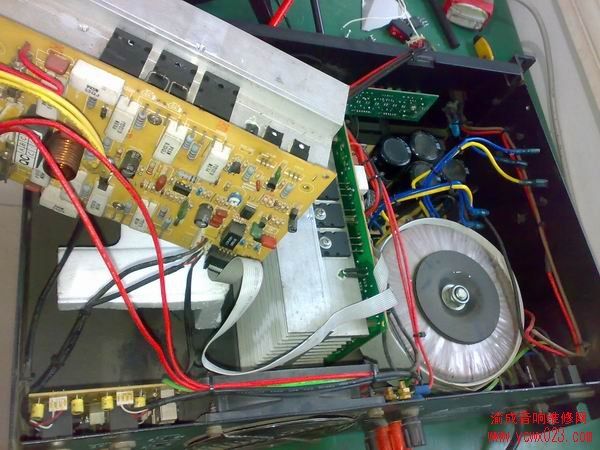
- 美国品牌音响维修展示专区
0评论2026-08-12

- 【音响维修】音响大面积损坏如何维修,速速来看!
0评论2026-08-12

- 设备的定义和分类
0评论2026-08-12

- 江门住宅专项维修资金管理办法公开征求市民意见
0评论2026-08-12
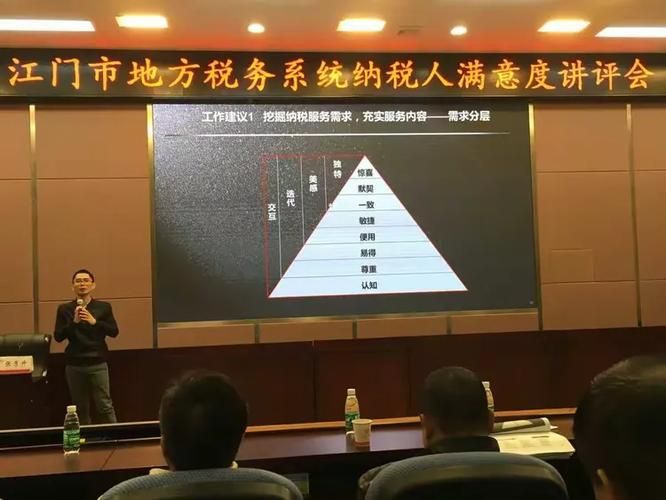
- 《江门市市区住宅专项维修资金管理办法(征求意见稿)》
0评论2026-08-12

- 新会所有小区业主,必看!本月起实施!关于这笔钱……
0评论2026-08-12

- 西安考勤机
0评论2026-08-12
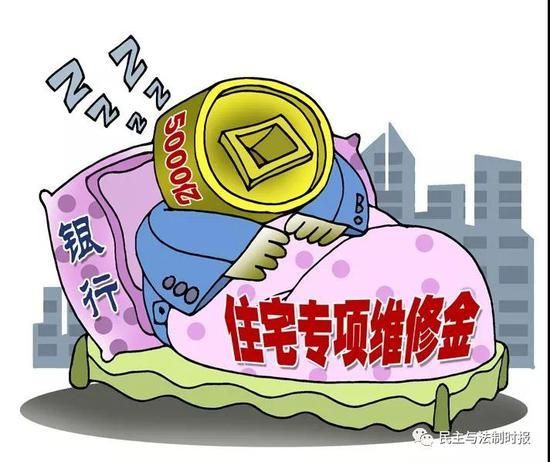
- 江门市住宅维修资金实施细则引发争议
0评论2026-08-12
Lcd tv looks back 10 years: how to kill plasma
1 lcd tv 10 year review and outlookFor 80 or even 90 years later, the initial impression of television is that the cathode cathode cathode (crt) television, the screen on the sphere (later changed to pure plane), the thick border and the big buttocks seem to be a bit of a silent taste today. Interestingly, it was the relative integrity of the users of this age group who had experienced the development of lcd tv over the past 10 years, and we went
0评论2026-08-11196