Last night, mao tai tai published a financial paper for 2025, which showed the first “double decline” in performance since it came on the market — an operating income of $16,8838 million, a decrease of 12. 1 per cent over the same period; and a net profit of $8,232 million for the mother, a decrease of 4. 53 per cent over the same period。
There have also been initiatives to salvage poor performance. It issued a surrogate policy last month and has officially shipped goods this month. What changes have taken place in the market now, half a month after the surrogate
Zhejiang has learned from a variety of sources throughout the country that the first deliveries have been completed in sichuan, jiangsu and shanghai over the past six months, and that individual areas such as zhejiang have arrived in the second shipment and have been partially looted。
The group of distributors is polarized, with distributors claiming that they do not have enough to sell, “in a second,” while distributors are trapped in stocks and needing “indigestion”。
In addition, the issue of surrogate is beginning to emerge. For example, the profit margin of over 20 per cent of the original product is now only 5 per cent, and the distributor can no longer “win by lying down” on the price difference. At the same time, its role is more like a “client resource provider”。
“does it mean that we are marginalized or disappearing once the percentage of the user of the i-shop has increased?” concerns have been expressed by many distributors. More dealers are betting on the full price, which means that they are often insomnia。
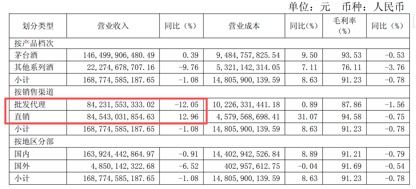
This concern is already evident in the financial statements. In the annual report, the operating income from wholesale agents amounted to $8,423. 2 billion, a decrease of 12. 05 per cent over the same period, while the direct sale earned $84,543 million, an increase of 12. 96 per cent over the same period。
In this situation, more time is still needed to verify whether the hut can continue to treat “family” distributors as well。
"i can't make it up!"
In march of this year, the sino-woan festival, the inner queens of the wine industry, was informed that the shai-tai will initiate a system of by-products, which will include qian-tai-tai 15, qian-tai-tai, qi-tai-tai, zi-tai-tian, and 53-degree small-capacity products. According to the information received, the channel for the sale of chai tai wine in 2026 was able to apply for a substitute sale on a voluntary basis, subject to 100 per cent compliance with all orders in 2025 and no liability for breach of contract between 2023 and 2025。
However, the products in question must be sold through the “i-tow” channel and the sale price must be based on the retail price on the “i-tow” platform. Compared to the way in which dealers bought their rights to cut off goods and paid for the goods, ownership of the relevant products under the sale pattern remains at the pavilion, while dealers no longer bear the burden of stocks and financial pressure。
During the first half-month of the new deal, the new wave's inner queens of the wine industry has learned from a variety of sources throughout the country that, after the holiday, the first sales of sauna wine products began to be distributed to vendors in various parts of the country. Consumers are able to buy multiple products, such as the year, the fine, and the kg, at retail prices on the “i-max” platform。
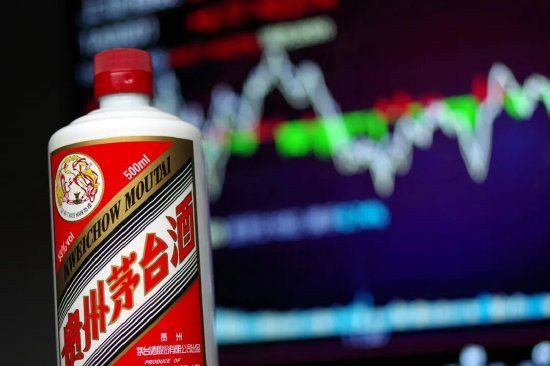
A number of distributors have revealed to intra-galcoast that most of the products are “defunct on arrival” and “not enough on arrival”. According to wang wei (alias), a mao dealer, “we have a very tight supply, and many of the new arrivals have been booked by the old customers, so we'll bring in some from other dealers to help them digest the inventory.”
It was also confirmed by the dealer (alias): “the second shipment has been signed and sold out, awaiting the arrival of new goods.”
However, as to when another shipment of new goods could be made, wang yun (alias) of the mao tai liquor dealer indicated that it was not clear: “there is no more, and the liquor store has not given up, and it may be new in a few days”
The commission is only 20-30%
It is worth noting that, in the context of the transition to c and the sale of fire-making heat, distributors also experience “skirmishes”. The most direct of these is the “less commission”。
For example, the most recent discount price was $1859/bottle and the guide price was $2299/bottle. Thus, prior to the introduction of the surrogate reform, the distributor had a profit margin of approximately $440 and a profit margin of 23. 67 per cent. Under the new substitute model, the product is sold at a strict retail price against the standard platform, and the distributor receives approximately 5 per cent of the service fee for the sale, with a discount of about $115 per bottle of fine。
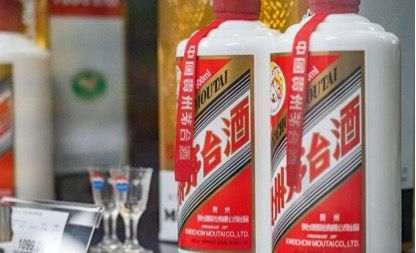
Other products are similar, such as the contract price of $3409/barrel 15 years ago, the retail price of $4199/barrel, with a difference of $790/barrel, while the return of 5 per cent of the current sales pattern is approximately $210/barrel. Thus, the commissions for both products were approximately one quarter of the previous profits. This may mean that business logic based on “disparities” is breaking down。
In the past few years, the personalized product of the mao tai tai has been inverted for a long time, with dealers once waiting to renew their contracts. The introduction of a surrogate system has boosted the heat of individualized products。
This has also attracted a desire on the part of some distributors to participate proactively. According to distributors to intra-gin, while the current sales of “back-to-back” are significantly lower than the “difference”, it is relatively stable that “sale applications have been submitted and many distributors are believed to apply”。
"will we be marginalized?"
On the other hand, the change in the toilet has also made distributors more concerned about the “loss of customers”。
Public information indicates that under the sales model, the detailed purchase process identifies the product and distribution to the distributor's door, which generates an exclusive 2-d code based on the consumer's needs, uses the i-map app scan to enter the product page, confirms the information submitted to the order and the customer who distributes the information confirms the receipt. The self-proclaimed client, on the other hand, had to come to the store to produce the pick-up code, and the official mao tsai had simultaneously issued the electronic bill of release, which operated on the i tsai ap。
According to industry sources, under the new marketing process, the role of distributors is gradually becoming a “server” and the function of “sales” is being weakened, which has led to a more “client resource provider”。
There is concern among distributors that: “all substitute products must be sold through the i-platform and consumers must scan the i-platform exclusively for 2-dimensional codes. Does this mean that we are all marginalized once the percentage of i-chamber users continues to rise?” there are also distributors with stable customer resources who believe that the current total sales are small and have limited impact。
These concerns are not empty. According to the 2025 newspaper, just published by mao tsai, the operating income from wholesale agencies was 84,232 million yuan, a decrease of 12. 05 per cent over the same period, and the direct sale earned 84. 54 billion yuan, an increase of 12. 96 per cent over the same period. In such sharp contrast, more time is needed to verify whether distributors can continue to be treated as “family” in the new year。
The liquor analyst, cai cai, said: “the surrogate is a thorough source of recovery and pricing, which, through the non-transfer of property rights and the uniform sale price of the i platinum, has fundamentally cut off the channel's space for non-programming, made the price system more transparent and stable, and left more profits in the factory from the distribution chain.”
In his view, this is, in essence, a new phase in moving the whole industry from a “channel game” to a “producer pool, service consumer”, and a series of changes in the pao are even important references to the stock market break-up and marketing transformation of the chinese wine industry。
According to independent commentators in the wine industry in china, the surrogate system has ended the possibility of dealers and cows influencing prices for the mills, leading to a return to the initiative of volume prices and a significant increase in governance, pricing and countercyclicality. For distributors, short-term pains are inevitable, but in the long run, with c-based, resource-intensive distributors will receive more quotas, more firm operations and less financial pressure, “which is both a dividend and an examination. Under a fixed commission system, the only business logic for earning more is to increase the turnover of sales.”