This brings to an end the era of siphons enjoying their open eyes, and also means that the capital market's valuation of the white wine giant is changing。
Where are the lost profits
Revenues rose by 6. 54 per cent, while net profits rose by only 1. 47 per cent, a difference of five percentage points, which became consumption of real and silver in the financial statements. To answer the question of where the profit of the hut is, it is essentially to look at the cost structure of the transformation of this traditional manufacturing enterprise into a retail one。
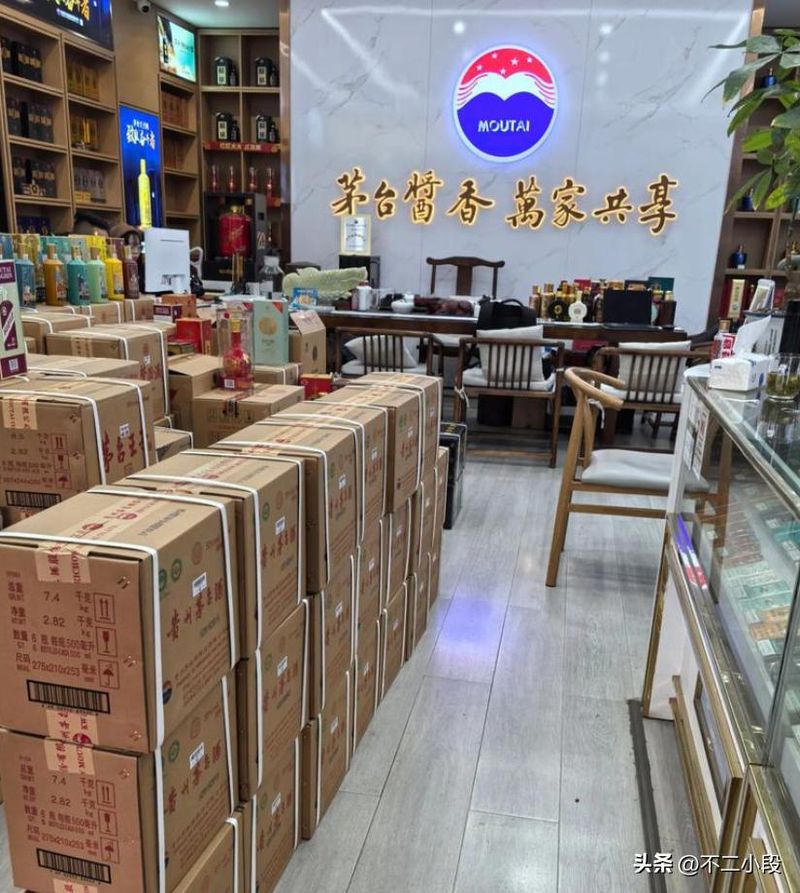
In the past, the business model of the hut was extremely simple and harsh, a typical b2b (business-to-business) model. The wine factory produces alcohol and sells it to distributors throughout the country in bulk at fixed prices, while the remaining stores, logistics, end sales, customer relationship maintenance are entirely the responsibility of the distributor。
This is the perfect business for a pail factory with little follow-up costs。

However, today's pavilion is undergoing an extremely dramatic channel change. In order to recover the profits taken by distributors and price-fixing rights to the market, mao tai has been vigorously pursuing a direct marketing strategy in recent years, with the central action being the introduction of digital marketing platforms directly aimed at consumers, such as the i chai。
This requires a shift from a production- and wholesale-only business to a retail and service business requiring tens of millions of c-end (individual) users。
The profits were consumed in the cracks of the identity switch。
The first is the surge in direct operating costs. Maintaining the app of an electrician with a large number of daily users requires huge technical inputs, server costs, professional internet operators and a national c-end logistics distribution system。

In the past, it had to send a carload of wine to a provincial warehouse; now, it needed to ensure that a bottle of wine was safely and hypocritically delivered to the door of an ordinary consumer. This fine-tuning operation led to a significant rise in marketing costs and market promotion costs, which directly ate part of the profits during the period。
The second is price pressure from macro-supply and demand-driven games. In the white wine industry, there is a core indicator called wholesale prices, the real market benchmark for large-volume transactions between distributors。
In the past, the official guide price for flying is us$ 1,499, but the market is extremely hungry due to the strict control of the wine factory, with the wholesale price hovering for a long time at us$ 2,800 or more。
The large price differentials in the middle have fuelled countless cows and the hoarding of strange speculators。

Real supply on the market has increased with the introduction of the i-max and the large amount of direct distribution. When ordinary people have more opportunities to buy a toilet and a series of wine at or near official prices, the original expectations of the terminal are broken, leading directly to continued market price hikes and, in some areas, even to a $2,500 high。
The downside of the wholesale price squeezed the operating space that would have enabled the pavilion to increase overall profitability by restructuring products and introducing high premium non-standard products。
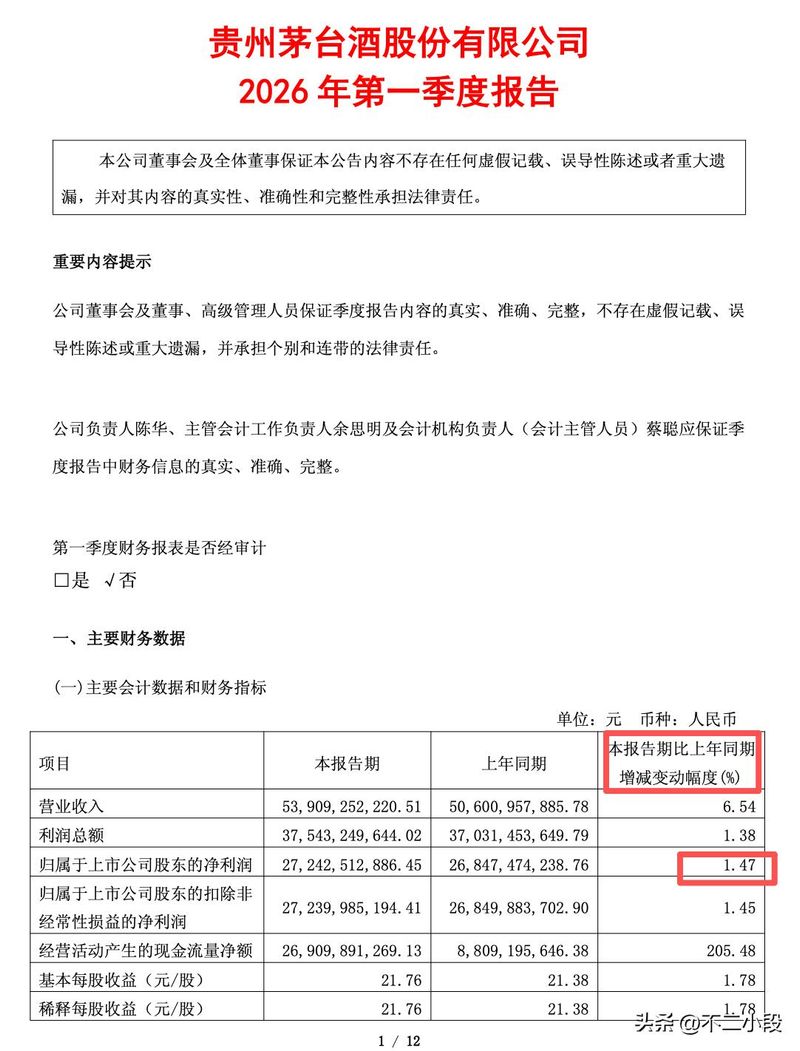
Thus, the 1. 47 per cent increase in profits is not the sudden loss of profit, but the money that could have been converted into net book profits, which would have been used to lay down a direct distribution line and bear the enormous costs of straight-to-face consumers。
From the strength of the army to the strength of the ruler: the way to fight
If one word is to sum up the successful passwords of the millet over the past two decades, it is the channel. In 1998, in the face of the asian financial crisis and the cold winters of the white wine market, the maotai wine factory was once unable to complete its sales task。
In order to survive, mao tai formed the first real marketing team in history, completely abandoned the ruler model of the planned economic era, began recruiting dealers throughout the country and established a large and deep distribution network。

This group of dealers, who suffered with mao tai, became the firm bottom of the white wine industry during the two decades of high economic growth in china. However, with the increasing power of mao tai's brands, the fatal flaws of this model are beginning to be exposed: the channel system has evolved into a community of interests。
As noted above, there is a large windfall of over $1,000 between the offer and the final market price. This portion, which was originally the product of brand premiums, was mostly deposited in the circulation chain and fell into the pockets of dealers and hoarders at all levels. Instead, the pail was turned into a production workshop for dealers。

Even more serious is the fact that this system of distribution of benefits is highly prone to corruption, while at the same time depriving mao tsi of control over real end-of-life consumption data: the liquor store had no idea whether its alcohol had been drank or whether it was locked in a dark basement awaiting appreciation。
As a result, the core strategic purpose of the recent mao tao management, and especially of the changers who have led the launch of the i tao tao in recent years, is one: to sharpen。
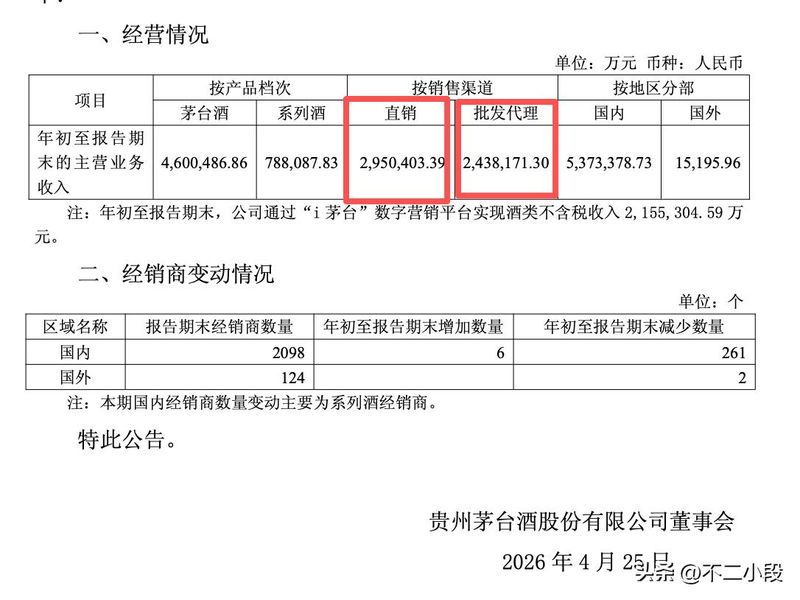
The business logic is clear: not only can the price differentials that were lost in the channel be put to the market company, as a collection and profit plate for large companies; and, more importantly, can direct contact with real consumers be re-established, and valuable user data be obtained, so that the temperature of the market is accurate, rather than being carried by dealers。
But it is often more difficult to touch interests than to touch souls. The introduction of direct camps means eating meat directly from the plates of traditional dealers. The rebound of dealers, the turbulence of channels, and the managerial friction inherent in the alternation of old and new systems constitute the main melody that has developed over the years。
Only 1. 47 per cent of the increase in profits in the first quarter can be seen as a direct reflection of the financial dimension of this old and new game. At the expense of extremely weak profit growth, the pao have been able to trade for strategic gains that are close to half of the mountain。
This was not a tactical error, but rather a firm choice between maintaining high-account growth channels and enduring short-term pains in exchange for long-term control。
In a long-term business logic, the commercial chassis, which is able to reach consumers and control core pricing rights, is much more secure than that of a highly dependent layer of distribution。
The cruel transition of the valuation ruler: saying goodbye to the myth and finding the foundation of value
After the 1. 47 per cent figure was published, capital markets voted with their feet, triggering a shock in stock prices. Why is it that a company with a net profit of 27. 2 billion dollars a quarter, simply because of the slowdown, makes investors so anxious? This is because it touches on the central logic of the capital market to price the hut。
In secondary markets, the value of a company is assessed, usually with two distinct scales: one for growth and one for value。
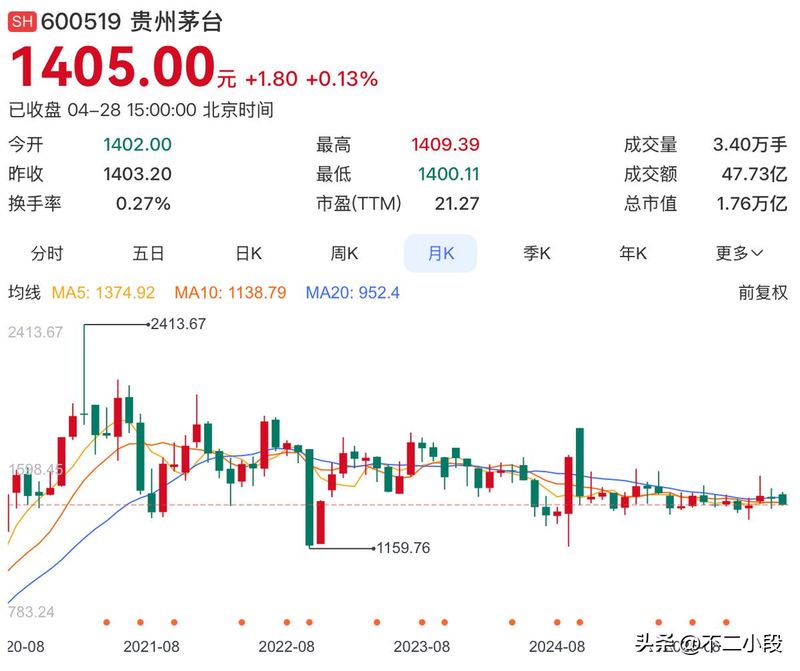
During the past decade, the white wine unit, especially the powlet, has been the most perfect firm growth unit in the a stock market. Within this logical framework, investors are willing to pay 30 or 40 times their market share to buy a hut stock because they are sure that its profits will keep up 15 or more per year。
In essence, the rate of market gain is a reflection of the current age, and if a company does not grow profits, 40 times the rate means that you will have to wait 40 years to return it, which is obviously uneconomical; but if its profits grow at 20 per cent a year, then the 40 times the rate will be spread quickly in a few years, making it very reasonable or even cheap。
The myths behind the high growth of the shao-tai in the past are the demand for blow-outs from the high economic expansion of china’s economy, and its own strong brand barriers. But now this macro premise has changed. The business consumption scene is experiencing structural contractions, and the consumption habits of the young generation towards white wine have been significantly diverted。
As the water temperature in the macro-environment drops, adding to the enormous cost of reforming its own internal channels, the profit of the hut drops to 1. 47 per cent。
This figure, like a relentless pause, has brought the era of high growth to a standstill, perhaps even a permanent end。
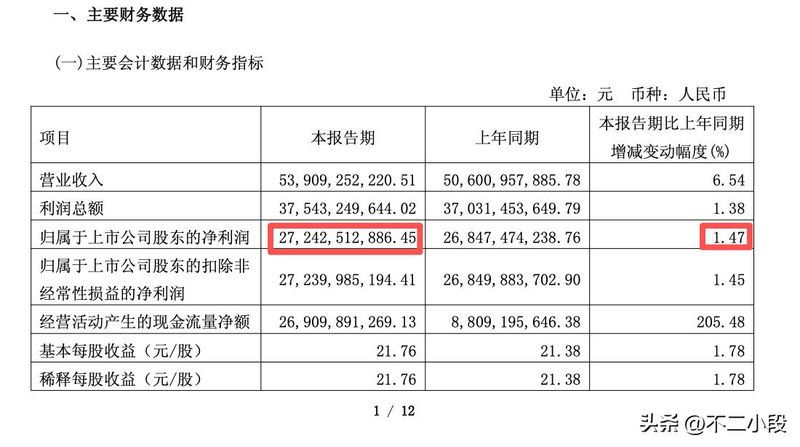
For investors, this compels them to have a painful logical transition: since the hut is no longer able to provide 20 per cent of annual growth, it will no longer benefit from the high valuation premium of the growth stock. The market must take off the coloured glasses of the growth unit and re-examine the huts with the magnifying glass of the value unit。
In the value unit assessment system, the market no longer pursues the pace of expansion in the future, but returns to the simplest financial indicators: current profitability, the health of cash flows and the most central dividends. In other words, since your company has not expanded much, and profits have not soared, how much real money can you give to shareholders every year
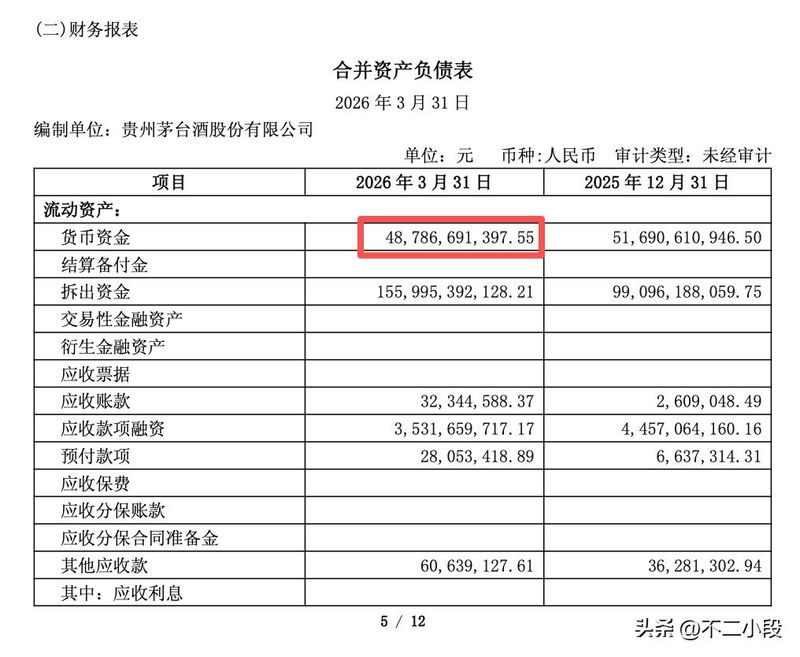
At present, the dividends of the pavilion fluctuate between 2 and 3 per cent. In an era of lower interest rates, this level of dividends is considered robust, but if compared to traditional public utility companies or energy companies whose valuations are extremely low and have a rate of dividends of over 5 per cent, the dividends appeal of the hut still requires a difficult balance with their current stock prices。
That is the root cause of all the divisions and fluctuations surrounding the huts. Some of the funds remain in the old dream that 1. 47 per cent are only temporary pits, and that the huts will sooner or later return to their high-growth thrones; others are sobering and they are beginning to lower the market-rate hub in accordance with the standards of a mature, low-growth, high-score public utility company。
The switch from sharing the dividends of unlimited growth to securing a steady and defined cash return is a valuation of the peddle by capital markets。
Concluding remarks
Looking back at the financial paper, the net profit of $27. 2 billion in the first quarter continues to prove that mao tai is one of china's most profitable and most deep-seated business enterprises. Its brand position has not collapsed, its brewing process has not been lost, and the cash flow remains envious。
However, the 1. 47 per cent slight increase is indeed a clear watershed. It pierced the illusion that it could always grow at high speed, pulling maotai back into a business-class gravitational circle。
Whether it be the high cost of direct marketing reforms or the cold transition in the logic of capital market valuation, the same message is being sent: the era of the former huts that can be won if they are bought with their eyes closed。
The future pavilion will face a more complex balance of prices, a more sophisticated operational test and a more selective investment vision. After suffering from redundancies in the stripping channels, a slow-down pedestal, perhaps a 100-year-old shop with real resilience, able to cross a longer economic cycle。
For everyone who cares about it, it is the right gesture to understand that 1. 47 per cent is slightly increasing, leaving aside emotions and recognizing that it is moving from a boom to a mature and stable business reality。