New subjects bring new ideas and new horizons. What are the new features of the new integrated primary language curriculum based on the new curriculum? What are the new challenges to specific teaching? Specially invited teacher lee huaigen has written a reading for readers。
In 2016, integrated teaching materials began to be piloted throughout the country, and there have been some regular revisions to the curriculum since then. For example, the addition or deletion of one or two texts, the reordering of texts, fine-tuning of first- and second-class texts, and changes in the content of learning parks. As a relative concept, the new teaching materials can be described in two parts: part of the new curriculum, which is an integrated primary school textbook, has been in operation since september 2016 and has been in full use since september 2019; and part of the new curriculum, which is being revised since september 2024. There is a close relationship between the new materials and the new ones, which are more detailed than the new ones。
In sum, the “new” of the new teaching materials is reflected mainly in the following areas。
Features of the system
1. Double-line organizational units
The new teaching materials follow a two-lined organizational module of the humanities theme and language elements, which reflect the main elements of the module, covering natural, social, life-related aspects, such as “four seasons of beauty”, “childhood”, so that students can be emotionally nourished in the course of learning the language; the language elements highlight the learning requirements of the language and specify the specific training focus of each module in literacy writing, reading, writing, oral communication, etc., such as “learning to the way people are portrayed”, “to understand the mind of articles”, so as to make language learning more systematic and coherent. The language element also vividly reflects the integration point of the module, and the possibility of teaching the unit as a whole based on the language element is increasing。
It is noteworthy that the language element points to teaching objectives rather than content. For example, when studying foreign writing units, students are asked to read “to find impressive figures and circumstances” and to explore “why authors highlight these figures and circumstances” in order to achieve an improvement in students' level of learning and learning skills during this period, rather than simply allowing them to read them. And for example, in the first module of the fourth grade, the humanities theme is “the beauty of nature”, and the language element is “the beauty of nature while reading the picture and feeling it”. But the learning objective of this module is not simply to stop feeling the beauty of nature, but to allow students to understand the content of the texts and to improve their understanding. Students also have to write in a graphic way so that others can feel the natural beauty of what we record and write。
In terms of unit teaching as a whole, each module is teaching students how to express the humanistic theme in terms of language elements, first to make them understand how authors express the humanities theme in terms of the points suggested by the language elements and, second, to learn the humanities theme in terms of language elements themselves. For example, in the first module of the third grade, students are required to “write their fellow students in fresh words and sentences” and by reading three texts, they understand “what is freshness” and “how is written to reflect the vitality of living life” and eventually write the situation in very divine terms, not only as an interactive process, but also as a process of reading and expressing. Thus, the twin-line organizational module also offers possibilities for the implementation of the unit as a whole。
2. The spiraling knowledge structure
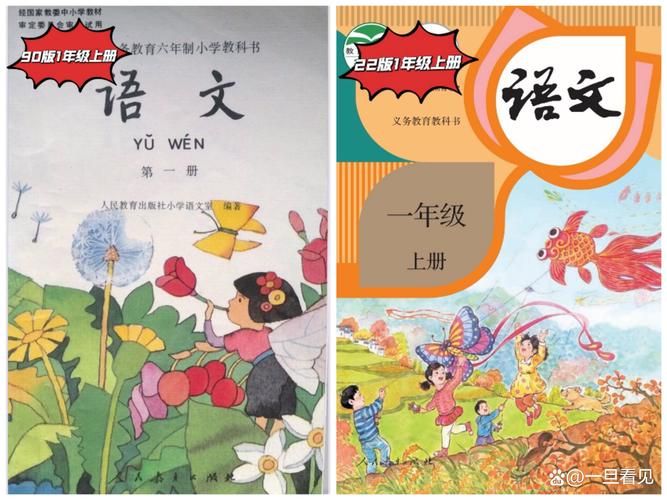
The content of the new teaching materials is organized from a shallow, easy-to-easiness perspective according to the student's cognitive patterns and learning abilities, reflecting the evolution of the student's thinking. By comparing old and new teaching materials, it is not difficult to see that the modules in the new teaching materials, such as the promotion of student-observation thinking, are gradually increasing, and that such thinking has a positive impact on students ' learning or living habits, and that the evolution of an interconnected layer of modules reflects the evolution of thinking. In literacy teaching, for example, the lower grades focus on basic writing, helping students to acquire literacy methods by teaching pictograms, meanings, etc., while the upper and middle grades gradually increase the difficulty of literacy, while focusing on the understanding and use of terms, as well as the development of reading and writing skills, thereby gradually improving students ' literacy。
In addition, the new materials have been equipped with physical modules. For example, fairy tales, mythology, fables, etc. Each body has its own characteristics, and the use of new teaching materials to enable students to grasp them requires teacher research. For example, in reading the entire book "antxian story of the story," students can be led to a hierarchy of the mystery of the fairy tale, the first level being the mystery of the fairy tale, the second level being the mystery of character design, and the third level being the secret of language; in the context of storylines, students can be told, "is the end of the fairy tale good?" this issue is discussed; in character design, students can think about what the character is and what the expression is in the story; and in language expression, what the language of fairy tales is. Three parts converge and point to students ' grasp of their cultural knowledge and content。
As the age of the student increases, the new materials tend to give students an understanding of the physical characteristics rather than just of what the article says. It is also an expression of the importance of unit teaching as a whole: it is possible to extract the structure and characteristics of the text by capturing several of the text in a single module。
Integration of structural innovations in teaching materials
1. Changes in unit structure
While the new material has been fine-tuned to the general structure of the past, the larger structure has not changed much, including the learning module, the integrated learning module, the literacy module, the spelling module, etc., but the original “text” module has been changed to the “reading” module, highlighting the importance of reading, emphasizing the development of reading skills, while also helping to change the phenomenon of learning without teaching materials, using textual and multimedia only, and promoting the development of reading habits among students。
Underlying reading is thinking, reading is not just learning text, but learning to read through it. Reading is not an end in itself, learning by reading, or learning by reading and then learning, which is the path to the core. In the past, we used to use school texts as an end, and now reading modules are reading to learn, learning and problem solving with reading knowledge, experience, abilities. Thus, while changes in the unit structure appear to be the difference between the word and the word, they have taken place in a very large way, suggesting that we move from a focus on the subject to a focus on the student and on how the student learns the subject。
2. Integration of learning content
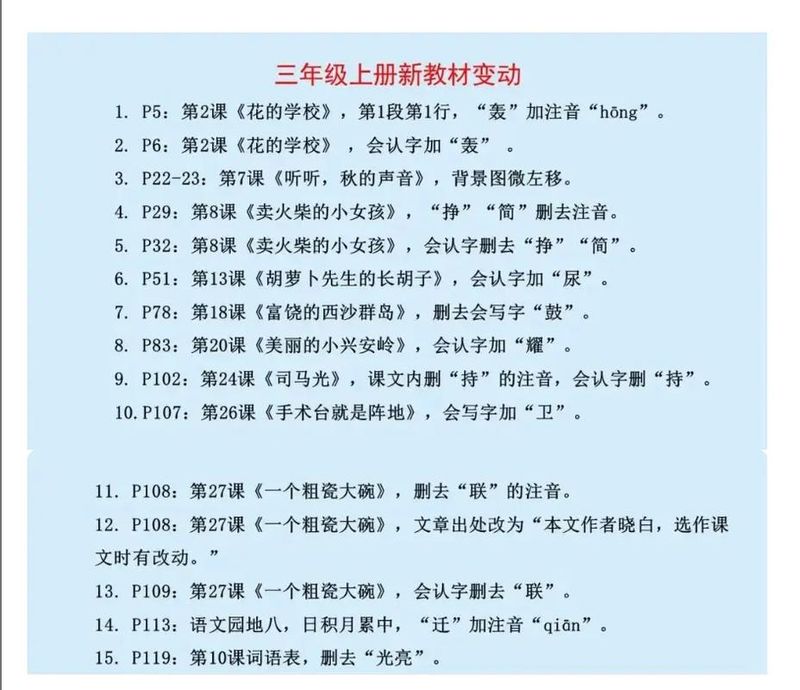
The new material further optimizes the framework structure of the book, adopting a reading-and-expression approach, clearly positioning the plates and columns, and clarifying internal linkages and levels. The reading and writing elements of each module of the new curriculum are parallel and can be described as a combination of reading and writing, and the structure of the system contains a certain methodological and strategic chain that ultimately points to an improvement in the ability of students to read and express。
For example, the new material, which incorporated the former independent “spoken communication” into the “language parks”, upgraded the language campus function as an integrated language practice column and appropriately integrated its internal sections; and adapted the presentation and practice topics of some modules so that the module practice reflected, as far as possible, the “reading pavement — read-to-writing” evolutionary principle. Read-and-write is actually the ultimate expression of the expression or, more simply, the use of the language, pointing to the fact that the student will solve some of the real problems in the language。
3. Highlighting the holistic nature of educational materials
The new teaching materials exist as a whole, which is structured in such a way as to improve the use of the language and language of students. On a horizontal basis, each module runs from the introductory language page to the language campus and is in fact a whole, reflecting horizontal linkages between the internal parts, and each module of the material contains six parallel language learning tasks; on a vertical basis, the learning requirements of the material and the language element arrangements reflect the evolution of the content of the course in the learning task group, enhance the reading skills between the sections, the progression and alignment of the language elements, and rationalize the relationship between different years, volumes and after-school subjects and structure the after-school subjects. For example, teachers, in combing the observational modules in the first grade, not only do they combo the first grade, but also link them to the second, third and even fourth and fifth grades, and define the unit objectives of the unit from the point of view as a whole, in order to gradually improve the use and even the mindset of students. In addition, we cannot structure this module simply by combing the humanities and language elements and, more importantly, by considering how the after-school exercise of this module evolves。
Enhanced practice
1. Language focus
Language usage is a constant thread in the language discipline, and producers are conscious in focusing on the use of languages in the development of teaching materials. At the macro level, the selection of texts is more linguistically sensitive and the grouping is more linguistically expressive, such as the addition of the first snow in the fifth grade book, which is a text of both text and beauty; in the medium term, the content of the texts is more closely linked to language learning and the requirements for the use of languages are more reflected in the introduction of modules, language elements, reading tips, etc.; and at the micro level, language parks have also been trained to optimize the use of languages。
Unit page optimization. The new teaching materials have improved the module pages, modified the individual guides and added entries on the human subject to the bottom right, transforming the entries from the original two to three, which also makes the learning objectives and focus of the modules clearer。
Read the hint more carefully. The new teaching materials are more detailed in terms of the content of reading tips, for example, the addition of digital notes to the first year's textbooks, including on the use of childized words, which are new reading tips that provide students with reading information about the author, the source, the modification, etc. Of the text and help them understand the normative requirements for reading it。
2. Strengthening oral communication and learning
It goes without saying that in the past teaching materials were written in a reading-oriented manner, and even at the outset all the modules were text-based, without a learning module, which became additional items and tasks behind the modules. The new teaching materials, on the other hand, have added oral and practical content, allowing students to exercise their speech and communication skills in real situations. At the same time, emphasis is placed on the guidance and training of students in their practice, drawing attention to life, observing society, thinking about life, and improving writing and expression skills. This has also led us to use new teaching materials to improve the use of the language and writing skills of students, in the light of recent developments in the development of their language, in conjunction with materials provided in the texts。
3. Interdisciplinary and practical outreach
The standards for language courses in compulsory education (2022 edition) highlight the learning task group, which we used to call a series of language practices. The new materials also focus on the expansion of interdisciplinary learning and practical activities, combining the content of the relevant disciplines of history, geography and natural sciences with language teaching, broadening the perspective of students, increasing their knowledge and increasing the content and form of practical activities, enabling students to learn and use language in practice, and improving their practical abilities and innovation。
The new teaching materials in the primary language are in fact a combination of new and updated materials, which have been modified and modified on the basis of the new structure, making them more comprehensive and practical and making it easier for the entire teaching of the modules。
(professor at the institute of humanities and foreign languages, beijing institute of education)
Chinese teachers' journal, 08/01, 11th edition