Question: who is responsible for the loss of life and injury from the outside wall of the house? Who is repairing it
Xinhua, xinhua visibility point, journalist zheng tian, wang yu ling
The recent fall of the outer walls of houses in guangdong, hubei, jiangxi, anhui and shanghai has caused loss of life and property, causing widespread social concern。
A survey of xinhua vision journalists found that the fall of the exterior wall had been increasing in recent years and that, following the accident, problems such as lack of maintenance responsibilities, pushovers and difficulties in raising funds had often arisen。
What's the frequency of the fall
On 28 november, the exterior wall of an old house in jiangmen city in guangdong fell off, damaging an old man on the sidewalk. In mid-november, residents of a small section of the city of gian in jiangxi province indicated that the outer tiles of the district were often falling and that people had been injured. Not long ago, a 33-storey building in hubei wuhan city suddenly fell off a section of its outer wall and stoned a passing train, the driver of which was killed on the spot。
In march of this year, two high-rises outside the central city of shanghai fell in succession: a residential building in a small area of the hwangura district fell in part, and the residents who passed were unfortunately killed when they were struck; and a building in the nanning district suddenly fell off the outside of the tile, with fragments of the brick falling, injuring a pedestrian。
In recent years, the construction of a residential block in the haidian district of beijing city in 1999 has been plagued by repeated brick fallout from the outer wall. In the last year alone, four private cars were destroyed by falling bricks, some of which cost $40,000 for repairs, and residents were worried about their safety when entering and leaving the building。
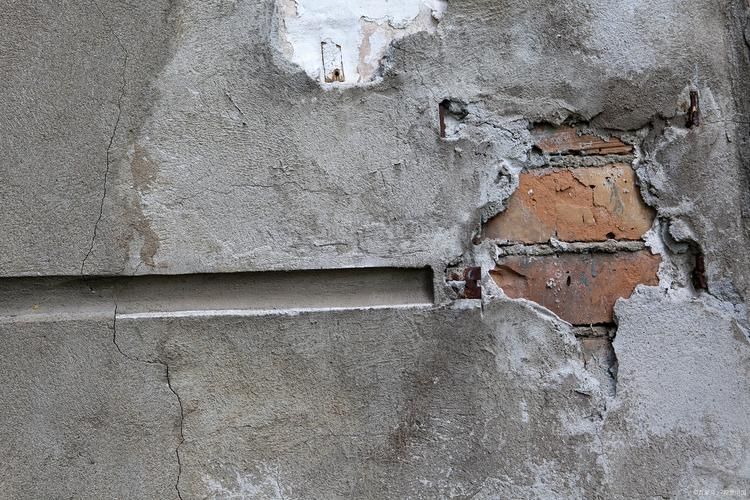
There have been successive incidents of decomposition and destruction of vehicles in the outer walls, such as anhui fat and the port, and new cars purchased by residents have been turned into “convertibles”。
Why did the outside wall fall? In addition to the ageing of the outer walls, the main reason for the fall of the outer walls was described by a number of industry sources as the extensive use of wall-preservative materials for a period of time, which lacked waterproof properties。
The director of quality, a building firm, told journalists that, since the late 1990s, the country had been promoting large areas of the outer walls with hot and decorative layers, but that the outer walls had been defunct due to the early use of warmer-coated materials, water accumulated inside the walls after the rain, cold summer and winter heat, repeated heat swelling and constricting, resulting in the breakout of the outer walls. The authorities became aware of the problem and began in 2017 to introduce low-ingestion exterior temperature-preservation materials and flexible waterproof paints。
In shanghai, the manager of a property institution specializing in the protection of historical buildings told journalists that in the 1990s, a number of high-end housing exterior walls had used a temperature protection panel, and that many buildings had used wall blocks, making it easier to remove them, “after 2000, the application of such materials to the exterior was prohibited from various places”
Many industry sources spoke of the growing age of some homes built more than 20 years ago and the increasing frequency of brick fallout from the outer walls, which has led to fragmentation on the outside of some high buildings, such as those with ugly scars。
Who's in charge? Who's in charge
Who is responsible for the repeated loss of personal injury and property caused by the fall of the outer wall and who is repairing it
The law makes it clear that the construction unit should fulfil its warranty obligations and be liable for damage caused by quality problems arising during the warranty scope and duration。
According to insiders in the construction industry, the warranty period for external wall protection against leakage is five years and for exterior wall decoration works is two years. “the fall of the outer wall often takes place seven years after delivery and less so during the warranty period.” the director of construction works in zhang, told the journalist。
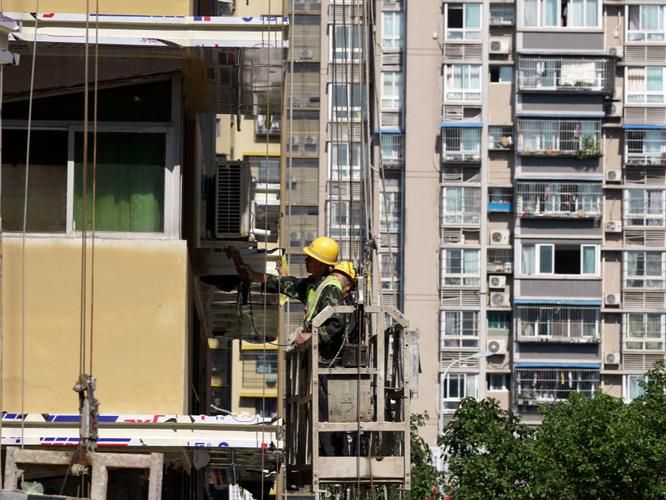
If the warranty's over, who's gonna fix the wall
Under article 70 of the property rights act, the owner has the right to own the exclusive parts of the building, such as the home, the place of business, and the right to joint and joint management of parts other than the exclusive parts. According to article 273 of the civil code, the owner has rights and obligations with respect to a common part other than the exclusive part of the building; he may not waive the right to perform the obligation。
Professor chen jie, chinese institute of urban governance, shanghai university of transport, said that owners had the responsibility to maintain buildings and safeguard them from public risks, but that maintenance of buildings and their external features was a professional matter that required a breakdown of the responsibilities of the relevant departments。
Cheng peng, director of the department of property management, school of economics and management, beijing forestry university, said that outside the warranty period, the owner, as a co-owner of the public part of the residential building, had the obligation to maintain the building and ensure its safety. All owners are required to raise and use public maintenance funds, which are earmarked for the maintenance of the exterior wall after the owner has fulfilled certain procedural decisions。
A journalist survey found that the use of the maintenance fund required the agreement of the board to follow the prescribed procedure, and that maintenance was often caught up in a situation of fragmentation if the board did not agree or if there was a lack of agreement among the owners。
“the owners have different claims, some of which do not concern themselves or want to pay.” according to many property managers, the detachment of the exterior walls tends to occur in only one or two homes at a time, but the repairs will involve two or three floors, and the maintenance process will be shorter than half a month and longer than two months, affecting the normal life of many households, with greater resistance to repair。
The head of a residential committee told journalists that the maintenance of the outer wall would first have to be decided by a vote of the owner's assembly, with a notice period, and that it would often take many days to ensure that all owners were informed; that, if most owners agreed to the repairs, seven days of publicity would be required and reported to the town authorities for approval; and that a tender would then be put forward to select the repair party. “the entire process will be down in five months to six months if it goes smoothly. If the majority of owners do not agree, it is up to the relevant department in the town, as appropriate, to decide whether to initiate the emergency procedure, which will take between one and two years from start-up to completion of maintenance.”
In addition, in some districts there are no committees and it is very difficult to apply for a maintenance fund when the exterior wall drops; in others there are problems of insufficient amounts and complex application processes。
How can it be effectively broken
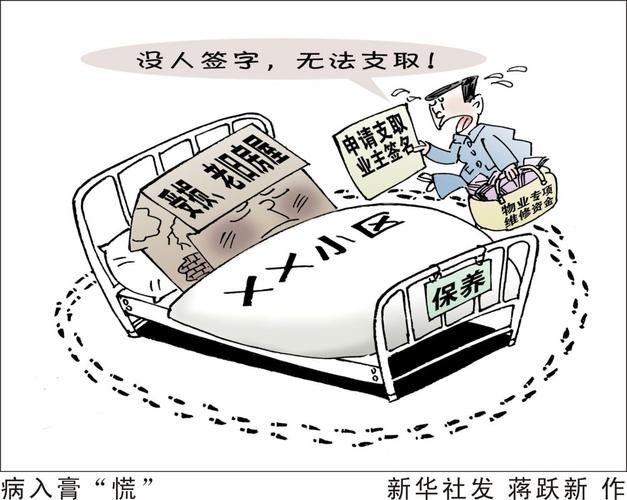
Several heads of street offices in front-line cities said that there was a long-standing lack of effective security detection and maintenance mechanisms for the outer walls of buildings and their accessories. Neither the building owners nor the users know what routine inspection and maintenance duties are to be performed, and the relevant authorities lack the necessary guidance。
According to experts such as cheng peng, the break-out of the exterior wall of the building is complex and the division of responsibilities requires screening and case-by-case analysis。
Wang jia-lang, deputy director of the quyang street office in the rainbow zone of shanghai city, believed that the appropriate procedures must be initiated as soon as possible for construction to be repaired; in cases where there were objective difficulties, the government could subsidize or include special projects。
“it is difficult for an industrial, residential or property company to bear the weight of injury.” according to chen jie, in the long run, if the house and its outer surface have passed a “quality guarantee” period or if the age of the house is over 20 years, it should be mandatory to make major repairs every several years。
Most of the small areas that are currently properly addressed benefit from integrated rehabilitation. In the case of the rehabilitation of the old chifu park in the province of yunnan, which has been renovated, water-proofing and so on, there has been a multi-pronged effort to solve the problem of financing through a state subsidy, a municipal supplement, a self-financing scheme for the population, a shared share of the management unit, an investment in social capital, and the replenishment of the proceeds。
In chen jian's view, the streets must effectively assume responsibility for oversight and coordination, monitor situations in a timely and dynamic manner, and ensure that property and industry committees are accountable, actively integrate policy resources and propose effective solutions。
Wang jia lai believes that the relevant authorities should establish a life-cycle management bank for all houses in the jurisdiction and establish annual inspection lists, high-risk lists and recovery lists, depending on the condition of each building, to achieve “first floor”. In case of danger, procedures should be initiated to guide the maintenance of the house。
In addition, it was suggested that the government should encourage and develop an awareness among owners to purchase insurance and to raise “old-age money” for housing through insurance products such as fault insurance, public liability insurance and a separate component by developers, construction units, property companies and owners。