In chemical material circles, there is a black powder, which is neither metal nor fabric, but which is low-key and has an unmovable presence. It's... Carbon black. Without it, it is difficult to present pure black ink, it is difficult to balance beauty and tolerance in paint, and it is even less likely that the coloured particles are efficient in plastic。
So, what kind of carbon black should we use ink, coating and color particles that are different from the scene
Today, we're going deep into the black and black world and unlocking the selected black box
I. What's carbon black? Let's get to know it again
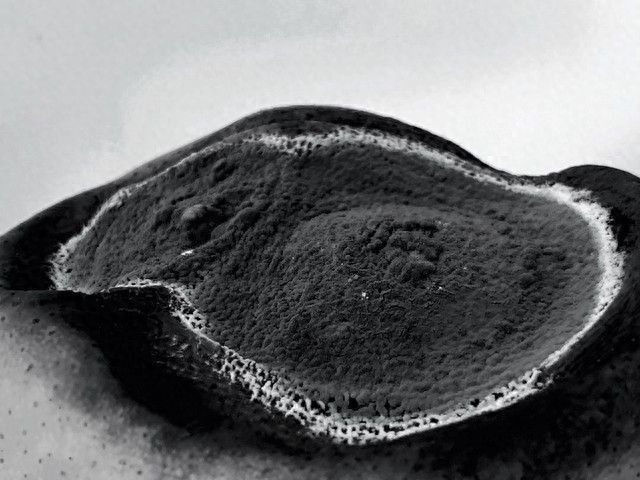
Charcoal black is a near-stereotyped carbon uniform made of heavy oil base materials, such as kerosene tar and ethylene crack tar, which are thermally decomposition. Globally, tens of millions of tons of carbon black are generated, of which about 30 per cent is used for tyre reinforcements, 30 per cent is used for non-temperate rubber fillings and the remaining 10-15 per cent is used as special colour black into high-value-added applications such as ink, coating and plastic-coloured mother particles。
Specialized carbon black is a specially processed carbon black product that is given special functions of conductivity, ultraviolet protection and high black colour through precise engineering design of dimensions such as surface area, structure, particle distribution and surface chemistry. The māori rate for special carbon black is significantly higher than that for ordinary rubber, and the price for conductive carbon black is more than 10 times that for ordinary carbon black。
Ii. Complete exchange of correct and blace approach in turkey, correct and pack
Ink: the ultimate balance between color, dispersion and stability
In the ink, the central role of carbon black is colouring — providing deep black for printed materials. But good black must not be “dead black” and must be colourful (e. G. Blue black or red black), brightness and durability。
The ink industry is extremely hard on the carbon-black selection, focusing on the following core dimensions:
(1) the particle size determines the blackness
The particle size range of carbon black is usually 10-100 nm, and its chromosomality is inversely proportional to the particle size. When the particle size is less than 25 nm, the absorption capacity of carbon black to visible light is significantly enhanced to provide higher blackness and colour intensity. Experimental data show that the blackness value (l) of the ink can increase by 3-5 units* for each 10 nm particle size reduction。
Therefore, high-end printing ink uses high-coloured carbon black (9-17 nm particle size). For example, in the carbot monarch series and the european special black series, the average particle size is usually between 18-24nm and is widely used in the field of high-end packaging ink。
(2) fragmentation of surface treatment decisions
The dispersion of carbon black in ink directly affects the quality of printing. Once the problem of reunification arises, it leads to abnormal ink viscosity and even to the printing of scrap. As a result, carbon black producers need chemical oxidation of their surfaces, introducing oxygen-containing cyanide, phenol hydroxyl and enhancing the compatibility of carbon black with solvent-type/water bindings. Especially in recent years, uv inks have spread rapidly, placing greater demands on the surface polarity of carbon blacks — uv ink uses carbon oxide blacks with surface polar cells。
(3) ink type corresponds to carbon black and white
The requirements for carbon black vary widely among the ink systems:
Summary: the core requirement for carbon black in the ink industry is high black + good dispersibility + specific colours (blue or red). Precision control of the particle size and surface chemistry of carbon is the core technical barrier to high-end ink and black oil。
Painting: coloring, uv-resistant, conductive
The paint area is the second largest application market for carbon black. In addition to meeting basic aesthetic demands (deep black tone), black carbon also carries a more complex mission in industrial paints — ultraviolet absorption, resistance to corruption and electrostatic conductivity。
(1) ultraviolet absorption: natural “photological ring” of carbon black
A large area of paint is exposed to the outdoor environment and the invisible killer is ultraviolet (uv). Birla carbon's raven black products can convert ultraviolet radiation into heat, thus protecting the base material from degradation by radiation absorption. The excellent uv absorption capacity of colored charcoal can significantly improve the aging properties of coatings by extending the product life of long-cycle scenarios such as cars, ships, transmission towers and tanks。
(2) conductive electrical protection against static electricity: requirements of the electronic age
The addition of conductive carbon black to the outer casings of electronic equipment, aeroplanes and blast-proof coatings can effectively disperse static electricity and prevent static accumulation from causing safety incidents. Through the construction of a continuous network of carbon and black clusters, conductive performance can be harmonized to the broad range of anti-static and electrostatic consumption to total conductivity。
Today, as intelligent and new energy vehicle manufacturing expands in scale, the demand for conductive electrostatic power for coatings rises dramatically. For example, the patent for cylindrical cylindrical base coatings, which was requested for paints, introduced conductive carbon black into paint formulations and solved the problem of electrostatic spraying in the area of automobiles。
(3) surface glossy and chemical inertia
The strong chemical inertity of carbon gives paint excellent durability in the acid-alkali environment and is an essential functional component of the heavy preservation coating. At the same time, carbon black also allows for finely calibration of coating gloss and surface senses by controlling adhesive paints such as additions and aluminium powder。
Summary: painting requires much more than a “blackboard”. Modern industrial paint requires carbon black to provide both deep black + ultraviolet shield + electrical transmission. This is a highly compounded performance requirement that can only be fulfilled by a highly pure and stable special carbon black。
Particle: high-impact coloring solutions behind black plastics
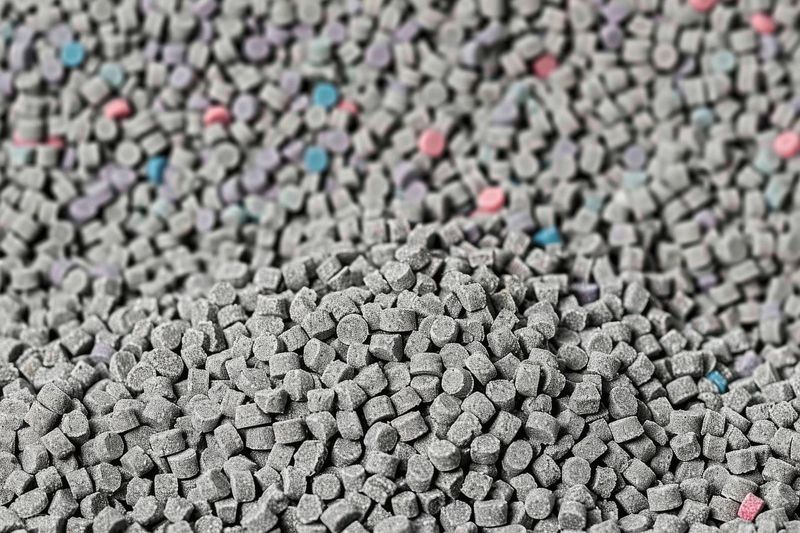
Black parent particles are the most widely applied colours of the particles, which are mainly carbon black paints, pre-mixed with resin carriers and dispersants. It is the most economical and reliable solution to “black” in the plastic industry — from handbags to car parts, and then to electrical and electrical casings, where black particles are visible。
(1) particle structure determines “black” and “dispersed” games
The plastic industry's most classic problem with carbon black selection lies at the end of two contradictory indicators: blackness vs fragmentation。
In addition, the structure (dbp absorption) plays a key role. High-structured carbon black increases the strength of the product, but increases the mulching viscosity leading to processing difficulties; low-structured carbon black is highly mobile but may be at the expense of some mechanics。
(2) functional extension: conductivity, food class, environmental protection
With the trend towards the functionalization of plastics, the functional boundary of the black mast continues to be breached:
Synopsis: in the field of black parent particles, the carbon black selection = a composite balance of particle size, structure, surface chemistry needs to be found in the four dimensions of “blackness”, “diffusion”, “cost” and “compliance”。
Iii. Guide to selected pits: the three indicators must be utilised
Among the three main applications of ink, coating and chromatography, several carbon black performance indicators are “necessary questions” in front of formula engineers:
Iv. Industry trends: special carbon black is entering fast cars province
The special carbon black market is expanding at an alarming rate. The global special carbon black market is expected to reach $3. 32 billion in 2025, rising to $3. 5 billion in 2026 and $5. 46 billion in 2034. The asia-pacific region dominates global markets and is expected to account for 57 per cent of market shares in 2025, benefiting from large-scale electronic manufacturing, automobile production and polymer processing capabilities in china, japan, the republic of korea and india。
At the national level, the size of china's special carbon black market in 2025 was 4,942 million yuan. China is the world's largest producer and consumer of carbon and is expected to have a market size of $9. 14 billion by 2026。
In terms of market supply and demand, the domestic carbon and black sector in 2025 was characterized by a pattern of “supply and weak demand”. Prices in the upstream coal tar market fell by 16. 20 per cent on average and in the carbon black market by 16. 98 per cent on average. The net profits of the three leading black cat shares, dragonstar technology and yongdong shares have been significantly reduced or lost. At the same time, however, the industry giants are accelerating their transition to higher value added. For example, black cat shares are developing special carbon black and extending to new material such as lithium-conducted carbon black。
Specialized carbon black has become a strategic high ground for the future configuration of the giants, not only because it exceeds several times the level of gross domestic product, but also because of its broad growth prospects for responding to the combination of green, low-carbon, health-compliance and high-end functional needs。
V. At the end
It is no exaggeration to say that the high and low level of carbon black applications determines to a large extent whether an enterprise can build real competitive barriers to high ink concentrations, long-lasting tolerance of coatings, and high blackness of coloured particles。
Understanding the checks and balances between the three core properties of the particle size, structure and surface chemistry of carbon black allows for more than one blade in the three main battlefields: ink, coating, and chromium. Today, as green trends accelerate and the demand for functionality rises, carbon black has moved from behind the scenes to become an important component of functional material solutions。
Charcoal is black, and the way is bright。
This is an industry-wide technical section, which is selected in the context of actual product needs and supplier technical parameters。