The vast universe is vast, light-years are the measure of the stars, and distant galaxies seem never to reach. And einstein's broad relativity leaves a magical structure of time and space for humanity — wormholes — and gives time travel the theoretical possibility。
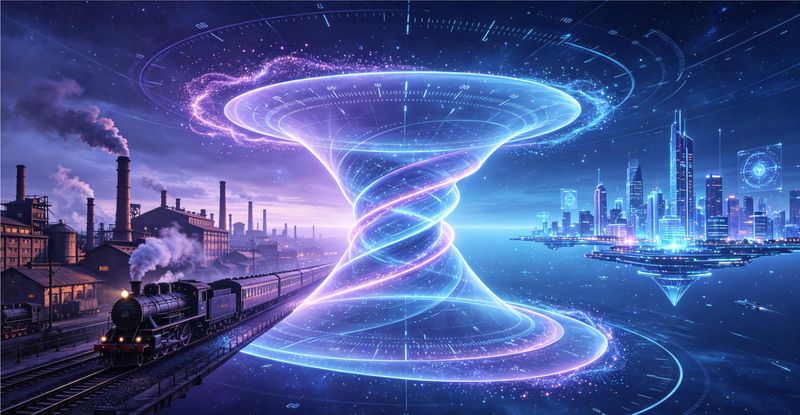
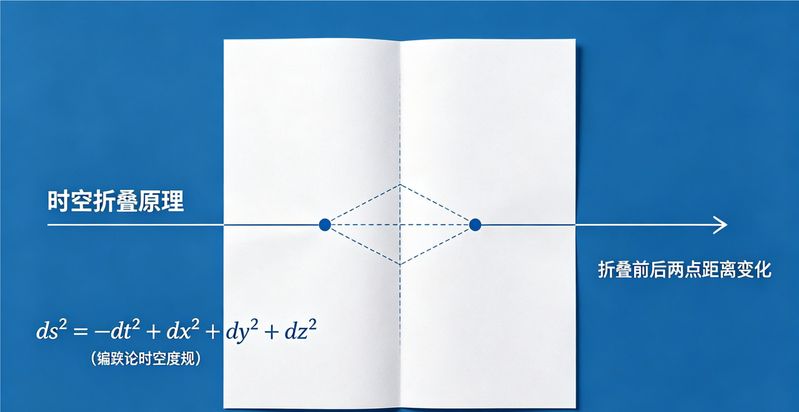
It's called einstein-roson bridge, which, in short, is the “crash tunnel” of space and time in the universe. We can imagine the flat universe as a piece of paper, with two points of paper that are far apart, where the paper can be folded, and two points that can be matched in an instant. The wormhole, like a small hole through the folding paper, can cut across hundreds of millions of light-years of space and become a shortcut for interstellar travel。
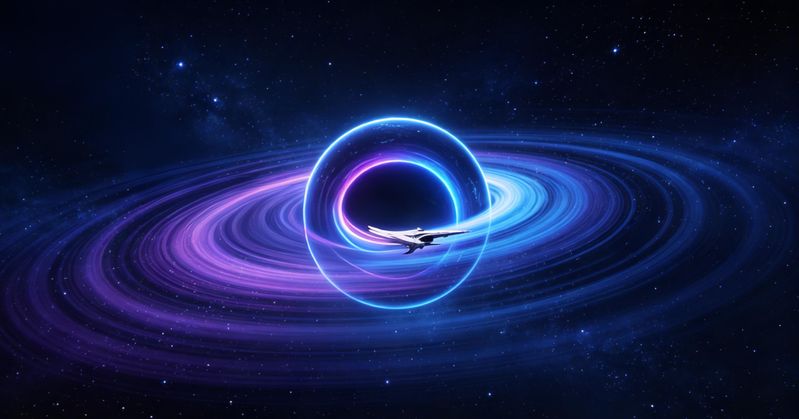
Even more amazingly, wormholes are more than just connected space, they distort time. In relativity, gravity and speed change the speed of time flow. If one end of the wormhole moves at a high speed, the two ends become time differentials. In theory, through the wormholes, humans may be able to travel to the future, to look back and to make the desired time travel。
But good ideas are still constrained by reality. At present, wormholes are only present in physical formulas and theories and have never been physically observed by humans. Natural wormholes are highly unstable and collapse at short notice. In order to keep access open, they need to be supported by strange negative energy materials that are not yet under human control。
At the same time, time travel has enormous causal paradoxes that break the rules of the space-time order of the universe。
The wormhole is a romantic puzzle that the universe leaves to mankind, carrying our dream of exploring time and space. It widens the scientific horizon of humanity, even though it cannot travel immediately. As technology progresses, perhaps one day in the future, we can open the mystery of wormholes and unlock the ultimate secret of time and space。