Although there are a lot of science fiction films, novels and games now portraying the wormhole as a tunnel through time, recent studies have shown that the concept of the wormhole over time may not exist at all。
In retrospect, in 1935, albert einstein and nathan rosen introduced a mathematical structure known as the bridge (einstein-roson bridge) to connect two fully symmetrical copies of time and space. The idea was not intended to provide a theoretical assumption for the passage of time and space, but rather to maintain theoretical consistency between a broad relativity and quantum physics。
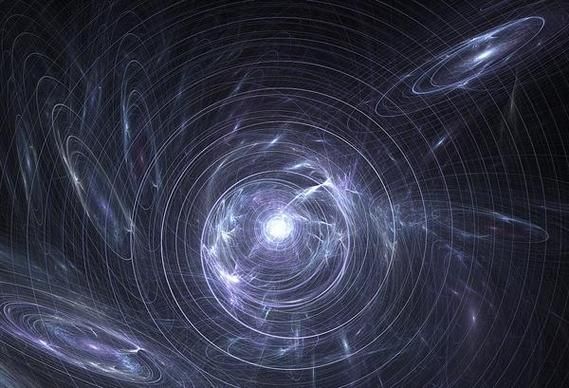
The idea of “einstein-roson bridge” as a time-lapse “worm hole” has evolved in recent decades, especially in the late 1980s, when some theoretical studies began to envisage the possibility of crossing from one side of time to the other. However, it is also clear from these studies that, within the framework of a broad relativism, such passage is impossible: the bridge structure will be rapidly “constricted” within a timescale that cannot be passed at any speed of light, and therefore cannot be accessed at all. In other words, the einstein-roson bridge is an unstable and unobserved mathematical structure, not a truly objective “pathway” in reality。
Phys. Org, a recent study published in the journal classical and quantum gravity, points out that einstein and rosen did not really try to solve the problem of space travel that year, but rather the way in which quantum fields behave in the sky when they bend。
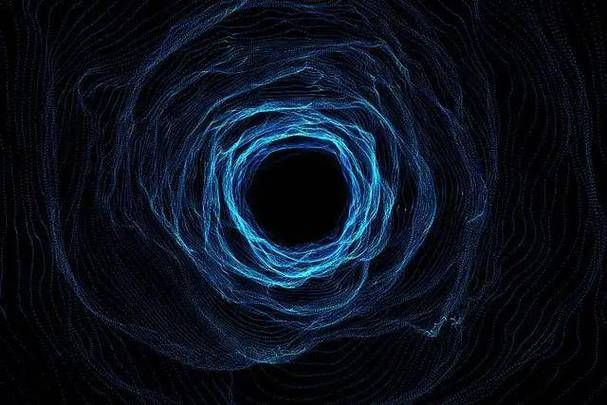
If we return to einstein and rosen's original concerns, this “bridge” refers not to a space shortcut, but to a more peculiar physical meaning. According to the research team, einstein-roson bridge can essentially be understood as a mirror in the air of time, connecting two time arrows at the microlevel in opposite directions。
Within the new research framework, scientists have introduced the concept of “two arrows of time”. Most of the most basic laws in physics do not distinguish between the past and the future, nor do they distinguish between direction and direction; even if they reverse time or space in the equation, they still exist. If this symmetry is taken seriously, the einstein-roson bridge is actually two complementary components of a quantum pattern: one moving forward at a time and the other moving backwards from mirror positions。
At the micro level, this “bridge” structure means that information can go beyond what we understand as an event horizon. The information did not disappear but continued to evolve in the opposite direction over time. This view provides a natural explanation for the “black hole information paradox” proposed by hawking in 1974. That is, the information absorbed by the black hole has not been lost, “just to leave the course of time we have experienced and to continue in mirror time, thus preserving the integrity of the theory and its causality without introducing novel physics”。
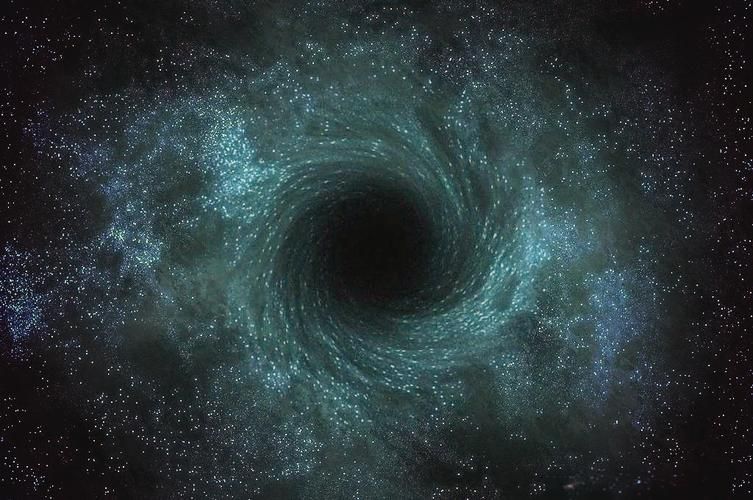
Further, this framework suggests even more far-reaching possibilities: the so-called “cosmic big bang” may not be an absolute starting point for the universe, but rather a quantum “reverse”, which links the evolution of the universe in two opposite directions. In this scenario, black holes are not only connected to the direction of time, but may even connect to different universes. We live in the universe, perhaps as a result of the formation of a black hole in another mother universe. If this picture is established, some relics from the pre-revolution stage, such as small black holes, may pass through the “mother universe” and appear in the universe as we know it。
In this perspective, the real “bridge” is time, not space; the “cosmic big bang” is no longer the “start of everything”, but rather a process. In the microworld and a reversible universe, time itself may flow in both directions。