Print money. It's supposed to be what most people think. Indeed, the number of currencies is the most important factor influencing their purchasing power. But if you ask again, how do you print money? How do we get new money into the market? A lot of people probably don't know. So the real question is:
What is the way to increase the number of currencies and thereby reduce them。
Are there any factors that affect the purchasing power of money other than the amount of money
Three main factors in the reduction of part 1: fisher trading equation
The economist owen fisher answered that question as early as 1911, when we were in the final years of the chong dynasty! He presented the trade equation, which revealed several direct factors of currency contraction and analysed the many indirect factors of contraction. The formula is as follows:
Number of currencies (m) x flow speed (v) = price level (p) x trade volume (t)
First of all, we use the rise in price levels as an indication of a shrinking currency. Since prices are measured in monetary terms, the purchasing power of the currency is the penultimate of the price level — the higher the overall price, the worse it is。
Price levels depend on three factors:
1. The amount of money in circulation (including bank deposits)
2. Speed of currency (including bank deposits)
3. Volume of transactions。
Of these, the amount of money is the “dollars” in circulation; the speed of circulation is the average number of dollars exchanged for goods in one year; the volume of transactions is the number of items purchased in currency each year。
Why does this equation work? There's a simple proof in currency deflation:
The trade equation is a mathematical expression of the total amount of transactions that occur in a given society over a certain period of time. It comes from all the trade equations of individual transactions. For example, assuming that one person buys 10 pounds of sugar at 7 cents per pound, this is a trade in which 10 pounds of sugar can be considered equivalent to 70 cents, expressed in equations:
70 minutes = 10 pounds x 7 minutes per pound
Other transactions can be expressed in similar equations; by adding all such equations, they can be obtained from a given society at a certain time. That is, the left of the equation represents the total monetary expenditure for a given period, while the right represents the total value of the items purchased during the same period. During this period, however, a sum of money may have served several transactions, and this is often the case. Thus, the left of the equation (currency end) is often several times the total volume of money in circulation. It is clear that the monetary end can be seen as the product of the amount of money and the speed of circulation (i. E. The number of exchanges)。
Part 2 indirect factors for currency contraction
Understanding the three direct factors, it remains difficult to discover the link between them and real events and policies, and we therefore need to move one step further to see what factors influence the three factors — the amount of money, the speed of circulation, the volume of transactions (trade volume) — so that the purchasing power of the currency is reduced. Only some indirect factors that affect the volume of transactions, the speed of circulation and thus the purchasing power of currencies are listed here。
“commercial purchasing power of production and consumption in trade
We analyse each of the factors affecting producers, consumers and linkages. Producers are affected by: (1) geographical differences in natural resources; (2) division of labour; (3) science and technology; and (4) capital accumulation。
“some parts of the planet produce wheat, others produce spices and others produce fur, which tends to drive trade flows between these areas; similarly, some groups invest in agriculture, others in fabrics, others in construction, etc., which can also cause trade among these groups. It is also clear that the state of knowledge about the means and methods of production stimulates trade. For example, as a result of indigenous ignorance, african and australian minerals have been buried in the ground for centuries and have not been used, but were later exploited by white people with metallurgical knowledge.” the same applies to marine oil exploration in some african countries。
“on the other hand, it is clear that useful knowledge needs to be applied, often with the help of capital. In any society, the more capital the more productive capital is, the more goods can be traded. A factory made a town a trading centre. Piers, cranes, warehouses and railway hubs can drive the harbour into commercial ports. Since an increase in the volume of transactions tends to lead to a decrease in the general price level, any factor that increases the volume of transactions tends to result in a decrease in the general price level.”
A typical example of this is the town of sundebei, where the author worked. Trade in the town has flourished thanks to the initiative of two major enterprises, the united states of america and the baguilan; in addition, the capital of the town's investment — the wharf, the hanger, the crane, the warehouse, etc. — has become a port; thus, the prices of general commodities are low there. This is why, in fact, the cost of living in large cities is mainly high in housing (the rise in the price of housing is mainly due to the fact that demand is growing much faster than supply, and is less affected by monetary factors) and the usual use of food is similar to, or even cheaper, in other three or four-line cities
What affects consumers is the size and diversity of demand. The more diverse the desire, the more the transaction, the lower the price. The factors that affect linkages between producers and consumers are accessibility (e. G. Aviation, high iron), freedom of trade (e. G. Tariffs), trust in banks and businesses. With regard to trust, fisher has the phrase: “trust is the soul of trade, to say the least. There are many places in south america that have not yet been developed, simply because capitalists find the contract insecure. They fear that any development they make will be taken away by others by whatever means.”
“a person's habit of moving at a fast pace and purchasing power of money
This is followed by storage, bookkeeping and the use of cheques in personal habits。
Storage means hiding gold and silver and not entering circulation. This naturally increases the purchasing power of money. But now that banks are in place, deposits are not stored at all, but rather are accelerating the flow of money and increasing the amount of money。
It's a bookkeeping. Now, it's all kinds of loans, credit cards, flowers, which speeds up the flow of money, and the currency shrinks. It's worth saying: because you shop on credit, you don't have to pay as much cash on hand. Under the cash payment system, a person has to have free money in advance; and if a bookkeeping credit is used, the person can obtain supplies on credit, even if he or she has no money, and then pay back when he or she has money on hand. For example, if a hit worker spends at least $7 per week on earnings and expenses, and if he spends at least $1 per day, the balance available on a full-week basis is at least $7, $6, $5, $4, $3, $2. 00, $1. 00, with an average balance of 4, with a turnover of less than two times per week (=7 ÷4); if credit is available, only $7, 0, 0, 0, 0, 0 dollars per day for the full-cycle period, with an average balance of only 1, with a turnover of seven times per week (=7 ÷1)。
Cheques are used today for bank deposits, balances, and micro-mail wallets. These instruments will also speed up the flow and reduce the currency, as the money is in the bank, which provides for the export of surplus money in pockets or cabinets to prevent idleness。
Fisher then talks about the impact of pay systems (e. G., monthly vs weekly salaries), population density (e. G., rural vs cities), regularity of income and expenditure (e. G., wage earners vs. Individual households), etc. On the speed of movement, which is not covered here。
These are only some of the typical indirect factors, and the analysis of them is simply to give you access to the trade equation as a tool for everyday decision-making. This is followed by an analysis of how recent monetary and fiscal policies affect prices, i. E. The purchasing power of money。
Part 3 recent monetary and fiscal policies
These are only some of the typical indirect factors, and the analysis of them is simply to give you access to the trade equation as a tool for everyday decision-making. This is followed by an analysis of how recent monetary and fiscal policies affect prices, i. E. The purchasing power of money。
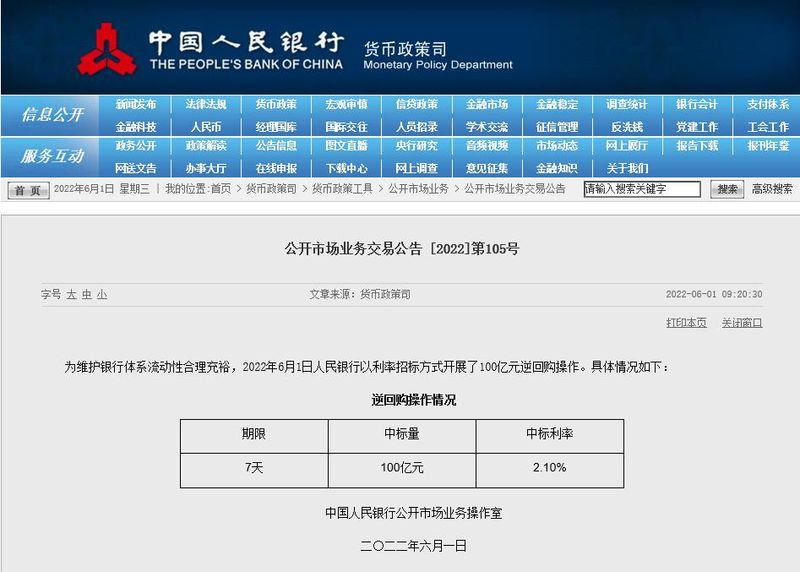
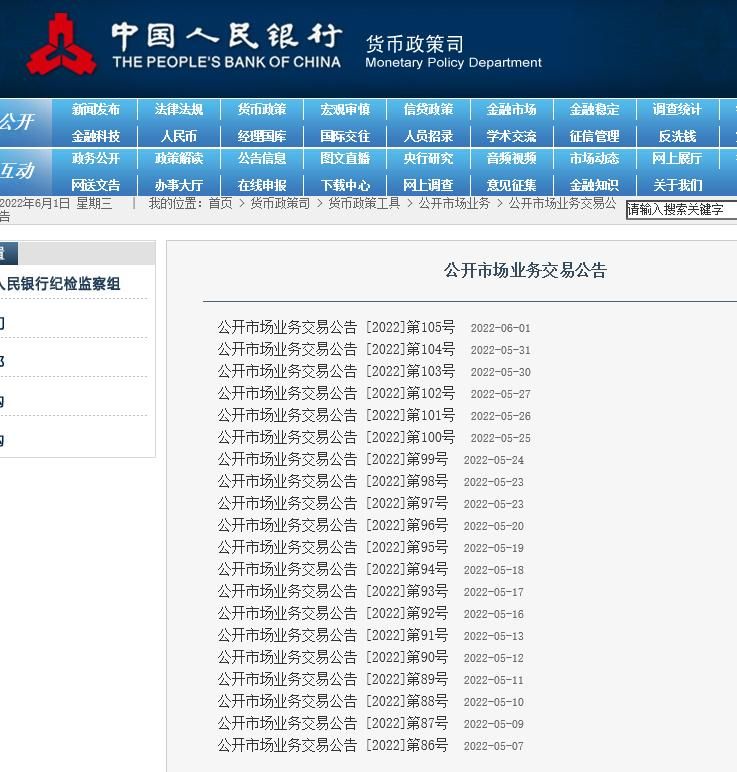
Both reduction and reverse buy-back are monetary policies. You'll be familiar with it. The lower reserve rate for banks means that some of the bank's unmovable money is in circulation, currency increases and currency shrinks。
Repurchasers may be relatively unfamiliar. Repurchase is one of the repurchase transactions in open market operations, where marketable securities are purchased by the central bank from first-tier traders (commercial banks or securities firms with a certain level of qualifications) and where it is agreed that the securities will be sold to first-class dealers at a specified date in the future; reverse repurchases are operations whereby central banks place liquidity (i. E. Water) on the market. It increases the number of currencies, thereby reducing them and increasing prices. Do not look at 10 billion as little as it seems, but only once, and the central bank has implemented it several times a month since this year). This, together with the expansion of credit lending through banks, will result in more than double the amount of money destined for the market. In order to understand how credit expands step by step, the section “secrecy of flow credit” of the currency deflation can be read。
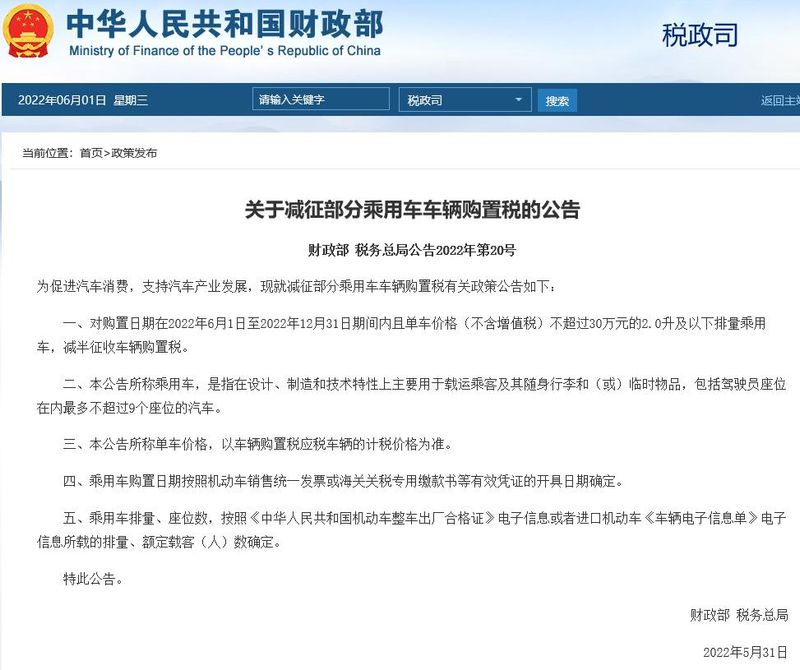
Consumer vouchers, car subsidies or tax cuts are fiscal policies. Consumer vouchers are subsidized by the government (generally local governments) and are promoted by businesses, which enable businesses to operate and the people's capacity to pay, thus contributing to the cycle of economic performance, thus generating employment and putting the “credit cycle” into a virtuous cycle. The same is true for automobile subsidies or tax reductions. Just on 31 may, the ministry of finance and the general tax administration issued a joint announcement to halve the vehicle purchase tax and, in some cases, to exempt the other half。
While these have not changed the number of currencies, they have significantly increased the volume of market transactions and, while boosting the economy, have reduced prices. Since the “values of money x the speed of circulation” on the left side of the transaction vary little, there will be a slight increase in the speed of circulation. In the right “price level x volume of transactions”, there would be a significant increase in the volume of transactions, so that prices would have to be reduced in order to maintain a balance, that is, currency appreciation。
Of course, it's another matter whether it works or not. For example, the 33 coupons recently issued by guangxi are for me chicken ribs, too limited, some stores are available, and they have to be used by a cloud to get a location。
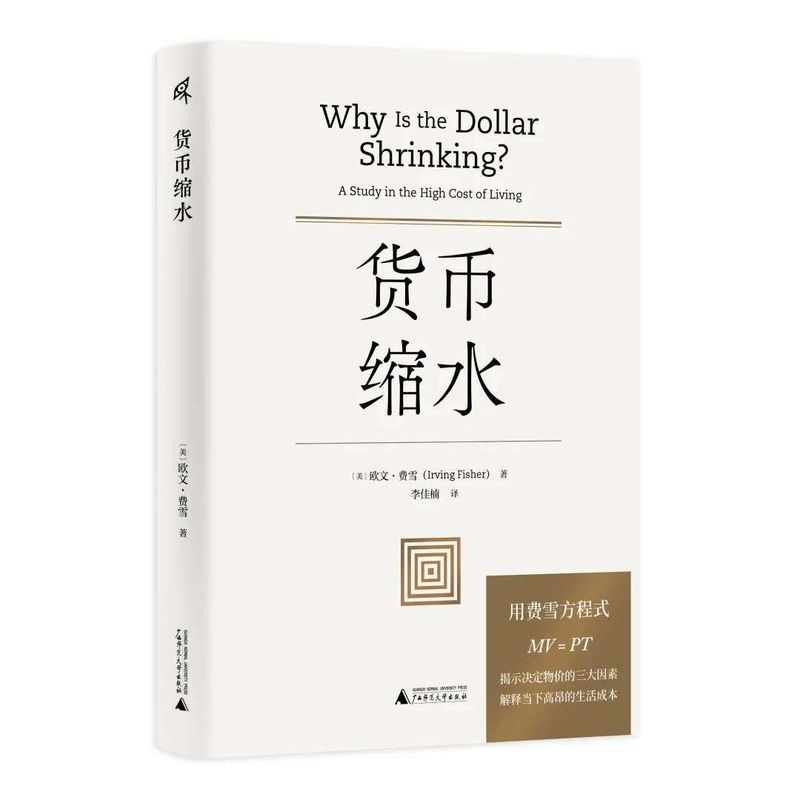
Published by owen fisher, by guangxi publishing house, new man
Why is the cost of living so high? Fisher proposed trade equations that revealed the three main factors in determining prices, analysing the impact of current policies and events on prices; author owen fisher was greatly admired by bear peters, friedman, richard seller, chang chang and xue boon; the book also looked at the nature and value of the currency, breaking down misperceptions of the currency; presented the gradual expansion of bank credit with a balance sheet; argued in a way as to whether the historical fixation system could stabilize the currency; and used the trade formula to introduce price changes to trigger the economic cycle and propose measures to reduce the frequency and consequences of the economic crisis; and concluded by rejecting nearly 30 popular claims that led to “high cost of living” and explaining the consequences of holding these misperceptions。
Introduction by the author
Irving fisher, 1867-1947, distinguished economist, mathematician, professor at yale university. His formula, fisher, raised awareness of the relationship between monetary volumes and overall price levels. There are the interest theory, the purchasing power of currency, prosperity and depression, and currency illustration, falling. It is highly appreciated by economists like bear pete, friedman, samuelson and chang chang。
This paper is from the u. S. W. P. "ihuman" (id:xinminshuo), by: foodlord, 36 kryptons。