In the recent past, a number of international financial institutions have intensified their exchange rate expectations for the renminbi. However, market analysis suggests that the renminbi still has a certain amount of appreciation momentum in the short term, but that there is a low probability of continued unilateral rise or decline, with two-way fluctuations likely to be the dominant melody in the long run。
The renminbi and the united states dollar are both strong and strong
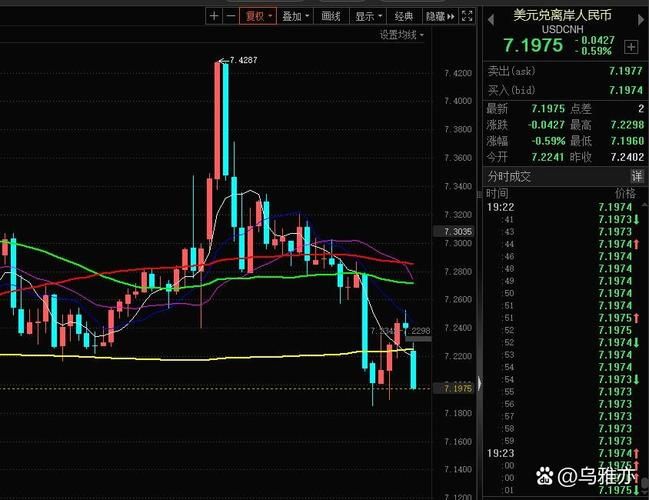
Since the beginning of 2026, the renminbi has generally been on the path of appreciation against the united states dollar, with a “two-power” pattern, despite a small upward movement of about 1. 3 per cent of the dollar index. As at the time of the publication, the renminbi has accumulated an increase of more than 2,200 basis points against the united states dollar since this year, an increase of about 3. 2 per cent; and onshore and offshore yuan have increased by more than 2,500 and 2,300 basis points against the united states dollar, an increase of about 3. 6 per cent and 3. 4 per cent, respectively。
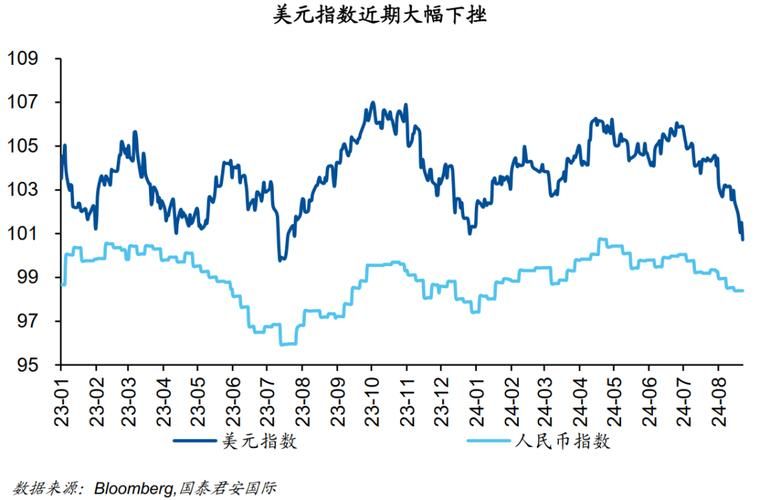
Following the traditional spread logic, the high return on us debt, the steady downward trend in chinese bonds, and the deepening of us interest spreads in the middle of the decade, should have put a downward pressure on the renminbi. However, the appreciation trend of the renminbi, which began at the beginning of 2025, has remained stable to date, resulting in an abnormal combination of “weak spreads and exchange-rate bias”. The reason for this is that the interest rate parity did not fail, but rather that the multiple links that spread to exchange rates were significantly weakened or hedged。
At the external level, there has been a marked fall in the risk-averse sentiment in the global market, with the situation in the middle east having a manageable impact on our economy; at the internal level, there has been a strong domestic macroeconomic start in the first quarter and a sustained recovery in the external economic and trade environment in the second quarter, which has provided a solid internal underpinning for the steady growth of the renminbi exchange rate。
The analysis concluded that the appreciation of the renminbi in the current round was not a result of short-term fluctuations, but was sustained by multiple good-interest factors. In mid-2025, export data were over-anticipated, domestic economic recovery was solid and exchange rates moved up the road; in late october 2025, china and the united states made important progress in their negotiations on trade and economics, and after china's external economic and trade environment stabilized, the renminbi began a faster process of appreciation; and in 2026, the currency rose or accelerated further。
Internationalization breakthrough: offshore foreign exchange pilot landing in shanghai
The process of internationalization has also been marked by important milestones as the exchange rate of the renminbi has grown stronger. On 17 june, the governor of the people's bank of china, ban kung-sung, announced at the forum of 2026, that he would launch a pilot offshore currency exchange operation in the shanghai free trade zone, authorizing six banks, such as comptoirs, agricultural banks, chinese banks, construction banks, trade unions and trade unions, and china's foreign exchange centre platform, to conduct related operations. Depending on the pilot, the offshore renminbi foreign exchange market will be further developed。
On 11 june, the people's bank of china, the central bank of indonesia and the hong kong monetary authority signed a memorandum of cooperation on the same day to establish a framework of cooperation to promote the use of indonesian rupees and the fcc in bilateral transactions between indonesia and hong kong。
At present, several international financial institutions are looking at the multi-channel currency, and there is room for further appreciation in the coming year。
Exchange rate maintains an inter-zone shock pattern
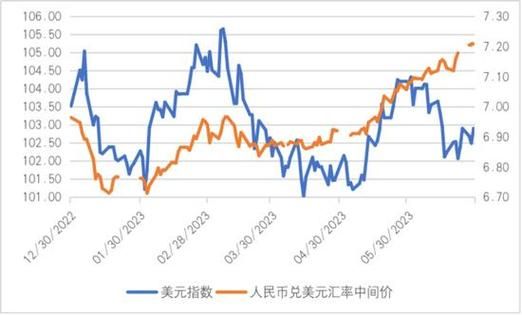
Overall, there are a number of positive supporting factors in the pricing of the renminbi exchange rate in the short term. The advancement of the memorandum has helped to ease global energy and inflationary pressures, to some extent reducing the fed’s urgency to continue austerity policies, thus potentially limiting upward movement on the united states dollar index; on the other hand, the strong performance of export trade continues to provide internal resilience to the renminbi’s current-account inflows. Taken together, the resonance of these milestones constitutes the bottom driving force of the renminbi to maintain a two-way swing centre and to operate strongly in the short term。
However, the subsequent evolution of the macro-environment still requires attention to multiple variables. The current course of tariff policy is not yet fully clear, the geotechnical situation is strained by the marginality of the real economy and the export sector is under some structural downward pressure in the second half of the year. In addition, the fed’s continuing abbreviation process, which usually underpins the bottom liquidity of the dollar index, reduces the likelihood of a significant unilateral weakness during the year, and tends to perpetuate the broad-band shock that has prevailed since the beginning of the year. Taken together, the rmb exchange rate is expected to continue to be priced in reverse association with the united states dollar, subject to current supply and demand fundamentals, and cross-border financial flows tend towards a two-way equilibrium rather than a linear extension in a single direction。