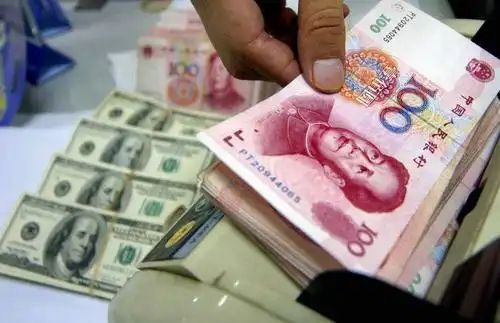
It is not unusual that the renminbi has appreciated from abroad, with an internal devaluation. Since the beginning of this year, the rmb exchange rate has taken on a general “truck-over” pattern. During the first five months, the exchange rate of the renminbi went down almost unilaterally, with an emergency of 7. 20. However, the exchange rate of the renminbi has peaked since june and, as at 13 august, the median rate of the renminbi was $6. 9429 versus the renminbi, having rebounded over two basis points over the past two months, the appreciation of the renminbi is now expected to increase。
What has led to the recent rapid appreciation of the renminbi? First, the epidemic in china has been brought under control, the economy has begun to recover, and confidence in it has grown. It has now become the only globally recognized economy with positive GDP growth. In contrast to the united states, new coronary infections have become more numerous owing to the prevalence of epidemics due to weak domestic controls. Despite the federal reserve’s use of quantitative easing of monetary policy to stimulate the economy, the united states economy has shown signs of recession, compounded by the fact that it is the year of the united states general election, with parties attacking each other and social unrest. As international capital needs to stabilize the value-added environment, china has become the best option for international capital and, as foreign investment continues to flow into china, it has contributed to successive appreciations。
Second, the united states economy was depressed and the dollar index fell. An important reason for the increase in the exchange rate of the renminbi is the fall in the dollar index. Currently, the united states dollar index is at a low level over the past two years. The rebound of the united states economy is weaker than expected, and the united states dollar has insufficient momentum to move up. There are two main aspects to the weakening of the dollar index: one is that the federal reserve's “big flooding” in the aftermath of the epidemic has eased the market's perception of the “shortfall” of the dollar's liquidity and weakened the drive for a strong dollar. In the recent past, the united states government is planning a new epidemic support programme of about $1 trillion, which continues to stimulate the economy with excessive fiscal easing, which is the direct cause of the fall in the dollar index。

Another important reason for the depreciation of the united states dollar was the new coronary epidemic, which was the concentration of the second outbreak in the united states in mid-july and continued until august. As at 0900 hours on 12 august, the united states had cumulatively diagnosed 5304379 cases of new coronary virus pneumonia, treated 27,55089 cases, died 1,67589 cases and now diagnosed 2381701 cases. If the new coronary epidemic is not alleviated, it will be difficult for the united states to re-enter full-scale work and return to productive life, the recovery of the united states economy will be affected, unemployment in the united states will not fall, and there are fears that the united states economy will decline for a long time。
Thirdly, the opening up of china's financial markets to both sides continues, attracting large amounts of foreign capital and increasing the holding of the renminbi. The first is that, with the opening of the domestic bond market, foreign investors holding domestic renminbi bond assets have increased at an average annual rate of 40 per cent in recent years. Second, china's a stock market is also increasing the pace of openness. With the inclusion of unit a in several mainstream international indices, china has also liberalized its a share market investment restrictions and some international hedge funds have entered the a share market as part of their asset allocation. Thirdly, the start of futures markets such as domestic crude oil would also attract foreign investment into mainland china。
Then why is the exchange rate of the renminbi appreciated, while domestic prices are rising wildly? This is mainly due to the fact that domestic capital items are not entirely open, that the increase in the rmb exchange rate does not mean that domestic prices must decline. First, because of china's robust control of the epidemic and the economy's continued positive performance, large amounts of overseas funds have entered chinese capital and asset markets. Our country has a system of closing and selling money, with large foreign capital entering china to exchange the equivalent of the renminbi, while the central bank has to collect large amounts of foreign currency and be forced to place the equivalent in the market, which has led to a surge in financial market liquidity and a rise in domestic prices。
Moreover, domestic price increases are also associated with the epidemic. As a result of the new coronary epidemic, many businesses and factories have stopped working, and the reduction in the production of daily commodities will inevitably lead to higher domestic prices after the outbreak. At the same time, domestic flooding and the onset of the monsoon season in the south have affected the development of pig farming and vegetables. Thus, poor weather conditions not only affect the production of pork, vegetables, eggs, etc., but also cause large fluctuations in these commodity prices。

Finally, after the epidemic, the catering industry, factories and enterprise canteens began to function, requiring a large supply of agricultural products, which were reduced by weather. As a result, domestic prices for agricultural products are now increasing exponentially and only food prices are relatively stable. In such cases, prices of non-essential items, such as electricity, cars, tourism, mobile phones, etc., have not increased, but have fallen。
It is clear that the substantial appreciation of the renminbi’s exchange rate is not directly related to the rise in domestic prices, at best resulting in a large amount of foreign investment, and that the central bank of china has been forced to place its equivalent on the market, leading to a proliferation of domestic liquidity and indirectly contributing to higher prices. The volatility of domestic prices, in turn, largely depends on supply and demand. If the market for daily goods and agricultural products is strained, then it is not difficult to understand the rise in prices of some commodities. There will be limited scope for future increases in the renminbi exchange rate, which will fluctuate significantly in a large box. Domestic prices will decline by the end of the year or early next year, at least not now。