This treaty was adopted at geneva on 20 december 1996 by the diplomatic conference on certain questions of copyright and neighbouring rights。
Article 10. Limitations on and exceptions to the obligation to protect photographic works. Article 12 obligation to regulate technical measures. Article 13 limitations on the application of rights. Article 15 articles on the exercise of rights. General assembly article 16 of the international bureau. Article 17 of the treaty. Recognition of the desire to become a party to this treaty. Article 19 of this treaty. Rights and obligations. Article 20 of this treaty. Entry into force. Article 21 of this article
Relationship with the berne convention insofar as this treaty is a special agreement within the meaning of article 20 of the convention, it shall not have any connection with treaties other than the berne convention or prejudice any rights and obligations under any other treaty. (2) nothing in this treaty may derogate from existing obligations between the parties to the present covenant and each other under the berne convention for the protection of literary and artistic works. (3) the term “bern convention” means the paris text of the berne convention for the protection of literary and artistic works of 24 july 1971. (4) the contracting parties shall comply with the provisions of articles 1 to 21 and the annex to the berne convention. 1 (note 1: agreed declaration on article 1, paragraph (4): the right to reproduction provided for in article 9 of the berne convention and the exceptions thereto, as permitted, are fully applicable to the digital environment, in particular the use of works in digital form. It goes without saying that the digital storage of protected works in electronic media constitutes a reproduction within the meaning of article 9 of the berne convention
The scope of copyright protection. Copyright protection extends to expression and does not extend to ideas, processes, operating methods or mathematical concepts per se。
Application of articles 2 to 6 of the berne convention 2 (note 2: agreed declaration on article 3: it goes without saying that, in applying article 3 of this treaty, “member states of the union” in articles 2 to 6 of the berne convention, in applying those provisions of the berne convention to the protection provided for in this treaty, will be considered as if they were parties to the treaty, it goes without saying that “non-member states of the union” in those articles of the berne convention, in the same circumstances, should be considered as if states that are not parties to the treaty were parties, and that “this convention” in articles 2 (8), 2 bis (2), 3, 4 and 5 of the berne convention would be treated as if they were parties to the berne convention and to this treaty. Finally, it is self-evident that, in applying these provisions to this treaty, the “nationals of one of the member states of the union” referred to in articles 3 to 6 of the berne convention means, in the case of an intergovernmental organization which is a party to this treaty, nationals of one of the states that are members of that organization
Computer programs are protected as literary works within the meaning of article 2 of the berne treaty. Such protection applies to computer programs regardless of their expression or form of expression. 1 (note 1: agreed declaration on article 4: as interpreted in article 2, the scope of protection of computer procedures under article 4 of this treaty is consistent with the provisions of article 2 of the berne convention and is identical to those of the trips agreement
Data compilation (database) the compilation of data or other information, whatever its form, is protected in itself as long as the selection or organization of its content constitutes intellectual creation. This protection does not extend to the data or information itself, nor does it prejudice any copyright where the data or information in the compilation already exists. 2 (note 2: agreed declaration on article 5: as interpreted in article 2, the scope of protection of data compilation (database) under article 5 of this treaty is consistent with article 2 of the berne convention and is identical to the relevant provisions of the trips agreement
(1) authors of literary and artistic works shall have the exclusive right to be authorized to make available to the public, through sale or other transfer of ownership, the original or a copy of their work. (2) the conditions under which the right in paragraph (l) of this article is to be exhausted after the original or replica of the work has been authorized by the author for the first sale or transfer of title (art. Nothing in this treaty shall affect the freedom of the parties to determine such conditions. 3 (note 3: agreed declaration on articles 6 and 7: the terms “replicates” and “originals and copies” in both articles are subject to the right to issue and lease rights in both articles and refer specifically to fixed reproductions that may be placed in circulation as objects containing a condensation
Rental rights (1) (i) computer programs (ii) film works, and (iii) authors of works embodied in a record shall have the exclusive right under the domestic law of each contracting party to authorize commercial rental of originals or copies of their works to the public. (2) paragraph (l) of this article shall not apply to: (i) a computer program which is not in itself the main object of the lease; and (ii) a film work unless such commercial leasing has resulted in a widespread reproduction of such work, thereby seriously impairing the exclusive right to reproduction. (3) notwithstanding paragraph (l) of this article, any contracting party that has, and continues to have, its system of fair remuneration for the rental by authors of copies of works embodied in a record on 15 april 1994 may retain such a system as long as the commercial rental of works embodied in a record does not cause serious harm to the author's exclusive right to reproduction. 45 (note 4: agreed declaration on articles 6 and 7: the terms “replicate” and “original and replica” in both articles are subject to the right to issue and lease rights in those articles, referring specifically to fixed replicas that may be placed in circulation as objects of war. Note 5: agreed declaration on article 7: it is self-evident that the obligation under article 7(1) does not require a contracting party to provide exclusive rights for commercial leasing to authors who have not been granted rights to sound recordings under the law of that party. This obligation should be understood as consistent with article 14 (4) of the trips agreement
Without prejudice to the provisions of article ll, paragraph 1 (l) (ii), article ll, paragraph 1 (l) and (ii), article ll ter (i) (ii), article 14 (l) (ii) and article 14 bis (l), of the berne convention, authors of literary and artistic works shall have the exclusive right to authorize the dissemination of their works to the public, whether in a cable or wireless direction, including by making their works available to the public, so that members of the public may obtain them at a place and time of their choice. 1 (note 1: agreed declaration on article 8: it is understood that the mere provision of physical facilities for the purpose of facilitating or spreading does not constitute dissemination within the meaning of this treaty or the berne convention. Moreover, nothing in article 8 should be construed as preventing a party from applying article 11 bis (2)
The contracting parties shall not apply the provisions of article 7 (4) of the berne convention to photographic works。
(l) contracting parties may, in their domestic legislation, impose limitations or exceptions to the rights conferred on authors of literary and artistic productions under the present treaty, in certain circumstances which are not incompatible with the normal use of the work and which do not unreasonably prejudice the legitimate interests of authors. (2) in applying the berne convention, the contracting parties shall limit any restrictions or exceptions to the rights set forth in the convention to certain exceptional circumstances which are not incompatible with the normal use of the work and which do not unreasonably prejudice the lawful interests of authors. 2 (note 2: final declaration on article 10: it is self-evident that the provisions of article 10 permit contracting parties to continue to apply under the berne convention, subject to limitations and exceptions, and to extend appropriately to the digital environment. Similarly, these provisions should be understood as allowing parties to establish new exceptions and limitations appropriate to the digital network environment. Moreover, it goes without saying that article 10 (2) neither narrows nor widens the scope of limitations and exceptions permitted by the berne convention. I'm not sure
The contracting parties shall provide for appropriate legal protection and effective legal remedies against the use by authors of effective technical measures to exercise their rights under this treaty and to regulate the conduct of their works without the consent of the author concerned or authorized by law。
(l) the obligation to provide appropriate and effective legal remedies against any person who knowingly, or with respect to a civil remedy, has reasonable grounds to believe that his or her conduct would induce, facilitate, facilitate or harbour a violation of any of the rights covered by this treaty or the berne convention: (2) the term “right to regulate information” in this article means information identifying the work, the author of the work, the owner of any right to the work, or the terms and conditions under which the work is used, and any numbers or codes representing such information, which appear in each copy of the work or in its dissemination to the public. 3 (note 3 agreed declaration on article 12: it is self-evident that the reference to “violation of any right covered by this treaty or the berne convention” includes both exclusive rights and the right to remuneration. Furthermore, it goes without saying that the contracting parties will not rely on this article to establish or apply a regime of rights requiring the performance of formalities not permitted by the berne convention or this treaty, thereby impeding the free flow of goods or the enjoyment of rights under this treaty

The contracting parties shall apply the provisions of article 18 of the berne convention to all the protections provided for in this treaty。
(l) the parties undertake to take such measures as may be necessary under their legal system to ensure the application of this treaty. (2) the contracting parties shall ensure that, in accordance with their laws, law enforcement procedures are available to enable effective action to be taken against any violation of the rights covered by this treaty, including prompt remedies to prevent such violations and remedies to deter further violations。
The conference of the parties shall have a conference. (b) each party shall have a representative who may be assisted by alternate representatives, advisers and experts. (c) the costs of delegations shall be borne by the parties which have designated them. The assembly may request financial assistance from the world intellectual property organization (hereinafter referred to as “the organization”) to facilitate the participation of delegations of parties that are considered to be developing countries or countries in transition to a market economy, in accordance with established practice of the united nations general assembly. (2) (a) the conference shall deal with matters relating to the preservation and development of the treaty and its application and application. (b) the conference shall perform the functions assigned to it under article 17 (2) with regard to the admission of certain intergovernmental organizations to become parties to this treaty. (c) the conference shall decide on the convening of any diplomatic conference on an amended treaty and shall give the director-general of the organization the necessary instructions for the preparation of such a diplomatic conference. (3) (a) each party shall have one vote and shall vote only in its own name. (b) a party that is an intergovernmental organization may vote in its place as a member, with a number of votes equal to the number of its member states that are parties to this treaty. Such intergovernmental organization shall not vote if any of its member states exercises its right to vote, and vice versa. (4) the conference shall meet regularly every two years and shall be convened by the director-general of the organization. (5) the conference shall establish its own rules of procedure, including the convening of special sessions, the requirement of a quorum and the majority required for decisions to be taken subject to the provisions of this treaty。
The international bureau of the organization shall perform its administrative duties in relation to this treaty。
Any member of the organization which becomes a party to this treaty may become a party to this treaty. (2) if any intergovernmental organization declares that it has competence in respect of matters covered by this treaty and that it has legislation binding on all member states, and declares that it is duly authorized, in accordance with its internal procedures, to request to become a party to this treaty, the conference may decide to admit that intergovernmental organization as a party to this treaty. (3) the european community may become a party to this treaty after having made the declaration referred to in the preceding paragraph at the diplomatic conference for the adoption of the treaty。
Each contracting party shall have all the rights and undertake all the obligations under this treaty except as specifically provided to the contrary in this treaty。
Signature of this treaty。
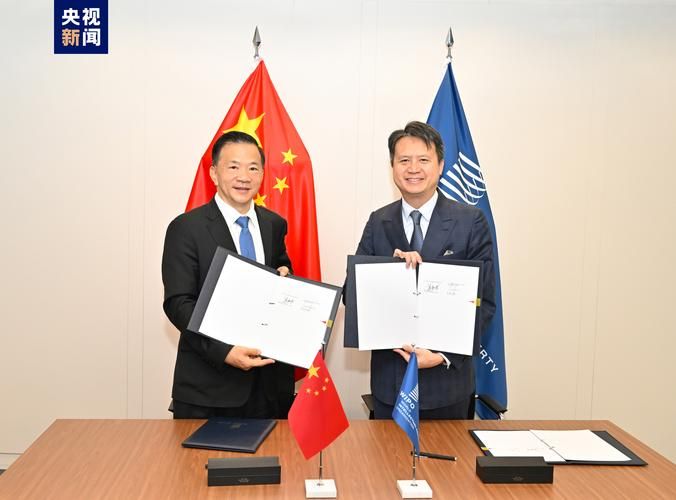
This treaty shall enter into force three months after 30 states have deposited their instruments of ratification or accession with the director-general of the organization。
(i) with respect to the 30 states referred to in article 20, from the date of entry into force of this treaty; (ii) with respect to other states, three months from the date of deposit of their instrument of ratification or accession with the director-general of the organization; (iii) with respect to the european community, two months from the date of deposit of such instrument or three months from the date of deposit of their instrument of ratification or accession prior to the entry into force of this treaty。
No reservations may be made to this treaty。
Any party to this treaty may withdraw from this treaty and such withdrawal shall be notified to the director-general of the organization. Any denunciation shall take effect one year after the date of receipt of the notification by the director-general of the organization。
(l) the original of this treaty shall be signed in one copy in english, arabic, chinese, french, russian and spanish, each of which is equally authentic. (2) the official texts of any language other than those referred to in paragraph (l) of this article shall be prepared by the director-general at the request of the parties concerned, after consultation with all the parties concerned. For the purpose of this paragraph, “parties concerned” means any state member of the organization that is involved in its official language or one of its official languages and, if one of its official languages is involved, the european community and any other intergovernmental organization that may become a party to this treaty。
The director-general of the organization shall be the depositary of this treaty。