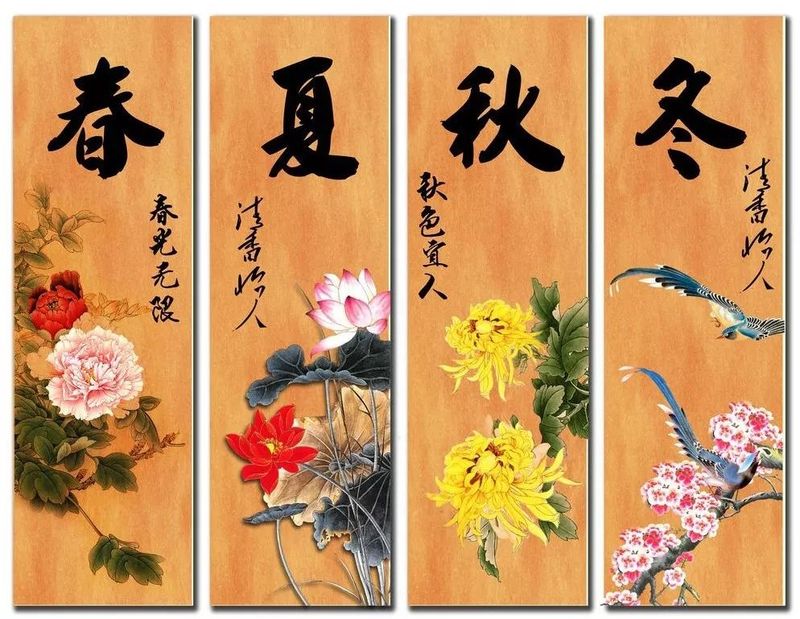
In a year, spring, summer, autumn and winter are four seasons of rotation, re-emerging. What about the four seasons? Based on different standards of astronomy, climatology and statistical practice, there are usually the following types of classification that can be shared。
Astronomy
In astronomical terms, four seasons of change are seasonal changes in the length of day and night and in the height of the sun. In a year, the longest season of day and the highest height of the sun is summer, the shortest season of day and the lowest of the sun is winter, and the transitional seasons of winter and summer are spring and autumn. To this end, the four-quarter division of the astronomical law begins with spring-point (21 march), summer to 21 june, autumn (21 september), winter to 21 december). That is, spring runs from summer to spring, summer through autumn, winter through autumn and winter through spring。
Meteorological classification
In the meteorological sector, it is usually spring from 3 to may, summer from june to august, autumn from september to november, winter from december to february, and often winter, spring, summer and autumn as representative months。
Ancient division
The first spring began on 4 or 5 february, the summer began on 5 or 6 may, the autumn began on 7 or 8 august and the winter began on 8 or 9 november。
Agricultural calendar classification
Our folk custom divides the four seasons over the calendar months. It is spring from january to march of the year, summer from april to june, autumn from july to september and winter from october to december. At the beginning of the month, it was the first day of the year and the first day of spring, so it was called spring festival。
While simple and convenient, there is a common disadvantage in the fact that all parts of the country enter the same season on the same day, which is quite different from the reality in the various regions of the country. For example, under the above-mentioned division, march is already spring, when the area south of the yangtze river is truly green and hot; the northern part of the heilong river is cold and cold, with no sense of spring; and the people of hainan island have worn single clothes for summer. In order to align the quartet with the natural landscape and the rhythm of people's lives, the meteorological sector has adopted a four-season approach to weather。
Temperature classification
This division is based on waiting (five days). Average temperature is used as a temperature indicator for four seasons. The average temperature starts in the summer when it stabilizes at above 22°c, the average temperature at below 10°c begins in the winter and the average temperature at between 10 and 22°c is in the spring and autumn. From 10°c to 22°c is spring, from 22°c to 10°c is autumn。